The staying power of persuasive brand logos
The stories behind some of our favourites
The staying power of persuasive brand logos

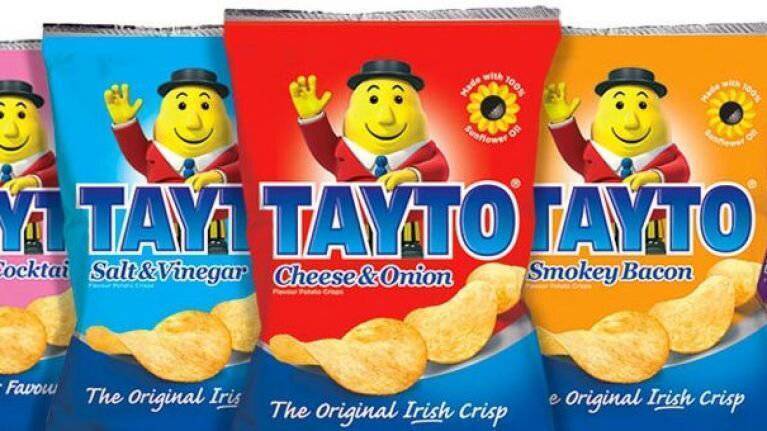
Such is the brand recognition of the product that ‘Tayto’ is used as an equivalent word for crisps of any kind.

Mr Tayto — the popular candidate 

The Tayto crisp company — which derived its name from founder Joe Murphy’s son’s childhood pronunciation of the word ‘potato’ — became one of Ireland’s most high-profile products through a combination of innovation and marketing. 

The ever-smiling and hat-wearing mascot, Mr Tayto, became so well known he was central to a 2007 campaign that presented him as a general election candidate. 

The following year, he began a search for a suitable romantic partner, and in 2009 launched his autobiography, The Man Inside The Jacket, which went on to become a best seller and claim the coveted Christmas No 1 spot. 

Such is the brand recognition of the product that ‘Tayto’ is used as an equivalent word for crisps of any kind — the ultimate peak of brand recognition.

The Rolling Stones’ Hot Lips

We’re going to be hearing a lot about the Rolling Stones in 2024 — a band of octogenarians setting out on a world tour one more time.
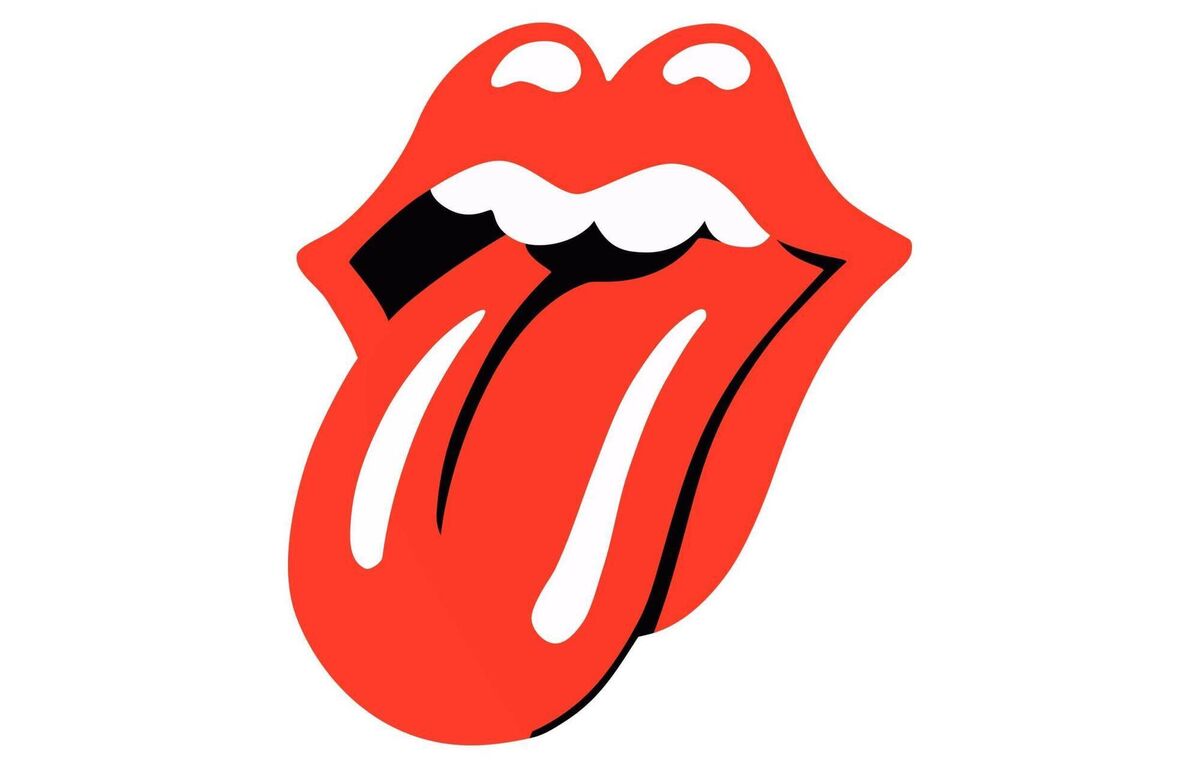
Added to that will be plentiful sightings of the band’s ubiquitous ‘Hot Lips’ emblem that probably qualifies as one of the most enduring logos in rock music. 

For over 50 years, the lurid mouth and tongue has symbolised the continued appeal of Mick Jagger and his bandmates — and generated as much income on t-shirts and other memorabilia as ticket sales to their concerts.

The logo dates back to 1970 as the band prepared for their European tour. 

Jagger was unimpressed by the emblems suggested by Decca Records so he instead hired student John Pasche, who was in his third year at the Royal College of Art in London, and suggested the tongue of the Hindu goddess Kali as a starting point — a design concept he felt represented the band’s anti-authoritarian attitude combined with obvious sexual connotations. 

The Rolling Stones’ Hot Lips dates back to 1970.

“I designed it in such a way that it was easily reproduced and in a style I thought could stand the test of time,” Pasche explained. 

“I saw the tongue as a protest symbol, like the kind of thing kids do when they stick their tongue out at you.”

Pasche worked on the commission for two weeks, submitting three versions before Jagger was satisfied — and was paid the agreed sum of €60. 

He continued to work with the band for a number of years, receiving commissions from other music stars like Paul McCartney, The Who, and Jimi Hendrix. 

Years later, Pasche sold the original design of the Hot Lips logo to the London V&A museum for €90,000.

Jacob’s Black Diamond

“We’re proud to say we’ve been in Irish homes for over 150 years since our founders William and Robert Jacob fulfilled the wishes of biscuit lovers everywhere,” trumpets the company history. 

“Now our biscuits are in the kitchen presses, tins and jars of more Irish households than anyone else — not a bad feat for two guys from Waterford.”

Jacob's revamped its logo in 2015.

In 2015 Jacob’s rolled out a new look, keeping the familiar wide black diamond shape of the existing logo, but with the name moved upwards, leaving space for the name of the individual product. 

The design also featured a new typeface and flatter graphics. 

“The revamped logo brings a smart, contemporary style to the range, keeping it fresh and exciting,” said director of savoury brands Ted Linehan.

“Following the successful introduction of the Jacob’s masterbrand campaign, this will help us to continue growing through stronger on-shelf impact and easier range navigation for the brand in-store.”

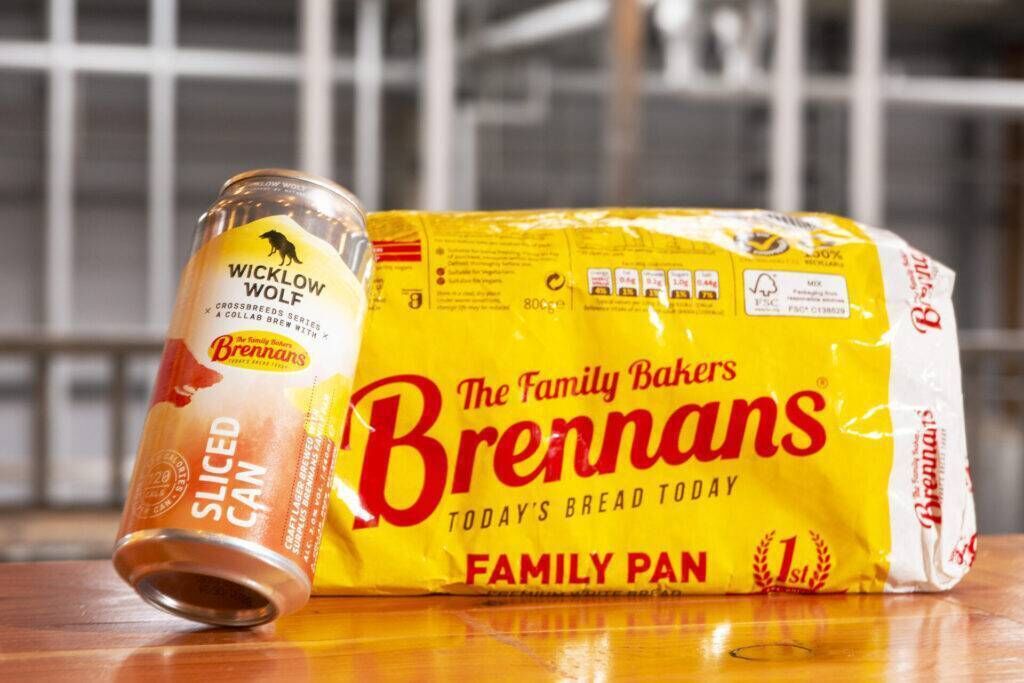
Brennan’s ‘Today’s Bread Today’

Those fatherly tones of ‘Old Mr Brennan’ are familiar to practically every Irish person, the successful result of an advertising campaign ongoing for many years. 

The radio adverts are actually the voice of Mr. Brennan himself, who began the business over half a century ago. 

Branded by its yellow and white wax paper packaging with vivid red script, its promise of ‘Today’s Bread Today’ remains a jingle thoroughly ingrained in consumers’ minds. 

A loaf of Brennan's bread.

And while the country came to a virtual standstill during the ‘Beast from the East’ storm of 2019, Brennan’s white sliced pan became one of the most sought-after products during that status red event.

The Guinness Harp

The harp, which serves as the Guinness emblem, is based on a famous 14th-century Irish harp known as the ‘O’Neill’ or ‘Brian Boru’, which is now preserved in the Library of Trinity College Dublin. 

The harp has been synonymous with Guinness since 1862 when it was used as a symbol on the first bottle label and was registered as a Guinness company trademark in 1876. 

It is because of the harp trademark that Guinness named its first lager ‘Harp’ in 1960. 

As the harp is also the official national emblem of Ireland, there is a distinct difference between the two. 

With Guinness having trademarked the harp symbol in 1876, the Irish Free State Government of 1922 opted to turn the official government harp the opposite way to differentiate between the two. 

The distinguishing feature is that the Guinness harp always appears with its straight edge — the soundboard — to the left, while the government harp is always shown with its straight edge to the right.

x

More in this section

The Business Hub

Newsletter

News and analysis on business, money and jobs from Munster and beyond by our expert team of business writers.

Cookie Policy Privacy Policy Brand Safety FAQ Help Contact Us Terms and Conditions

© Examiner Echo Group Limited