IMF warns housing targets would need to double to meet EU averages
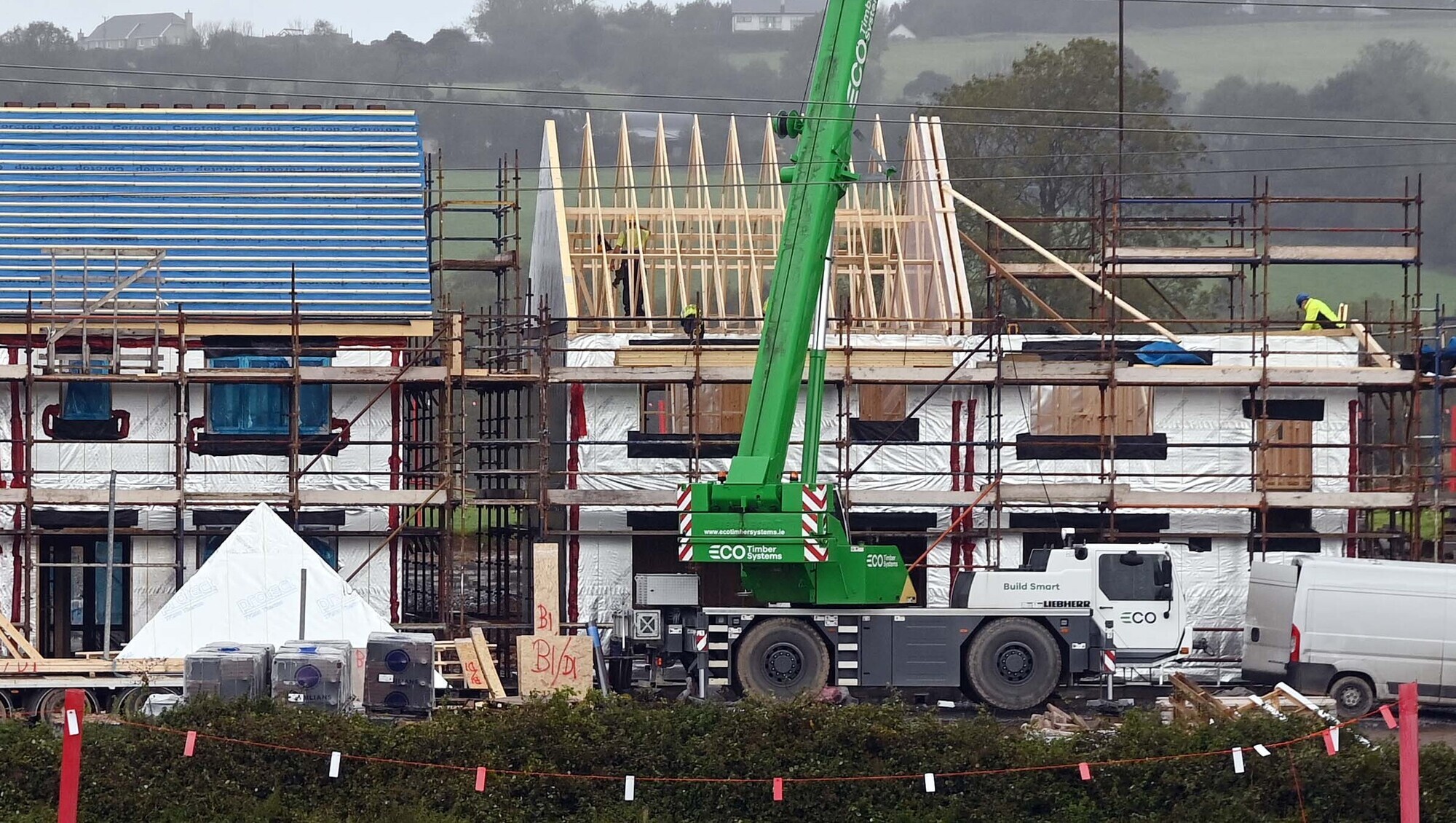
Housing targets will only see a return to 2011 levels by 2030. Picture: Denis Minihane
The Government would need to double its annual housing targets to at least 60,000 a year if it is to reach EU averages, but the current system is mired by a slow, complex planning system and a shortage of labour, the International Monetary Fund (IMF) has said.
In its latest country report on Ireland, the fund reviewed a number of economic issues the country is facing including the boom in corporation tax receipts, the establishment of a sovereign wealth fund through yearly surpluses, as well the issues being faced with housing affordability.
The IMF said that while the Government’s actions to tackle the housing crisis have been “ambitious” further action is “likely warranted” with housing in Ireland is “less affordable” than in most of its eurozone peers.
However, record investment and current housing completions will “not be enough to close the housing gap”.
The IMF said there are a range of issues contributing to the housing supply gap including; the complex and slow planning permission system, the constrained viability of high density housing, and the construction sector being dominated by a small number of low-productivity firms.
In addition, labour shortages contribute to higher construction costs and limit housing supply.
“Delivery this year is forecast to exceed Housing for All targets and may be close to 32,000 units.
At the same time, more recent forecasts suggest delivery for 2024 will also exceed target and potentially reach 35,000 or so units,” the IMF said.
But despite this uptick, construction has “hardly kept up” with population growth over the last decade.
Increasing housing stock by 30,000 units a year would bring the number of homes per thousand people from its current level of 415 to 437 by 2030 — the level seen in 2011.
To reach the EU average of 495 by 2030, annual completions would need to be "at least 60,000 units per year".
The IMF said that there needs to be a reduction in complexity around building houses as well as a removal of certain barriers to entry for labour.
On the affordability issue, the Fund estimated that it would take the average Irish household 15 years to save up enough to purchase a 100sq m home — the highest it across the eurozone.
On the issue of the State’s public finances, the IMF said the Government have “done well” which it attributed to “prudent management”.
However, it cautioned against a reliance on corporation tax receipts as it is a “fragile source of funding”.
The IMF praised plans to save the excess corporation tax receipts in specific wealth funds.
Finance Minister Michael McGrath welcomed the publication of the report.
On the two funds, Future Ireland Fund and the Infrastructure, Climate and Nature Fund, Mr McGrath said going to pay a “key strategic role” in helping Ireland to deal with issues such as an ageing population, climate change, as well as the digitalisation of our economics.

CONNECT WITH US TODAY



Be the first to know the latest news and updates