Warning signs of grandiose spending surfaced years before WeWork's bankruptcy
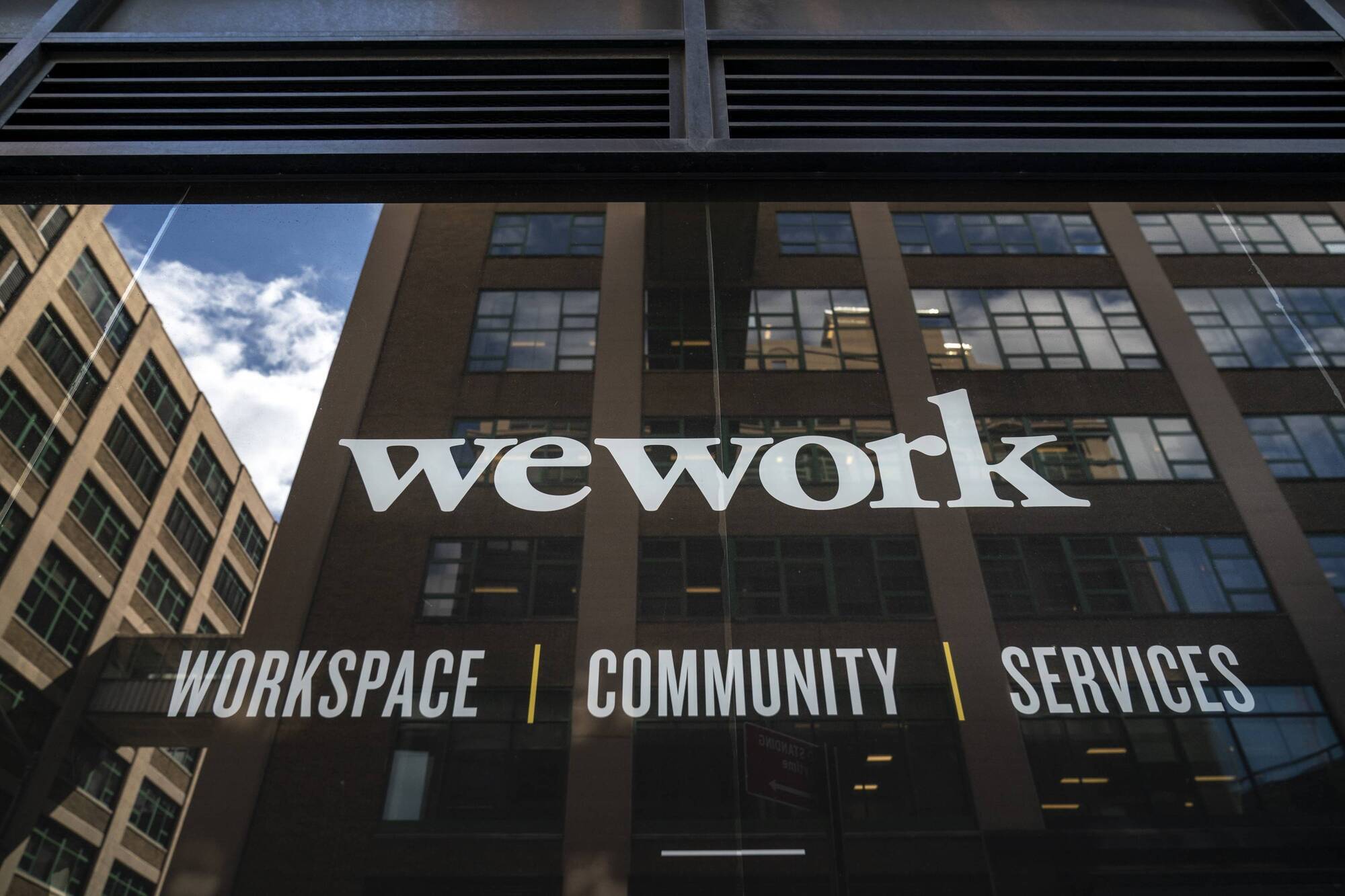
Adam Neumann and Miguel McKelvey started WeWork in 2010 selling desks and an ideal of what an office should be like.
For close to a decade, WeWork seemed unstoppable. The company grew rapidly and spent extravagantly but it has finally declared bankruptcy in the US.
While the co-working company could eventually emerge from the Chapter 11 process and survive in some form, the move marks a new low for a business that was one of the world’s most valuable start-ups as recently as 2019. There have been key moments in the company’s rise and fall.
Adam Neumann and Miguel McKelvey started WeWork in 2010 selling desks and an ideal of what an office should be like.
In 2015, Bloomberg Businessweek put Mr Neumann on the magazine’s cover for the first time, with a headline that captures the early bemusement of WeWork’s venture capital-fuelled, work-hard-play-hard vibe: “Is This the Office of the Future or a $5bn Waste of Space?" There would be many more magazine covers around the world.
Employees described the exciting, chaotic and party-soaked atmosphere of the company’s offices and how that affected the people working there. But there were early warning signs.
In 2016, WeWork cut some of its staff, and Mr Neumann warned his employees in an all-hands meeting that the company had lapsed into a “spending culture”. (In the years after that, the company would spend much more lavishly than it did then.)
A key part of WeWork’s corporate culture included the annual summer blow-out for employees and customers, which featured canoes full of beer, rah-rah speeches from executives and headlining music sets from artists such as Lorde.
WeWork had already promised to blur the boundaries of work life and social life. Why not home as well? The company opened two residential apartment buildings called WeLive. “I get this amazing quality of life,” one resident said in 2017. “The only thing I lack is a door and a wall.”
The venture capital funds kept coming, and SoftBank Group supercharged things when the firm got involved in 2017. WeWork poured money into a vast array of ventures. One of those was a private elementary school in Manhattan called WeGrow.
Rebekah Neumann, Adam Neumann’s wife and the company’s chief brand officer, said at the time that the school’s goal was “raising conscious global citizens” who “understand what their superpowers are”.
By 2019, WeWork had rebranded as We, with a mission of “elevating the world’s consciousness,” and was gearing up for an initial public offering of shares. As part of the renaming, the company agreed to a $5.9m equity deal with Mr Neumann for a set of trademarks related to the name.
In the run-up to its 2019 shares launch attempt, WeWork’s visions for itself got even more grandiose. The company had spent tens of millions of dollars on the Creator Awards, a series of live pitch competitions with celebrity judges like P. Diddy and performances from bands such as the Red Hot Chili Peppers.
WeWork even pitched TV networks on turning it into a show. By then the company had also bought the iconic Lord & Taylor building in Manhattan in an $850m deal and had spent tens of millions on other tangential purchases such as a private jet, a search-engine-optimisation company and stakes in a superfood start-up and a wavepool maker.
In the span of a few weeks in the autumn of 2019, WeWork’s big plans to go public crashed to the ground, Mr Neumann was ousted, and the company was scrambling for cash to stay alive. Excessive spending and loose corporate governance were its undoing.
Since 2019, WeWork has weathered a pandemic, gone public, cycled through a string of interim and “permanent” CEOs, downsized its real estate portfolio and limped along—until this August, when it raised doubt about its ability to stay in business.
CONNECT WITH US TODAY



Be the first to know the latest news and updates