E-scooter firms race to enter Irish rental market

Legislation is expected to play a major role in e-scooter regulation, with a maximum speed of 25 km/h proposed, with further age, helmet and parking restrictions to be confirmed. Picture: Eddie O'Hare
Electric vehicle companies are eagerly waiting to enter the Irish rental market ahead of new legislation on the use of e-scooters in Ireland.
Expected to be signed in the coming weeks, the new law will pave the way for the use of shared e-scooter schemes, allowing those who do not own their own vehicles to enter the new and growing e-transport market.
Already widely used across the country, e-scooters are classified as mechanically-propelled vehicles (MPVs), thus requiring tax, insurance, and a licence to be driven on public roads.
However, there is currently no licensing or tax regime for these vehicles, making the use of them in public effectively illegal, an issue that the new legislation aims to rectify.
Ahead of being signed into law, city and county councils have already entered talks with private e-scooter companies, discussing how such schemes could be introduced locally with some already hopping on board.
"From our initial discussions with councils, we see that Ireland is taking this matter seriously and is ready to embrace new modes of sustainable transport," said chief operating officer of Irish e-scooter start-up Zeus, David O'Reilly.
Established in 2019, the Carlow-founded firm has expanded across Europe, now operating shared e-scooter schemes in Germany, Norway, Italy, Croatia, and Sweden.
Mr O'Reilly said the new Road Traffic and Roads Bill is "encouraging," adding that it signalled Ireland as a "leader in sustainable mobility".
While supported by local governments, the legislation follows a recent vote in Paris banning all rental e-scooters, following a number of accidents involving the vehicles.
Rental schemes became the centre of growing concerns last year, with the French capital registering 459 accidents with e-scooters and similar vehicles, including three fatal ones.
Similar attributes have been exhibited here in Ireland, with insurance provider, Aviva reporting earlier this year that e-scooters riders were considered one of the most dangerous road users in the country, second only to young male drivers.
Despite the Paris ban, companies say they have no such fears that similar approaches will be taken in Ireland, with cities and citizens showing a "prevalent appetite" for the schemes.
That is according to Aisling Dunne, head of public policy at Bolt, an Estonian mobility company offering everything from taxis, food delivery services, and rental e-scooters.
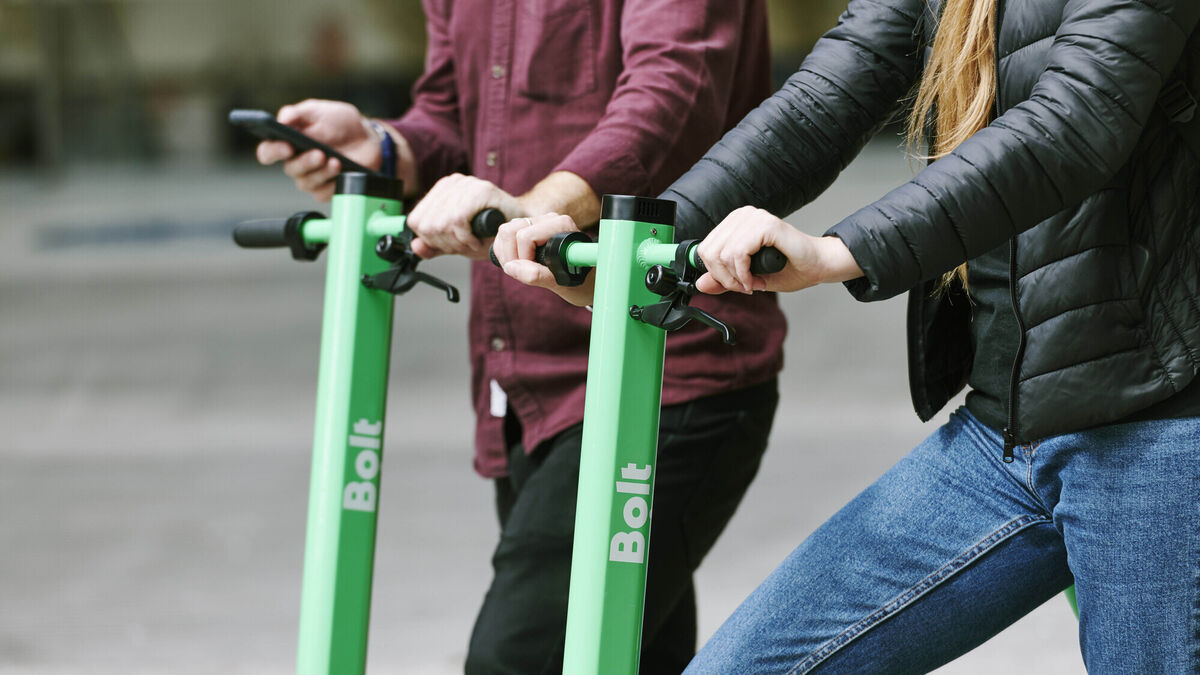
Having already deployed electric bikes in Sligo and Kilkenny, Ms Dunne said "over 5,000 users have travelled over 100,000km on the bikes in Sligo since June 2022.
"Our experience of operating scooters and bikes across Europe tells us scooters will be similarly embraced here when they arrive," she said.
Senior public affairs manager of transport-provider Lime, Hal Stevenson, said cities are actually going in the "opposite direction" as Paris, with even other French cities extending permits and expanding programs.
Established in 2017 and headquartered in San Francisco, Lime has grown to be the world's largest shared vehicle company. Last year, the company piloted its first Irish operation, deploying 100 rental e-bikes to Mayo.
Rising safety concerns have also prompted companies to heavily invest in new technology.
For Bolt, the company says its upgrades have "improved enormously during a short period of time," with the company launching systems tackling riding prevention, AI Parking, and drunk scooting, issuing a score to track reckless scooting and banning those that don't follow the rules.
Similarly, Mr O'Reilly says Zeus, which recently acquired Irish shared-vehicle firm Zipp Mobility, has upgraded its vehicles to a three-wheel design with two front wheels, which is "proven to ensure a safer, smoother and more stable ride”.
Legislation will also play a major role in e-scooter regulation, with a maximum speed of 25km/h proposed, with further age, helmet and parking restrictions to be confirmed.
Another hot topic surrounding e-scooter schemes is their price, and what customers will need to pay to use the sustainable transport alternatives.
Significant uncertainty remains regarding costs though. Zeus said it is unable to confirm its proposed prices.
Lime said its pricing was decided "based on the individual market and no two are the same”.
While prices also vary across countries, Bolt claims to have "typically the most affordable in the market".
As traffic congestion and fuel emissions become growing staples of city life, electric vehicles offer an alternative that is attractive to the climate-conscious, with new legislation embracing a culture turning e-scooters from a novelty to the norm.
EV companies may be racing to enter the Irish market, but time will tell if Ireland decides to hop on board.
CONNECT WITH US TODAY



Be the first to know the latest news and updates