Housebuilding activity drags construction recovery, new report shows
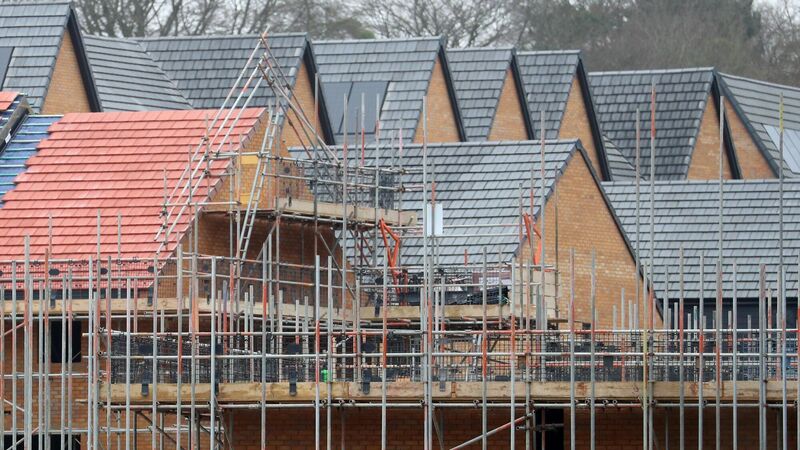
The survey highlighted that 87% of Irish building firms are expecting to be as busy or busier in 12 months’ time, which is an improvement on 82% recorded last December. Picture: Andrew Matthews/PA Wire
Housebuilding activity increased slightly in March, but remains in contraction territory, slowing the overall recovery of the construction industry which has battled several economic challenges in the last three years.
The latest BNP Paribas Real Estate Ireland Construction Purchasing Managers’ Index (PMI) also showed that confidence among builders last month faltered compared with the mood recorded in February, as average input costs rose again.
However, the industry is on much more solid ground compared to recent months. Growth in March was driven by a boost in commercial building which continued to buck the wider trend and saw activity expand for the second month in a row.
Last month, builders also saw a growth in new orders, which led to companies adding to their workforce. Construction employment rose in each month of the last quarter.
Builders also welcomed signs that inflationary pressures are cooling.
In the March quarter, three trends were evident for Irish builders, said John McCartney, director and head of research at BNP Paribas Real Estate Ireland.
The first trend was that overall construction activity contracted, but marginally, and at a diminishing rate through the quarter.
Secondly, input cost inflation slowed markedly compared with Q4 2022.
Finally, Mr McCartney said every forward-looking indicator has switched from negative to positive.
“Order books strengthened progressively through the quarter,” he said.
The survey also highlighted that 87% of Irish building firms are expecting to be as busy or busier in 12 months’ time, which is an improvement on 82% recorded in December.
Stubborn headwinds lie ahead in Q2, however. Sub-contractor rates increased sharply last month and Irish construction firms continued to comment on supply-chain issues and delivery delays.
The survey also found that vendor performance subsequently worsened further, but at a rate much softer than seen over much of the past three years.


CONNECT WITH US TODAY



Be the first to know the latest news and updates