Style guide to evolving dress codes in the workplace
When preparing for a job interview, you may dress to stand out, but there are guidelines as to what your clothing choices communicate to the employer. Picture: iStock
The suit. The dress. The dress code. What we wear sends a message about us. About who we are. About how we want to be seen. This is important in the workplace, where perception is everything, determining who rises, who falls, who stays and who goes.
Dress codes in the workplace are mostly of relevance to those who’ve been hired to work there. To get that far, you’ve got to win at the interview stage, where presenting appropriately is a must.
Throwing light on the art, CareerWise Recruitment director, Ken Murphy recommends researching the company’s dress code and erring on the side of conservatism.
”This shows respect for the interviewer and demonstrates a professional business approach,” Ken says.
For candidates attending interviews, he recommends a business suit with a crisp shirt. “The requirement for men to wear ties has relaxed. Now a collared, plain shirt is generally acceptable,” Ken adds.

He’s right of course. Dress codes change with the times. Sometimes for practical reasons. Sometimes because equality demands it.
Of course, what is demanded is not always mandatory. Sometimes fitting in is the thing. Take the tech workplace, for instance, where smart casual is everywhere and blazer materials are varied.
“Instead of opting for just wool in a blazer, our tech clients are choosing more flannels, more texture and more linens and cottons,” says Seán Treacy of Hunter Treacy Tailors. “To look sharp and look their best, they’re wearing a mix of tailored garments, but in a more casual way.”
Suit jacket shoulders are softening as well: “People are moving away from the English style of boxy-shoulder suit, towards a more unstructured, slouchy, Italian style, with a softer shoulder and a more natural drape,” Seán explains.
“The super-skinny fit is totally gone. We still see young lads going around with their clothes painted onto them. But in the office, it's more of a slim, tailored look. A ‘not billowing in the wind’ kind of style. Not super slim. Just a nice, clean, tailored look, where the suit hangs properly off the shoulder. That's what most of my finance and solicitor clients want."
What suits young men are wearing is a topic about which Tom Murphy of Tom Murphy is familiar: “In professional settings, nearly all younger men wear three-piece suits. No young fella will buy a suit from us that isn’t three-piece. Waistcoats are very much in.”
For ties, his business clients are choosing burgundies, navy blues and deep greens.
“Silk and wool ties, unlined, hand-tipped, that’s what those in the know are buying,” Tom says. “They’re hand-finished with a slightly more casual look. They’re a little more relaxed, more fluid. They never look cheap or stiff.”
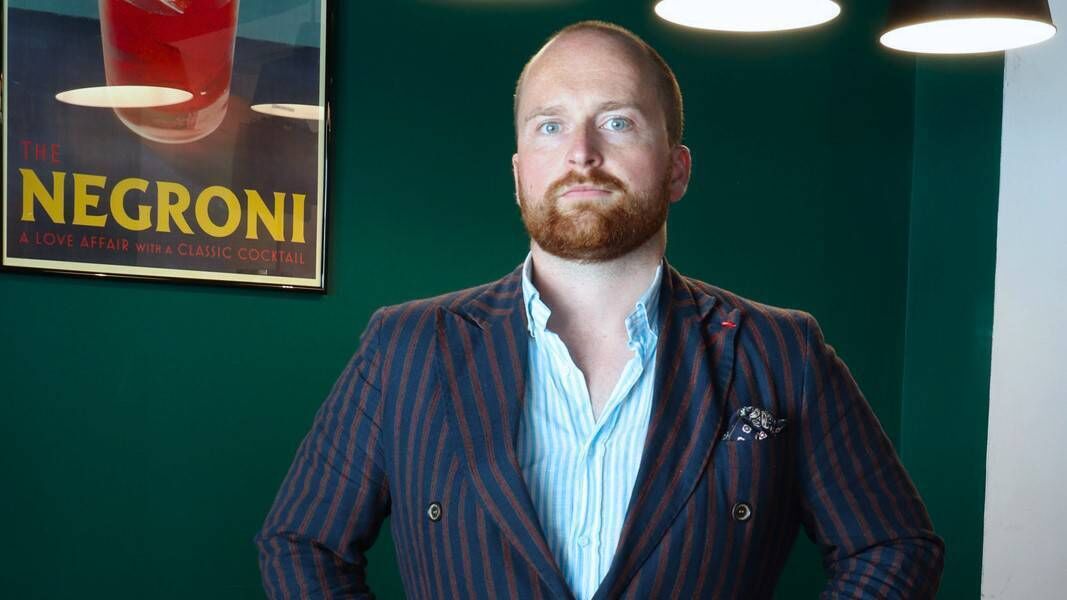
On the art of wearing a white, open-necked shirt with a suit, Treacy lauds the merits of the button-down shirt collar "for staying in place and looking clean and nice".
Another who’s expert at dressing clients for work is Tom Murphy of Tom Murphy Menswear Cork. His clients too, are fond of open-necked shirts: “They wear them with a jacket and a pair of smart slacks,” he says.
“Fewer business people are wearing suits. Smart blazers are popular. They tend to be made with different fabrics: herringbone, tweed, or perhaps a loud check. When paired with a plain pair of contrasting trousers, blazers can be a bit more audacious without being overwhelming or over the top.”
Are chinos considered smart trousers?
“They absolutely are and they’re popular with all ages,'' he explains. “But sometimes older people will instead ask for the slightly more formal dress trousers in wool.”
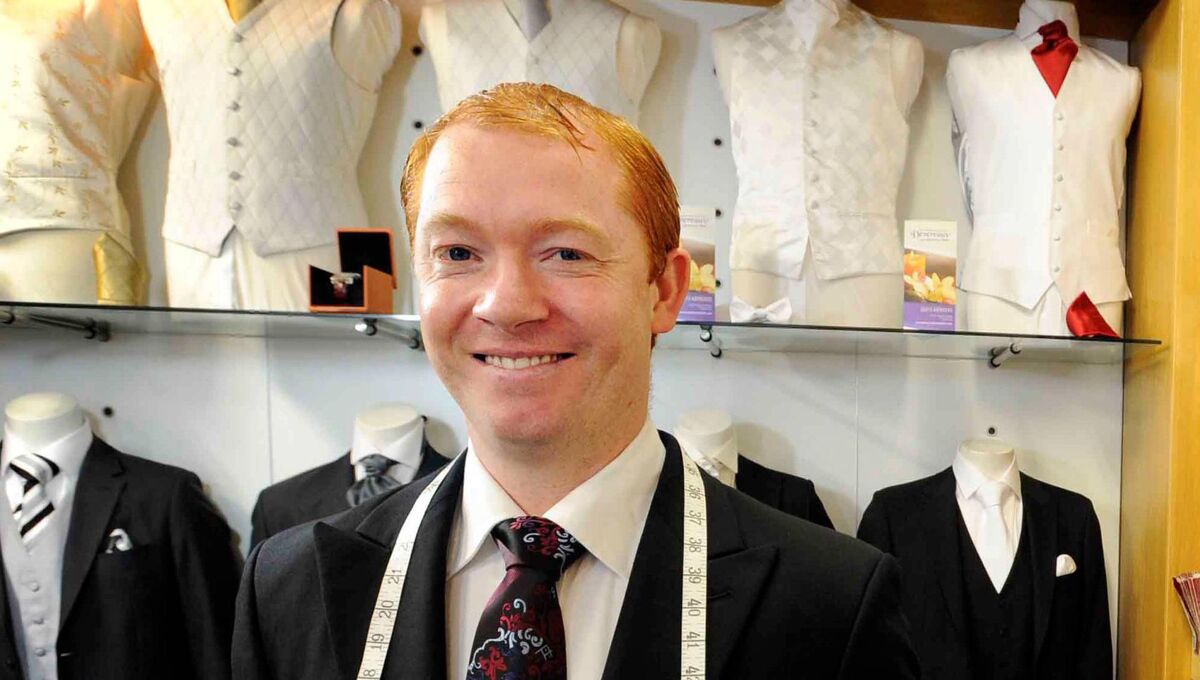
While wool navy blazers are classic, more casual versions are also popular. Tom Murphy says cotton and herringbone tweed are popular.
Asked what shirts are being worn in the workplace, he says older men often go for white or blue Oxford shirts. "They might go for pinstripe or a Bengal stripe. Chambray and poplin are also popular.”
“Younger people tend to go for a slightly more jazzed-up shirt. It could be something with a little print or a little diamante. Floral prints would be popular. For work, their choices are more subdued. Most choose blue, pink or white shirts and prints when worn are small and subtle.”
On the subject of brands, Tom Murphy says Olymp and Eton are the best shirts on the market and the best value too.
As for what’s best in suits, Seán Treacy lauds wool: “Many don’t realise that most off-the-rack suits are nearly entirely polyester, which is just plastic. They’re terrible for the environment and terrible quality as well. Spend a little more — around €400 — and you can buy an off-the-peg, Italian-made suit in pure wool.”
Are monogramming requests rare? “They would be, yes,” says Tom Murphy.
Who asks for that? “Not young people so much. Some older gentlemen in business like their initials on their shirts. They go on the inside of the cuff, so aren’t generally visible.”
Cuff visibility is an art, as Tom Murphy explains: “Because double cuff shirts tend to come down below the sleeve a little more than single cuff shirts, extra care and attention is required while wearing one with a suit. Suit length has to work in tandem with the cufflink shirt.
“It doesn’t look right if there’s too much cuff showing and you’re missing the boat if there’s too little,” he continues. “Three-quarters of an inch is about the right amount of cuff to be showing below the jacket sleeve. Anywhere between half and three-quarters of an inch.”
What’s happening with handkerchiefs? “Older men sometimes come in looking for them for work,” says Tom Murphy. “Younger people look for pocket squares, which are of course, just an accessory and aren’t used for practical purposes. They add an extra bit of character to the suit, a little pop of colour and a little opulence. Francis Brennan and Conor McGregor are always well-dressed. Both often have a pocket square in the top pocket, which adds that extra little touch of class.”
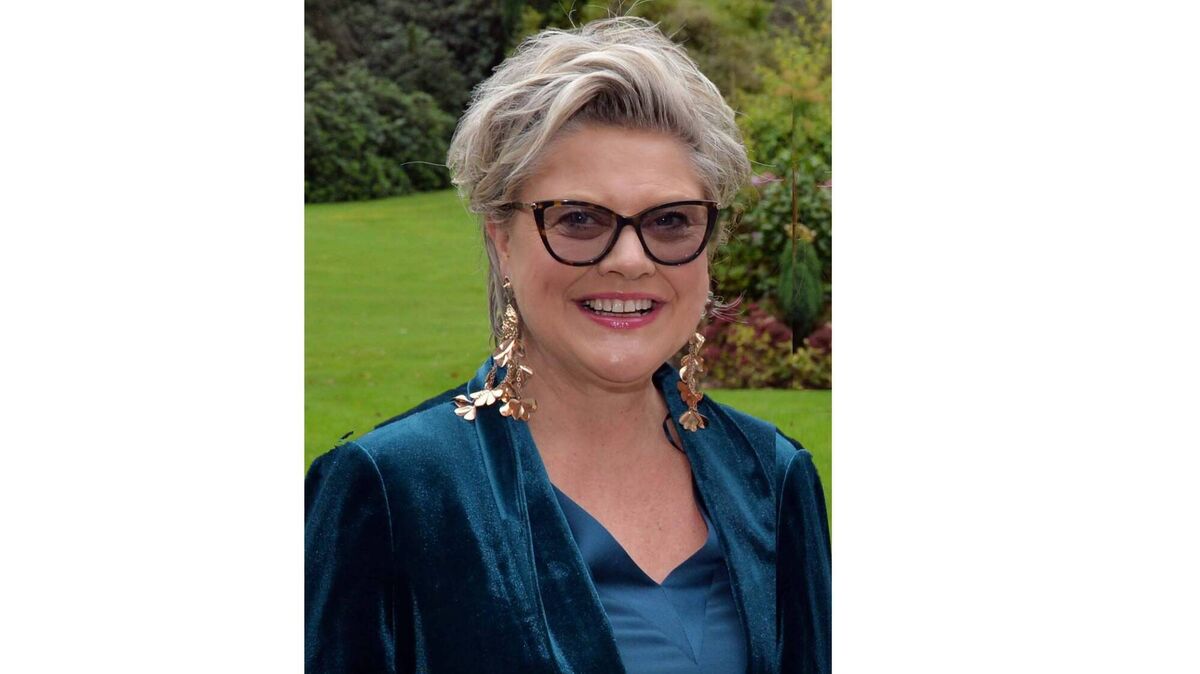
Dee Kelly Morgan, style advisor at Cork’s Mahon Point, has dressed a lot of people over her 25-year career, which includes a previous stint as stylist at Brown Thomas.
“Suits are gone,” she declares with gusto, when asked what women wear to work. Most don’t have to wear formal work clothes, unless they’ve a presentation or an important meeting.”
What adjectives would she use to describe women who stroll into the office in a suit? “Dated,” she replies with a smile. “It’s all smart casual now.”
Asked to define same, she says: “It could be a dress with opaque tights and a pair of ankle boots; that kind of a cool look.”
On the topic of hem length in the workplace, she shares that ‘they’re getting shorter.’ Short enough to warrant opaque tights for modesty? “Most of us are more comfortable wearing those,” she replies. Then we laugh, and talk knees for a while.
- Conservative two-piece business suit.
- Conservative long-sleeved shirt or blouse.
- Clean, polished, conservative shoes.
- Well-groomed hairstyle and clean, trimmed fingernails.
- Minimal cologne or perfume.
- Empty pockets — no bulges or tinkling coins.
- No gum or candy.
- No cigarettes.
- Ensure your background is camera-friendly.
- Dress as you would for a face-to-face interview.
- Dressing fully – not just from the waist up; in interview clothes helps you to feel psychologically ready for interview, as if it were face-to-face.
- Research the company and decide what’s appropriate to wear. Ask yourself: Would I wear a t-shirt for a face-to-face interview?
- Avoid patterns.
- Avoid distracting jewellery.
- Avoid ties.
- Go for simple, softer colours.
(Tips courtesy of Ken Murphy, director, CareerWise Recruitment).


CONNECT WITH US TODAY



Be the first to know the latest news and updates