Retailer Aldi sees cost pressures building
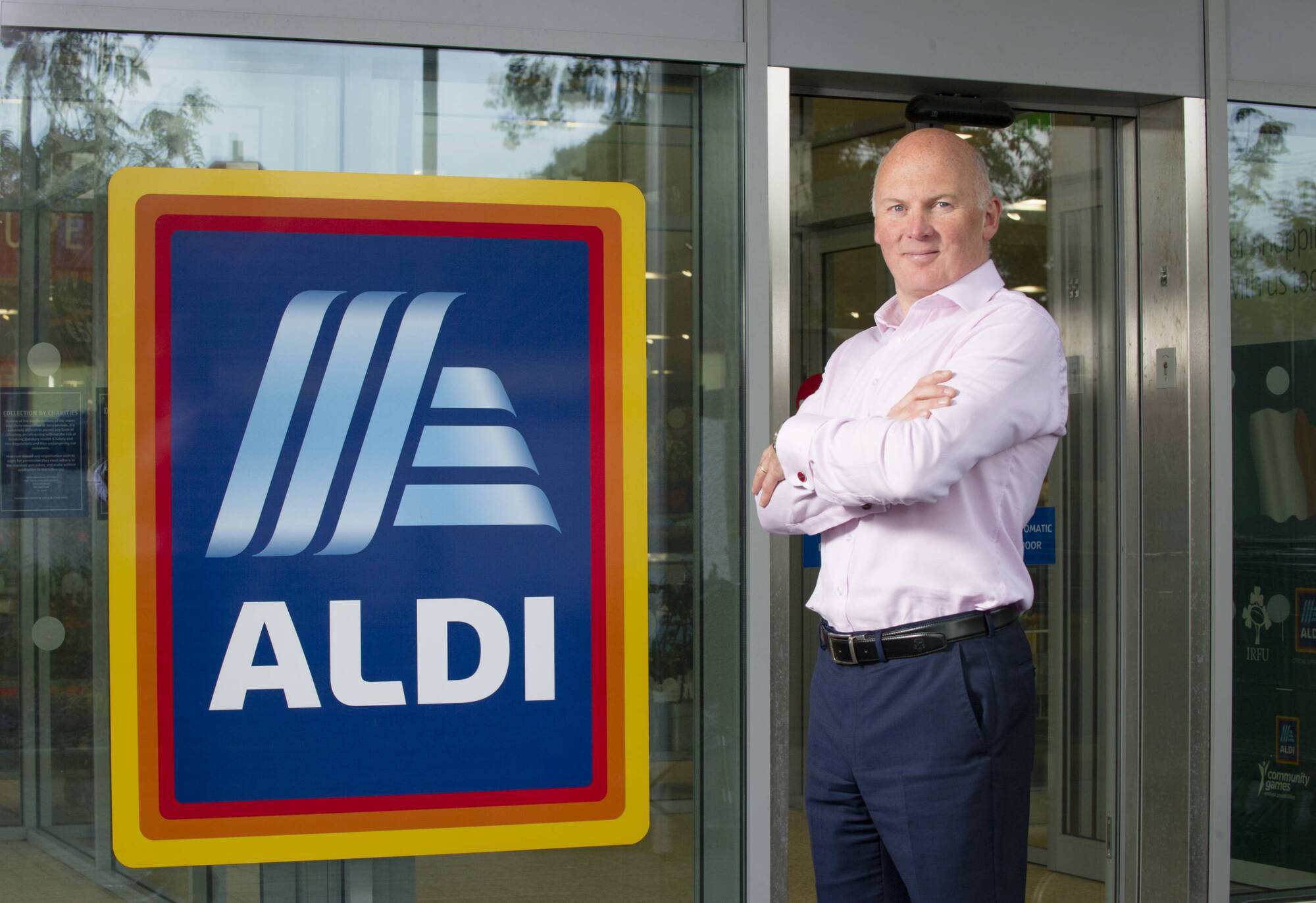
“Our priority is to insulate, as far as we can, the customer from what’s coming,” said Niall O'Connor, managing director of Aldi Ireland. Picture: Daragh Mc Sweeney
Aldi may be forced to put up its prices this year to absorb the huge rise in costs.
The discount grocer also said that it does not intend to cut opening hours to save on its energy bills. Some rival stores across Europe have announced plans to curtail winter opening hours. .

“Our priority is to insulate, as far as we can, the customer from what’s coming,” said Niall O’Connor, group managing director at Aldi Ireland.
“It would be ridiculous for me to sit here and say that our prices aren’t going up. Of course they’re going up.”
He said any price increases would only come as a last resort.
The retailer employs around 4,650 people, operates over 150 stores in Ireland and has a significant share in the grocery market. Mr O’Connor pointed to manufacturing prices in farming as having a major impact on costs, in addition to the economic consequences of the war in Ukraine including “fractured” supply chains.
Read More
“Farm inputs and outputs are getting an absolute battering,” he said. Some agricultural costs may ease this year though as global fertiliser prices are starting to fall due to farmers pulling back from the market, driving down demand.
Mr O’Connor added that name-brand foods are driving inflation in groceries. Dairy is among the products that have gone up substantially in price.
Aldi data found that around one in four households say they are struggling to do a minimum food shop due to rising grocery costs and many are cutting back on non-essential items. “Anything over €50 is a challenge to sell,” said Mr O’Connor.
Aldi data showed a spike in spending during the Covid-19 lockdowns, however, that has not provided a cushion for this current crisis as much of that spend was re-invested in staffing costs and increasing suppliers to 330, among other things.
Mr O’Connor indicated Aldi will not slow plans to open new stores in the coming months amid a cost-of-living crisis, as it prepares to open another Aldi in the West. “If we open more stores, we dilute our fixed costs which makes us more efficient,” said Mr O’Connor.
It is also eyeing up opportunities for new stores in Dublin. The German grocer already has 24 stores in Dublin, but it is still falling behind competitors in this area. Aldi has expressed interest in 25 potential sites in the capital and said it is in talks to put non-retail developments on these sites in order to secure the locations.
Mr O’Connor did not give any further detail about what these developments could be. He added that one of the reasons Aldi hasn’t opened more stores in Dublin to date is because the process takes twice as long as elsewhere in the country.
He said that growth will not be achieved at the expense of “ridiculous” prices. Other plans for this year and 2023 include increasing investment in Aldi suppliers from €1bn to €1.2bn.
Aldi has a lower market share of over 12% compared with other leading grocers in the Irish market Dunnes and Tesco, according to Kantar research, but Mr O'Connor said that customer footfall is “significantly” up in the last eight to 10 weeks.