Worst of summer travel chaos is over for German airline, says Lufthansa
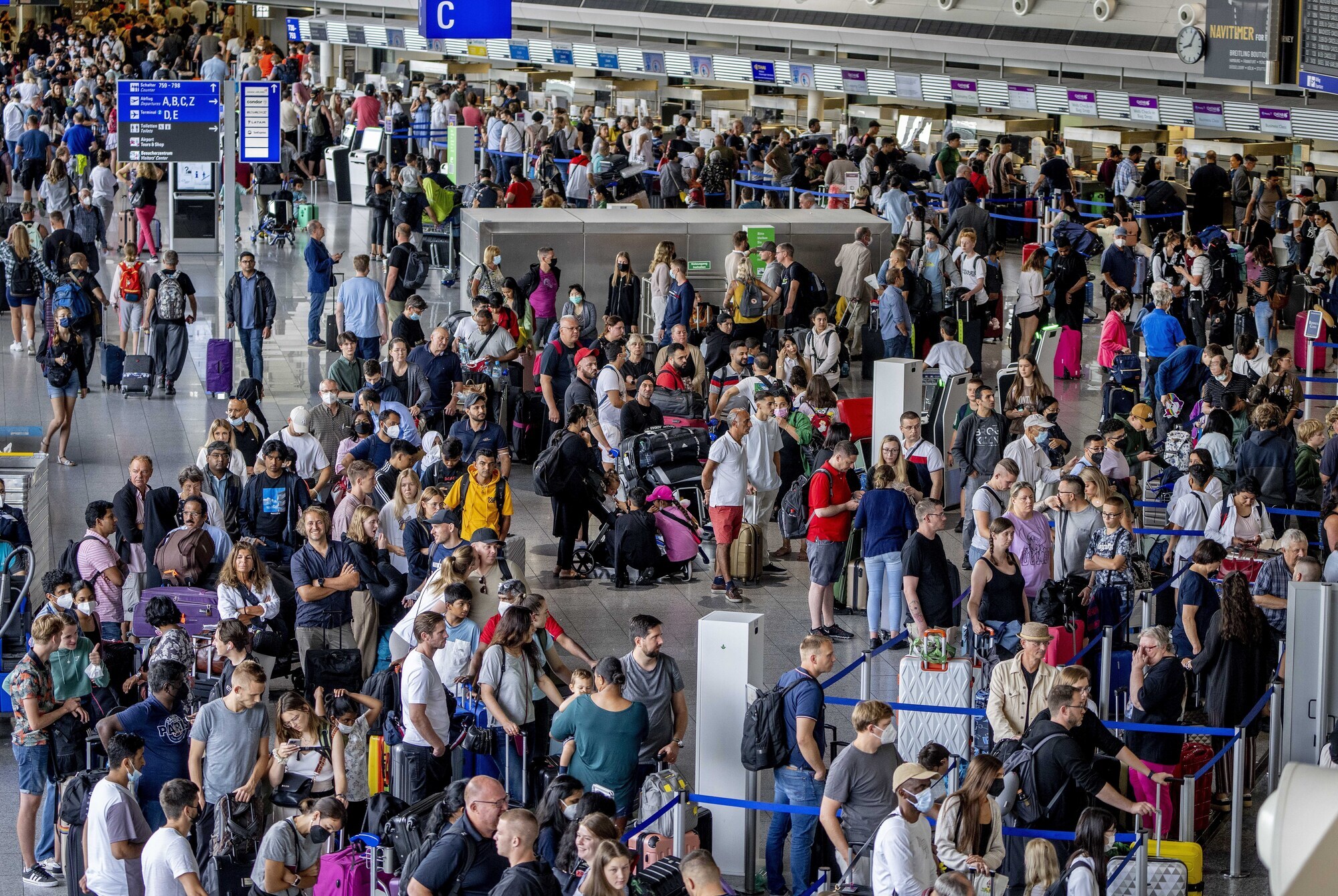
Passengers queue at check in counters at the international airport in Frankfurt on July 27.
The worst is over for German airline Lufthansa after staff shortages caused flight chaos over the summer, but levels of sick leave remain challenging, board member Christina Foerster told a German newspaper.
Airlines across Europe have struggled to cope with a strong rebound in holiday season demand after the Covid-19 pandemic stopped much travel. Many airports faced huge queues due to staff shortages, prompting last-minute cancellations.
"The low point has passed; flight operations are largely stabilised," Ms Foerster was quoted as saying in an interview with Funke Media published on Sunday.
"Nevertheless, this summer we are dealing with a level of sick leave that is not easy to offset," she said, adding that the situation remained challenging.
Most flight cancellations are affecting domestic routes where there are alternatives, she said.
She added, however, that the situation would only improve significantly with the winter flight schedule at the end of October.
Lufthansa said last week it expected demand for short-haul flights in Europe to drive growth at its passenger airlines this year, and it forecast a return to group operating profit for the full year.
Meanwhile, Swedish, Danish, and Norwegian pilot union members have voted to adopt a collective bargaining agreement reached with airline SAS last month, and will thus not resume their strike, the trade unions have said.
SAS grounded some 3,700 flights during a crippling 15-day strike in July. In Denmark, 93% of pilot union members voted in favour of the deal.
"I am incredibly happy about the great support for the agreement, not least when we have been through such a long and tough conflict," said Henrik Thyregod, chairman of the Danish pilots union.
Unions in Norway and Sweden said a majority of their members also backed the deal, but did not immediately disclose how many had voted in favour.
Long-struggling SAS, which filed for US bankruptcy protection on the second day of the strike, has estimated the industrial action cost it more than $145m (€142.4m) during what is normally the profitable peak summer travel season.
The deal entails lower wages and longer hours for the pilots, but also a commitment from SAS — whose biggest owners are the governments of Sweden and Denmark — to rehire pilots laid off during the pandemic.
The new collective bargaining deal between SAS and unions also needs approval by a US court handling creditors' interests in the Chapter 11 process.
Under the agreement, pilots were given a guarantee that SAS will not set up new subsidiaries on different terms than what has now been agreed, Dansk Metal, the union representing Danish pilots, said.
SAS, which was already loss-making before the pandemic due to rising competition from low-cost carriers, has said it needs to slash costs further and raise more capital in order to survive.
While the Swedish government has rejected the company's plea for more cash, Denmark says it might inject fresh funds if SAS also finds support from private-sector investors.
CONNECT WITH US TODAY



Be the first to know the latest news and updates