Rethink Ireland: Covid impacts felt more by women than by men
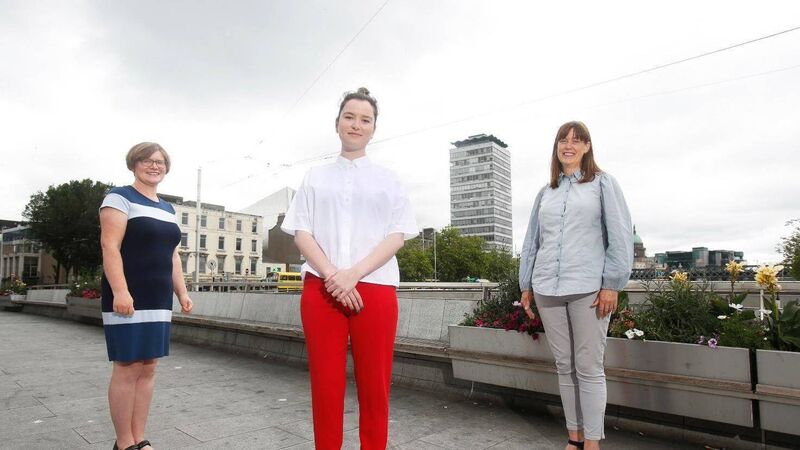
Deirdre Mortell, CEO of Rethink Ireland, Amy Power, Rethink Ireland, and Orla O’Connor, director of the National Women’s Council, at the launch of the report, ‘The Impact of Covid-19 on Women’s Economic Mobility’, on the Rosie Hackett bridge in Dublin, the first Liffey bridge to be named after a woman
The Covid-19 pandemic has had a damaging effect on women’s economic mobility. That’s according to a new report launched by Rethink Ireland.
‘The Impact of Covid-19 on Women’s Economic Mobility' is based on testimonies from participants of programmes run by Awardees of Rethink Ireland’s Mná na hÉireann, Women of Ireland Fund. The fund supports social enterprises and charities that are working to improve women’s economic mobility.
Through these testimonies and case studies from women in direct provision, women parenting alone, transgender women and women in rural Ireland, the report outlines the extent to which the Covid-19 pandemic has affected women’s jobs and incomes, home care responsibilities, and led to an increase in domestic violence and worsening mental health.
The report also found that women’s employment opportunities have been affected during the pandemic due to digital literacy issues, increased care responsibilities, and job displacement as a result of Covid-19 restrictions.
Deirdre Mortell, CEO of Rethink Ireland, said: “Rising unemployment during the pandemic has disproportionately affected women, the burden of home care and homeschooling was carried disproportionately by women, and there has been an alarming increase in domestic violence cases during the lockdowns.
"To help ensure women are not left behind in the post-Covid economy recovery, our report has recommended a series of measures the Government should support to improve women’s economic mobility.”
These include:
- Introduction of targeted measures to support women into employment post-Covid-19 including reskilling programmes and social welfare supports.
- Addressing the economic inequalities experienced by working-class women, lone parents, women of colour, Traveller women, Roma, women seeking asylum, disabled women and carers.
- Improving decision making by ensuring the most diverse representation of women are present at all tables where decisions regarding social and economic policy are made.
- Gender and equality budgeting is embedded in all economic decision making to ensure the allocation of resources tackles inequality.
Nora Corcoran, a participant with Equal Ireland, has been working frontline with the Galway Traveller Movement and has both experienced and witnessed the challenges Traveller women face, in particular the lack of access to technology in their community, how it has worsened during the pandemic, and how this had knock-on effects on isolation.
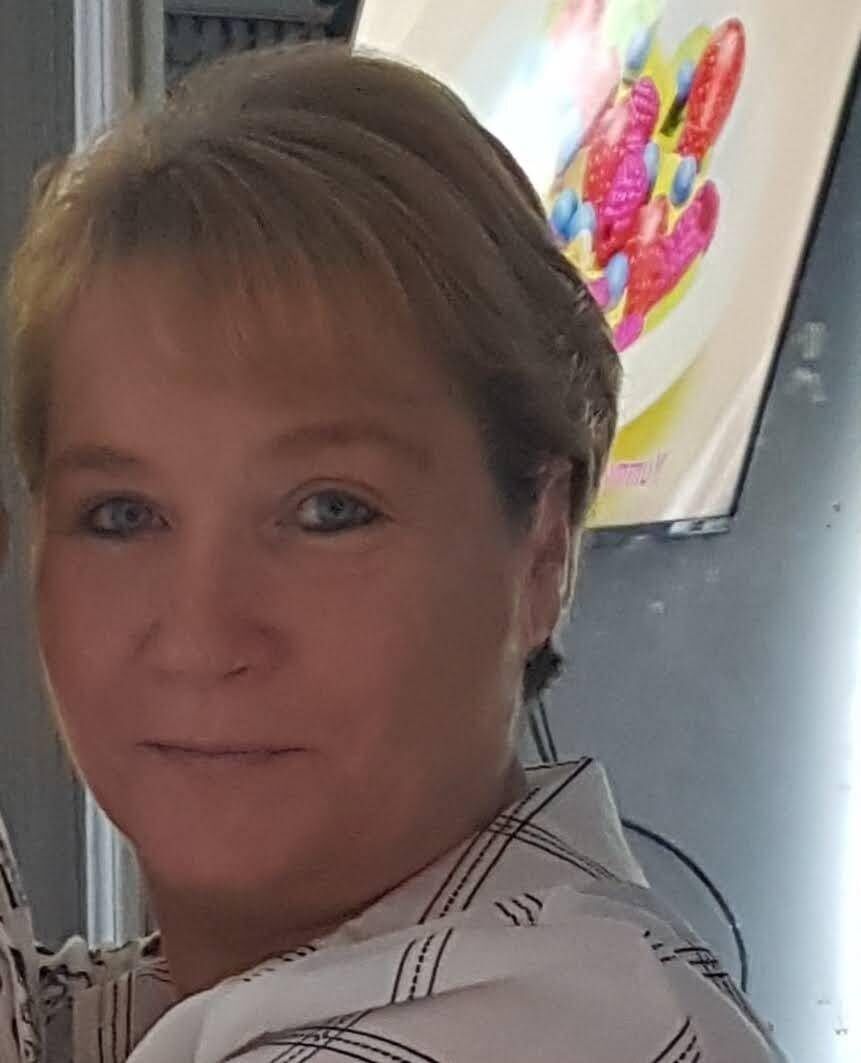
Equal Ireland helped Nora further educate herself.
Nora said: “There should be more organisations like Equal Ireland to support our community. In a survey carried out by the Galway Traveller Movement, we found that during the pandemic there was little to no communication between schools and travellers because there was no internet and many struggled to help their children given the low literacy issues within the Travelling community.
"It’s not because we don’t want to learn but because we don’t always get the opportunity. It’s a myth that Traveller’s do not value education. Education is important to us and lack of access to the internet and technology proves how much we’ve been left behind.”
Another woman who availed of the support from organisations funded by Rethink Ireland was Korina Kohler, a participant of An Cosán, as well as Dress for Success and Equal Ireland.
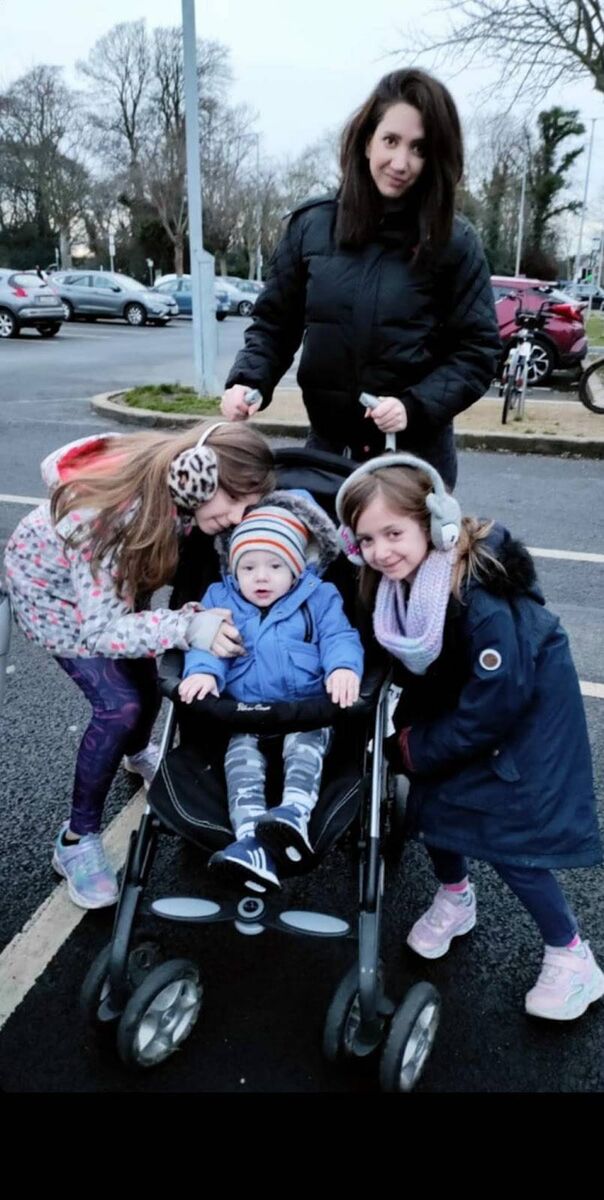
Korina came to Ireland six years ago from Croatia, and has three young children. She has found that the support she received from the above organisations has allowed her to advance her education and career options, and she is now seeking to become an advocate to elevate women and to support others like her.
She said: “I decided to move to Ireland for better opportunities. Ireland is much more advanced regarding education and I was hoping my children would have a better future than I did growing up in Croatia. “But being a single mother, no matter how much I worked, I couldn’t pay the bills, rent and childcare. I needed to borrow money to get to work to pay the babysitter. I was a massage therapist in a chiropractic clinic at the time, my background was health and wellness.
“I decided to stop paying for a babysitter and bring my kids with me to work. I was at the front desk and my kids were in another room. I was desperately trying to make a living. I considered moving jobs but even in a different job, I’d have the exact same problem. “I decided around the pandemic, to change my career and further my education but I thought how would I do that between my children and finances?” Korina contacted her local social welfare office, expressing how much she wanted to go back to work.
They referred her to Northside Partnership who was running a program called Careers in Mind in partnership with Dress for Success.
Careers in Mind informed her about a level five business, an administration and digital skills course with An Cosán. She applied and secured a place, fully funded for two years. Later on through Dress for Success, she found a new program that is Equal Ireland’s level six program in business, community, and education.
“I am planning to do a further two years with Equal Ireland and get my BA in business and social enterprise. Thankfully through these organisations, I gained the courage to go back to further my education.”
Director of the National Women’s Council, Orla O’Connor, said: “As a partner in publishing this report, we wanted to highlight that the impact of the pandemic has been undeniably gendered.
"Central to women’s economic equality is the need for investment in the care economy and in supporting women into decent work but our childcare system continues to be one of the most poorly funded systems in Europe and we have one of the highest rates of low paid workers in Europe. If we are to build a more equal post-Covid-19 society and economy, it is vital that we use a gender and equality framework as a lens to guide decisions about how public funding and resources are allocated.”
Deirdre Mortell, CEO of Rethink Ireland, added: “The role Rethink Ireland plays through our Mná na hÉireann, Women of Ireland Fund is now more important than ever before. The Fund is supporting organisations that are doing vital work in promoting women’s employment opportunities. These organisations can play a key role in helping to ensure women are included and not left behind in the post-Covid-19 economic recovery.”
The Mná na hÉireann, Women of Ireland Fund Report can be downloaded from: www.rethinkireland.ie/reports
CONNECT WITH US TODAY



Be the first to know the latest news and updates