Irish Rail records surplus of €2.5m despite 64% drop in passengers
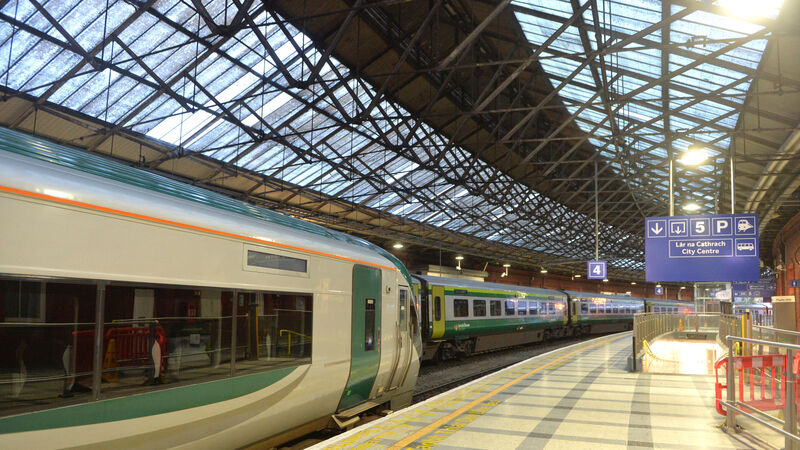
The company received €21m from the Government stimulus package and €14.6m from the wage support schemes. File picture: Dan Linehan
Iarnród Éireann recorded a net surplus of €2.5m last year with the assistance of State supports, despite a 64% reduction in passenger numbers due to the Covid-19 pandemic.
The latest annual accounts of the company show the annual surplus decreased by 40% as passenger numbers fell from a record high of 50.1m in 2019 to 17.9m. The impact of the pandemic saw overall revenue drop from €297.4m in 2019 to €143.7m last year – an annual decrease of 52%.
Passenger revenue accounted for €133m of the decrease, with revenue from intercity services down 55% to €61.4m.
Fare income on Dart services was down 60% to €19.1m and down 59% to €20.3m on commuter services.
Freight revenue remained largely unchanged at €3.8m.
Iarnród Éireann chief executive Jim Meade said the company’s financial sustainability last year would not have been possible without the additional financial supports provided by the National Transport Authority and the Department of Transport.
The company received €21m from the Government stimulus package and €14.6m from the wage support schemes put in place as a result of Covid-19, while the amount of public service obligation funding by the NTA more than doubled to €198.9m.
Mr Meade said the company was able to progress key capital projects during the year including the Dart+ expansion programme and work on the tender process for up to 600 new electric vehicles to meet future demand.
He acknowledged that the anti-social behaviour on train services had increased significantly, with the number of incidents up 18% to just under 1,400.
“While some of this can be attributed to enhanced reporting methods, it is a concerning trend that must be monitored closely,” said Mr Meade.
Iarnród Éireann chairperson Frank Allen said capacity had been envisaged as an issue for the company at the outset of 2020 on the back of a record passenger number the previous year.
However, Mr Allen said Covid-19 meant capacity featured in a different way last year, with passenger numbers limited at one stage to 25% of normal levels due to the need to maintain social distancing on trains.
He claimed capacity challenges were likely to re-emerge as the vaccination programme rolled out and society opened up again.
Looking ahead, the company said it was projected to incur a loss in its commercial business this year with a return to surplus in 2022.
“There will be a significant shortfall in passenger revenue in 2021 which will require additional funding from the NTA similar to that provided in 2020,” it added.
CONNECT WITH US TODAY



Be the first to know the latest news and updates