Tech role for finance officers as talent retention takes spotlight
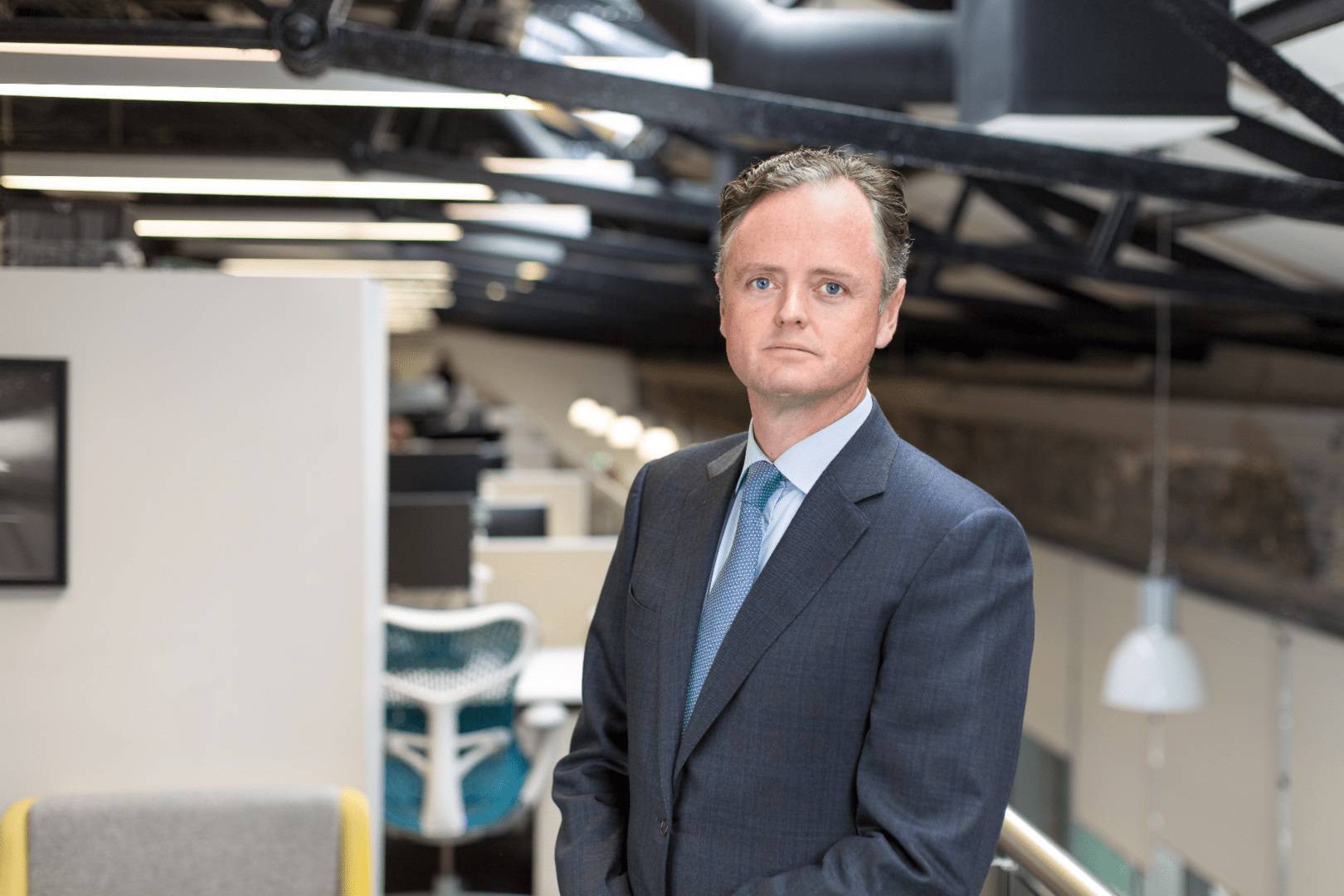
George Deegan, assurance partner, EY Ireland, says the biggest future challenge for the future of finance will be attracting candidates that have a broader range of skills, with relevant finance qualifications plus expertise in technology.
Finance officers see talent as the most significant risk to their organisations' growth strategy and long-term stakeholder value in a post-Covid world.
In a survey of the business leaders attending professional services firm EY's recent virtual CFO Forum, more than half (53%) of respondents said that managing a hybrid “home and office” work model was the biggest challenge they foresee for their organisations in the post-Covid world (over the next 24 months), with a further 20% saying that technological disruption posed by Covid was their number one concern.
Of the 500 people attending the event, 224 responded to the survey. The Irish CFOs also said they identified talent (34%), disruptive technology (17%), regulatory (15%) and climate change (12%) as the biggest risks facing their businesses as the world gradually edges into the 'new normal' working environment.
“I don't think we will ever go back to a world with everyone working in the office five days a week. It will be a more blended model,” said George Deegan, assurance partner, EY Ireland. “Finance will be among the last to return to the workplace. That will happen as soon as possible, perhaps by September or October.
“In the future, people will be making quality of life choices, doing more remote work and reassessing what they have done in the past. With the pandemic and Brexit, we see an abundance of people working remotely in tech, life sciences, pharma and fintech.
“The issue of skills shortages is not a new concept but it has become more prevalent as a result of Covid, so it’s no surprise it has come out on top here. Factors including Brexit were already exacerbating the skills shortages in the finance sector with more companies establishing operations here.
“The biggest future challenge we foresee for the future of finance will be attracting candidates that have a broader range of skills that incorporate both the relevant finance qualifications, together with expertise in technology.”
The disruption caused by Covid is seeing more organisations rethink how they view the role of the CFO and the finance function generally.
CFOs now face a demanding balancing act as they manage traditional mandates such as corporate reporting, with new ones including overseeing digital transformation and growth initiatives across the enterprise, as well as an increased focus on non-financial reporting in the form of ESG (Environmental, Societal and Corporate Governance) data.
Some 40% of CFOs responding to EY's survey said that their organisation's finance function already reports on ESG data, and a further 30% claiming they have plans to do so over the next 12 months. Of course, that implies that 60% of finance functions do not currently report on ESG data.
The survey also found that just 5% of Irish CFOs have already implemented emerging technologies such as AI (Artificial Intelligence) and RPA (Robotic Process Automation) extensively in their financial reporting function, though 70% indicated they are already using it to a limited extent.
EY believes that this means a sea change is on the horizon, and reinforces the point that the role and skillset of CFOs and finance leaders will soon need to pivot to an increased knowledge and aptitude of technology-enabled systems and processes, and their potential impact for all facets of the business.
“Embracing innovation is all about attracting and retaining talent,” said George Deegan. “More and more, CFOs are looking at how they can develop talent from within their existing pool, how to promote from within.
“Many people are also looking at moving, realising that many job options are now more about your availability than your location. People are taking a fresh look at their own experience and seeing that there are opportunities out there, so many people are opting to grasp those opportunities.”
Meanwhile, the CFOs are increasingly being viewed as having a key role to play in the intersection between talent acquisition and retention, corporate growth strategy and the adoption of new technologies.
Not only are technologies such as AI and data analytics helping to unlock greater insights based on ESG data, this is also leading to growing evidence and awareness of the positive impact of ESG on performance.
“In addition, we are seeing a growing propensity for employees to gravitate towards companies with a clear purpose. Companies that are more willing to report on the likes of ESG data, while also demonstrating a continued investment in innovation through technology adoption, represent a very attractive proposition to potential candidates,” said George Deegan.
“Since the onset of the Covid-19 pandemic the changing nature of the role of the CFO has been seismic. There has never been a better time for CFOs to reframe what value really means for their organisations, and similarly set out their stall when it comes to the future of finance and what that should look like. Smart investments in technology and innovation together with a renewed focus on talent attraction and retention have never been more important for organisations as they respond to disruption with agility.”
Read More


CONNECT WITH US TODAY



Be the first to know the latest news and updates