Competition chief turns her guns on new targets
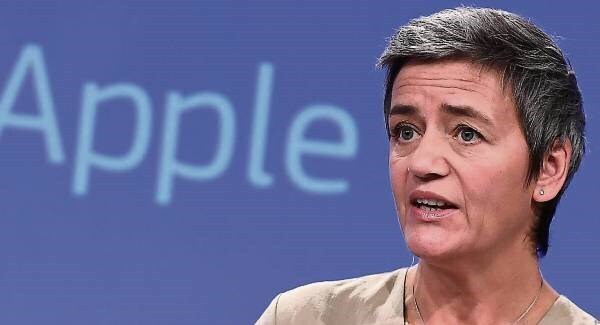
Famous for the Apple and Ireland tax ruling, Margrethe Vestager, the EU competition boss, is tipped to be Commission head, says .
Dubbed the “most powerful woman in Brussels”, Margrethe Vestager has made her mark as the EU’s Competition Commissioner.
A multi-billion euro fine imposed on Google for abuse of dominance, in the summer of 2017, has cemented her position, in addition to well-publicised findings of illegal state aid to behemoths like Apple, Amazon, Fiat, and Starbucks.
This former Danish deputy prime minister has become Emmanuel Macron’s favourite to succeed Jean-Claude Juncker, when the latter steps down as European Commission president next year.
Expect Commissioner Vestager to keep a high profile in the lead-up to the Commission’s presidential election.
This will likely mean continued headline-grabbing competition law-enforcement, as well as other measures that Irish businesses and multinationals need to be aware of.
One such suggested measure is the recently mooted digital tax.
Ms Vestager flagged this towards the end of 2017, when she said the EU would develop new tax rules to govern the digital economy, “if there’s no international answer to this issue”.
She believes European tax systems are too focused on a company’s physical assets and are now playing catch-up with the digital economy.
As a result, “domestic digital businesses pay less than half the effective tax rate of their offline equivalents”, she says.
The recently announced proposals focusing on taxing technology businesses on their turnover, as opposed to their profits.
While the measure is backed by Macron and France, it has been met with a cold reception in Ireland and by some other member states, so it’s unlikely to be enacted any time soon.
Following on the digital theme, Ms Vestager has also emphasised how businesses use our data.
She wants this to be done “responsibly… so we can be sure that [technology businesses] will respect our basic right to privacy”.
Ms Vestager acknowledges that new ways of collecting and working with data have huge potential to improve our lives.
But she believes this will only happen if people have confidence that their data will be safe.
With the roll-out of the General Data Protection Regulation (GDPR), this month, Ms Vestager sees this as the right moment to push forward more competition enforcement in the digital economy to ensure we have diverse online markets in Europe, “where companies compete not just to cut prices, but to protect our privacy better”.

Ms Vestager says this will extend to ensuring that compliance with competition rules is built into digital businesses’ algorithms by design.
More generally, businesses can expect to pay higher fines under Commissioner Vestager, if they’re involved in any form of cartel or anti-competitive arrangement.
That’s the finding of analysis conducted by comparing the first three years of Ms Vestager’s reign with that of her predecessor, Joaquín Almunia.
Ms Vestager’s fines per company were, on average, twice as high as those of her predecessor.
There are some factors to explain the increase, like the multi-billion euro fines levied on participants in the trucks cartel.
But it’s also clear that Ms Vestager is not afraid to hit companies where it hurts in their pockets.
That’s the signal she’s sent out, since taking up her role, in November, 2014. And expect to see that trend continue, until her mandate finishes in late 2019.
Given the decisions taken during her tenure against each of the ‘Gafa’ — Google, Apple, Facebook, and Amazon — the four most powerful American technology companies — as well as consumer institutions like Starbucks and, most recently, Qualcomm, Commissioner Vestager has been unsurprisingly accused of disproportionately targeting US businesses for anti-trust scrutiny.
Indeed, Apple boss, Tim Cook, called the state aid finding against his business as “total political crap”.
But Ms Vestager has always made it clear that she will go where her competition-law mandate pushes her to investigate.
So, we’ve seen action taken against the likes of Fiat, and, towards the end of 2017, the Commission opened an investigation into the tax affairs of one of Europe’s, if not the world’s, largest retailers, Ikea.
The focus of this ongoing investigation is a number of Dutch tax rulings, allegedly in Ikea’s favour.
Founded in Sweden, but now with its headquarters in the Netherlands, Ikea would be a very prominent European scalp for Ms Vestager.
This year started with a bang, as Commissioner Vestager levied close to a €1bn fine on Qualcomm for abuse of dominance.
With, among others, additional Google investigations close to completion, 2018 will continue to be a very busy year for Ms Vestager, particularly if she has her eyes on the bigger prize of the European Commission presidency in 2019.
So, expect to see lots of competition-law enforcement, high fines, and plenty of press coverage over the next year and a half, as we approach the late 2019 election.
CONNECT WITH US TODAY



Be the first to know the latest news and updates











