Mark Carney says time for UK rate rise is closer
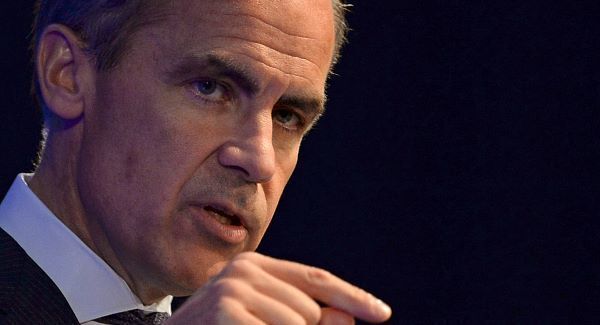
Speaking to British lawmakers for the first time since May’s national election, Carney said households should start to prepare for higher borrowing costs, though the central bank would only raise rates slowly.
“The point at which interest rates may begin to rise is moving closer with the performance of the economy, consistent growth above trend, a firming in domestic costs, counter-balanced somewhat by disinflation imported from abroad,” he told a parliamentary committee.
Carney has been saying that a rate rise is getting closer for more than a year, and yesterday he said there would inevitably be “shocks and adjustments” ahead. Investors reacted to his comments — the first on monetary policy since May — by pushing up the pound and selling government bonds.
British gilt futures fell nearly 30 ticks from their level before Carney’s comments, but then pared most of those losses. Yields on 30-year gilts rose to close to an eight-month peak.
Sterling jumped by more than a cent against the US dollar. Carney said the strengthening in sterling against other currencies was helping to keep inflation low but was not the dominant factor for the outlook for prices.
Earlier yesterday, official data showed Britain’s inflation rate fell back to zero in June.
The Band of England has held rates at a record low of 0.5% for more than six years. Investors mostly expect a first rate hike in mid-2016, although economists have said it is likely to happen earlier in the year.
Carney also repeated his view that British interest rates would not rise to their levels before the financial crisis. “I do think there are a variety of factors that mean that the new normal, certainly over the policy horizon over the next three years, is substantially lower than it was previously,” he said.
“I see no scenario in which they would move towards historic levels.”
Another rate-setter at the Bank of England, David Miles, said the first rise in borrowing costs “clearly is coming” and it was “not a bad thing”.
Miles has been one of the bank’s nine monetary policy makers who has voted most consistently to support the economy with low interest rates and additional stimulus.
Carney said a new higher minimum wage announced by chancellor George Osborne last week would probably give a small boost to Britain’s weak productivity record as firms shifted more towards investment than hiring.
He said he noted the view of Britain’s official budget forecasters that the inflationary impact of the new minimum wage would be “very modest”.

CONNECT WITH US TODAY



Be the first to know the latest news and updates