Ambitious start-ups a vital part of economy
In a free market they identify opportunities for growth and pursue them aggressively.
The attrition rate of these companies can be very high, but they are essential to a free-market economy.
There is a high level of support in Ireland for underdogs. In the corporate world, there are few experiences more satisfying than being part of, or observing, the blossoming of a company that began life as a seeming no-hoper.
In Ireland, we are surrounded by challenger companies and many of them are on the stock exchange.
There, they find a group of institutional investors who have a long record of backing challengers with risk capital, in the hope of generating outsized returns over an extended period.
Given the structure of the economy, and the relatively small stock exchange, the challenger companies that thrive pursue growth markets abroad.
Some of the businesses that today would be considered hugely successful, and leaders in their respective markets, started out dramatically different, as what I define as challengers, and this phenomenon is relatively recent.
Take the insulation group, Kingspan, as an example. In 1965, that was a small, steel fabrication, family-owned company, based in Cavan. Last year, it produced sales of €1.9bn and profits of €149m.
To achieve that, it had to move into international markets, acquire manufacturing facilities — particularly across Europe and north America — and develop a marketing presence around the world. All of that was done by a company that had many doors shut in its face while it was expanding.
Having the temerity to challenge the large, incumbent companies was considered by some a losing battle for a whippersnapper with attitude.
Kingspan continued to develop, through a variety of economic and construction cycles that wiped out many other businesses. Today, it is a global leader in insulation markets.
In 1985, Ryanair’s fleet was composed of a single Embraer Bandeirante that had two propellers and 15 seats.
It flew 5,000 passengers that year. Now, it carries 100m passengers a year on a fleet of 300 aircraft and operates in all European countries. That journey was pockmarked by a wide variety of attempts by incumbent airlines around Europe to destroy the upstart.
It also had to survive a series of economic crises in its home market, and external shocks, like 9/11.
There are many others. The food company, Kerry Group, the IT company, Datalex, and the shipping company, ICG, all had to tackle powerful, established businesses to succeed.
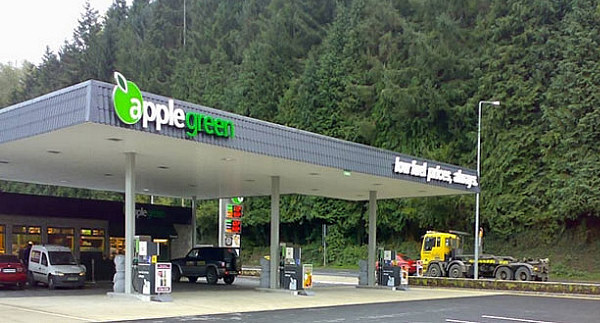
That pattern continues today, as companies — like the forecourt retailer, Applegreen, which joined the stock exchange last week — set out to plot an expansion plan across the UK, and potentially further afield.
A key message from all of these experiences is that businesses should never shy away from ambition.
Having lofty objectives is a vital ingredient in an entrepreneurial society and we should encourage small and fledging businesses to stick by their dreams, even when the going gets tough.
Many challenger companies fail, but that is part and parcel of an environment that supports risk-taking and the rewards that stem from success. Those companies that prevail generate wealth and employment, which benefits the broader economy while offering consumers choice.
This forces large incumbents to improve their performances, if they want to survive. This is why we should all be cheerleaders for start-ups and for growth companies that aim high.
CONNECT WITH US TODAY



Be the first to know the latest news and updates











