Bank guarantee politics ‘astonishing’
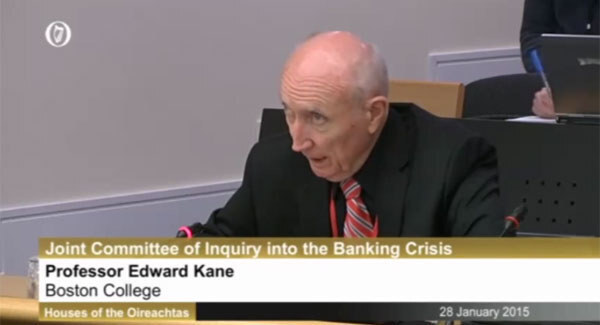
The professor of finance at Boston College, Ed Kane, said that a blanket guarantee — such as that extended here,with an estimated cost to the taxpayer of €40bn to date — is the easiest option politically and administratively for authorities to take. But he said is is elitist and punishes ordinary citizens.
Prof Kane said the Government should have secured a better deal for the Irish people but, as a small country, our representatives didn’t have the political clout to do so.
“Instead of other states coming to the rescue, Ireland seemed to be forced to help creditors in those other lands, like Germany. I don’t think that would’ve been the way that you would design for a crisis in a small country,” Prof Kane said.
“I think Ireland showed a lot of gumption in healing this situation for itself.
“I think they [the Irish authorities] should’ve worked a harder deal with the rest of Europe but they were not in a position to dictate terms, I guess.”
Ominously, he said that while the burden imposed on taxpayers had been enormous at a time of low interest rates, the future burden once rates rise will “shock people”.
Mr Kane was appearing before the Oireachtas Banking Inquiry where he was critical of the regulatory landscape in banking globally but admitted that he is “only a little bit familiar” with the Irish banking crisis.
Specifically, Mr Kane criticised the attitude of bankers in large banks; the interaction of business, political, and banking representatives; and the ability of regulators to adequately curtail reckless behaviour.
In the Irish context, he said Anglo Irish Bank was “clearly deserving of being nationalised” earlier and went on to say that the bank was enjoying implicit guarantees and growing at an unusually rapid rate, which should have warranted further investigation.
He added that he didn’t believe lessons had been learned from the financial crash and that the strength of political influences in the US and Europe is so strong that it will take another “crisis or two” for regulation to improve to the requisite level.
The concept of guaranteeing banks deemed “too large to fail” is inherently flawed and will continue to undermine the stability of the financial system given the expectation that, even if bankers take risks that make the ruination of their institution a possibility, they will be bailed out by the government, Prof Kane argued.


CONNECT WITH US TODAY



Be the first to know the latest news and updates