Bonds easing pressure on Irish debt
As Ireland’s chances of a refund on the cost of saving its banks fade, bond investors are helping the Government’s latest plan to reduce the debt burden.

Bonds easing pressure on Irish debt

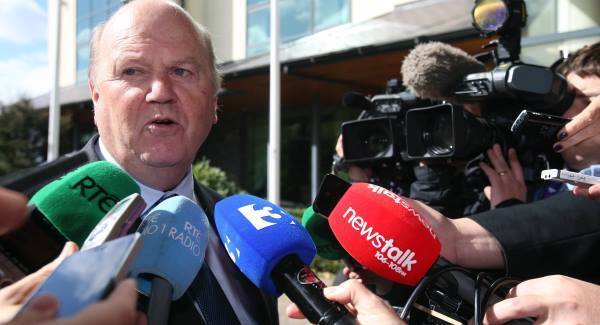
Next month, Finance Minister Michael Noonan will start fleshing out a proposal to repay about €15bn of bailout loans from the IMF early, partly using cheaper money raised in the bond market. Last week, the yield on Ireland’s benchmark 10-year government bonds fell below 2% for the first time.

Ireland is due to repay the last IMF bailout loan in 2023 and refinancing may save as much as €375m a year, Mr Noonan said last month. Any financial benefit may also help mitigate concern over the slowing momentum behind efforts to claw back some of the €64bn bank rescue bill from the eurozone’s rescue fund.

“The Government’s campaign for retroactive recapitalisation of its banks was never realistic in our view,” said Philip O’Sullivan, an economist at Investec. “In order to avoid a political backlash for failing to secure a deal, it seems to be turning its attention to negotiating an acceptable and achievable alternative.”

With Fitch Ratings last week raising Ireland’s sovereign credit rating to A- from BBB+, the yield on benchmark 10-year bonds dropped to 1.93%, from a peak of 14.2% in July 2011. The spread, or difference, with equivalent German bonds has narrowed to 93 basis points.

Last month, Mr Noonan told reporters he’d like to refinance the first €5bn of IMF loans before Christmas, a further €5bn in the first half of 2015 and a final €5bn in 2016.

“If we refinance the IMF loans and make savings, then we increase our capacity to repay the debt to everybody else,” Mr Noonan said at the July 28 release of the National Treasury Management Agency’s mid-year review.

The debt agency could sell more bonds to repay the loans. Last month it sold €500m of 10-year bonds at a yield of 2.32%. The Government could also use the State’s existing cash pile, which stood at €20.6bn at the end of last month, to repay the IMF.

The cash is “probably” earning 0.5% on deposit while the Government pays a weighted average 3%-3.5% on its borrowings, said Conall Mac Coille at Davy stockbrokers. “The NTMA is under huge pressure to lower its cash balances,” he said.

Last week the IMF’s mission chief to Ireland, Craig Beaumont, said the country could repay its loans early without penalty.

- Bloomberg

x

More in this section

The Business Hub

Newsletter

News and analysis on business, money and jobs from Munster and beyond by our expert team of business writers.

Cookie Policy Privacy Policy Brand Safety FAQ Help Contact Us Terms and Conditions

© Examiner Echo Group Limited