Oliver Mangan: Marked deceleration in rate of growth in the Irish economy
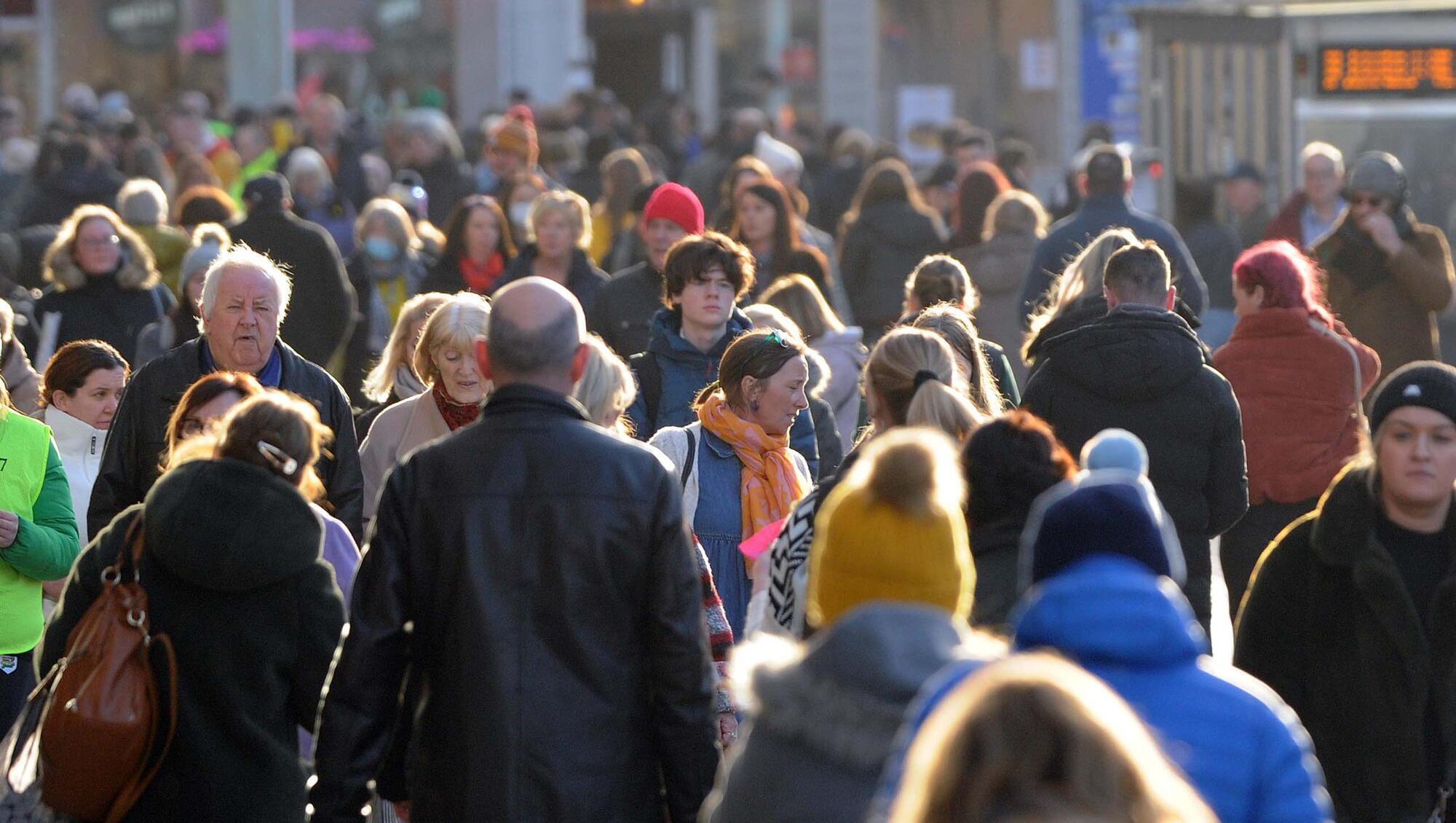
Consumer spending was the main contributor to growth, increasing by 3.75% year-on-year. Picture: Denis Minihane
The National Accounts data from the CSO for the first half of 2023 show the rate of growth in the Irish economy has decelerated markedly from the breakneck speed seen in 2021 and 2022.
Just to recall, Irish GDP grew by 15.1% in 2021 and 9.4% in 2022, while modified Gross National Income, which excludes some distortionary globalisation effects of multi-national companies, rose by 13.9% and 6.7%.
Meanwhile, the domestic economy as measured by Modified Final Domestic Demand, expanded by 7.3% in 2021 and 9.5% last year. So no matter what measure you choose, the economy boomed in 2021-22.
The first quarter of this year saw a sharp decline in the output of multinationals operating in the manufacturing sector. As a result, GDP fell by 2.6% in the quarter.
This marked fall in manufacturing output followed a period of exponential growth in 2021-2022. There was a partial recovery in the second quarter, with manufacturing output rising by 3.8% following the decline of 13.4% seen in the first quarter.
Meanwhile, the services sector of the economy performed very strongly in the second quarter. However, all this translated into a rise of just 0.5% in GDP for the period, which seems rather low.
Overall, it is probably best to look at the first half of the year in total, given the volatility of the data. GDP growth slowed very sharply to just 0.2% year-on-year in the period from the very rapid rates seen in 2021-22.
Growth in the domestic economy also slowed rapidly, with Modified Final Domestic Demand rising by 1.9%. Consumer spending was the main contributor to growth, increasing by 3.75% year-on-year.
The real damage, though, is being done by export growth, which slumped to 1.4% from 14-15% in 2021-22, reflecting the sharp fall in manufacturing output and thus goods exports. Services exports actually performed well in the opening half of 2023.
Given the volatility in output from the multinational sector, as well as big revisions to the data, there are very wide divergences of view in relation to the outturn for GDP growth this year.
The ESRI is projecting a rise of just 0.1%, but the Central Bank is forecasting a 5.3% expansion. The odds are now favouring a result closer to the ESRI forecast.
Other data, though, point to the economy continuing to perform well this year. The labour force data for the first half of 2023 show the unemployment rate has fallen to a 4.1-4.2% range, down from 4.5% in 2022.
Employment growth has remained strong, averaging 3.8% year-on-year, with the number at work at mid-year up by over 2% from its end 2022 level.
Not surprisingly then, tax receipts continue to rise strongly, increasing by 10% to end July.
Meanwhile, the Irish PMIs for manufacturing and services remain comfortably above those of other advanced economies.
The IDA has also reported inflows of foreign direct investment remained elevated in the first half of 2023.
In terms of the financial fundamentals, Ireland continues to enjoy a very large balance of payments surplus, the general Government budget also remains in a strong surplus, while private-sector balance sheets are characterised by low levels of debt and high savings.
Thus, although growth has come off the boil this year, the economy remains in very good shape.
- Oliver Mangan is chief economist with AIB