Readers Blog: Emissions of three culprit pollutants have increased here
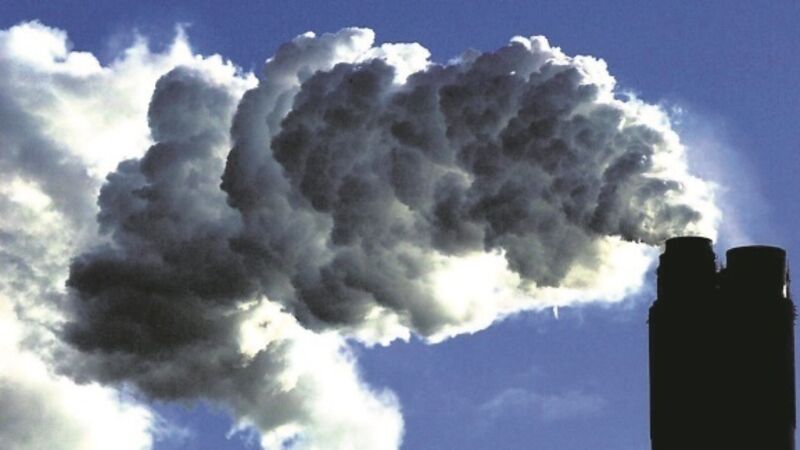
The Environmental Protection Agency’s report on the 2016 emission of the five main air-pollutants shows that levels of three increased: ammonia, nitrogen oxides, and non-methane volatile organic compounds.
Emissions of ammonia have been increasing since 2011 and in 2016, for the first time, they were above the specified, EU emission limit.
Emissions of two of the other air-pollutants, nitrogen oxides and non-methane volatile organic compounds, while in compliance with EU limits for now, are increasing.
Emissions of sulphur dioxide are decreasing.
These were well below the required EU emission limits, substantially due to the use of lower sulphur content fuels in electricity-generation and transport.
Particulate matter emissions declined in 2016. Future emissions will depend largely on the quantity and quality of solid fuel used in the residential and commercial sectors.
The EPA has published figures for emissions of five key air-pollutants. These pollutants impact air quality in Ireland and further afield, causing respiratory problems, pollution of soil and surface water, and damage to vegetation.
Our figures show that emissions of three of the five main pollutants are going in the wrong direction. Higher emissions of these pollutants will damage air quality and health and make future compliance with EU limits more challenging. This latest information from the EPA shows that Ireland exceeded its emission limits for ammonia for the first time in 2016 and emissions of this gas are increasing. The agriculture sector accounts for 99% of ammonia emissions in Ireland, arising from the application of fertilisers — 40m tonnes of animal manures are used annually, together with 300,000 tonnes of nitrogen in fertilisers.
Ammonia limits have been breached, due to the rapid expansion of dairy and beef production in Ireland. This underlines the challenge in designing appropriate policies that protect our environment in a growing economy.
The 2016 figures show that Ireland remains in compliance with its nitrogen oxide and non-methane volatile organic carbon emission limits, though these emissions are also increasing. Transport is the principal source of nitrogen oxide emissions, contributing 41% of the total in 2016.
Agriculture is the second-biggest source, contributing 29.6% of the 2016 total, mainly due to synthetic fertiliser application and emissions from urine and dung deposited by grazing animals.
Ireland’s level of sulphur dioxide continues to be well below the EU emission limits. The reduction in the emission of this pollutant is positive for the environment, public health, and the economy. The main sources of sulphur dioxide emissions are the power-generation, residential, and commercial sectors. Effective licencing and enforcement by the EPA has contributed to reductions in these pollutants, as has the use of cleaner fuels in power-generation and transport.
On the positive side, Ireland has significantly cut emissions of sulphur dioxide, greatly reducing the environmental damage caused by this pollutant, via behaviour change and response to regulatory interventions.
While overall emissions of particulate matter also declined in 2016, localised problems can arise, because of residential solid-fuel use. For further detail on these figures, see the EPA web-published report, ‘Ireland’s Air Pollutant Emissions, 2016’.