Louise O'Neill: This must be an extraordinarily difficult time for anyone dealing with an eating disorder
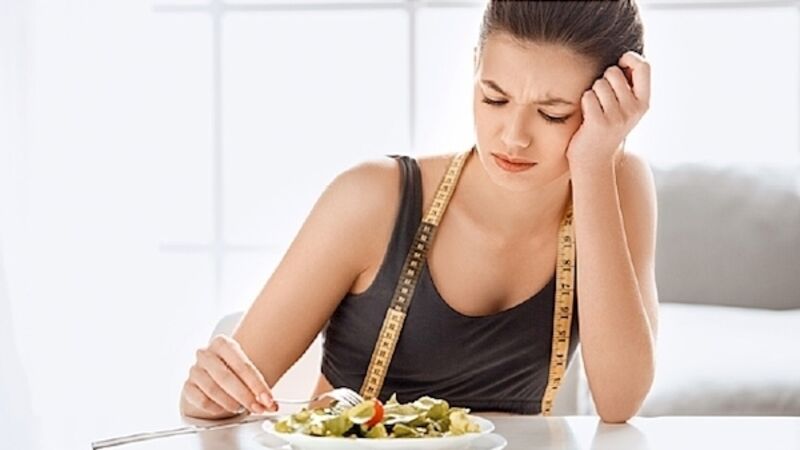
I’ve seen a lot of talk online about food recently, people bemoaning their tendency to overeat, whether out of boredom or to silence that ever-present sense of uneasiness we have come to associate with the year 2020, writes .
Cortisol, a stress hormone, increases your appetite, so while comfort-eating is not a ‘perfect’ solution, it’s an understandable response to the chaos happening in the world.
Not that you would know that by the manner in which people are discussing their diets on social media, the brutal language they’re using to describe their bodies.
It’s fascinating to me that we are currently faced with the possible deaths of thousands of people, our health service being put under an untenable strain, the loss of countless jobs, and yet still, our greatest fear is the prospect of getting fat.
I have empathy to a certain degree — our weight, at least, seems like the one thing we have control over right now — but it also speaks to our cultural obsession with thinness (or ‘strength’ and ‘clean-eating’ as a fixation on body image and orthorexia are sometimes disguised as in #FitFam) that the worst thing we can imagine happening in a global pandemic is an extra few kilo showing up on the scales.
There is a difference between this and an urge to take care of yourself.
I know that after my online gym class or my 2km walk, those much-lauded endorphins kick in and I do feel better.
I’m aware that if I consume too much caffeine or sugar, my anxiety spikes exponentially as a result.
But I’m making those decisions consciously as a way of protecting my mental health, first and foremost.
I’m uncomfortable with the current discourse and how latent with fat-shaming it is.
I always ask the question ‘who is listening to you’? Is it young children, internalising the message that there is ‘good’ food and ‘bad’ foods, picking up unhealthy eating habits that could take them a lifetime to undo?
Is it a vulnerable teenager, already struggling with poor body image?
Is it a fat friend, weary of being told they are unacceptable simply because they wear a larger dress size?
Or is it someone who is in recovery from an eating disorder, who will be triggered by your words?
Their therapist promises that a number on a scale has little to do with their ability to be loved and happy, but how can that be true when everyone in their life is constantly fixated on their own weight?
I have a monthly agony aunt column (submit your questions to asklouise@examiner.ie!) and someone wrote this week to ask me about this very subject.
“It is a challenging time for us who use food to cope and who deal with fear by not eating,” she said, “and yet we need to keep our bodies healthy”.
I can only imagine how extraordinarily difficult this time must be for anyone dealing with an active eating disorder.
We are all preoccupied by food right now — the fear that the shops would run out, the need to buy in bulk because we’re supposed to limit our time in the grocery store.
The increased quantities of food in the house; the fridge and cupboards full, family members baking and cooking more to pass the time.
This can feel terrifying to someone who has issues with their eating, especially when they don’t have the same access to their support systems, like therapists and nutritionists, as they would ordinarily do.
And of course, as the writer above wrote, eating disorders are a coping mechanism.
A highly dysfunctional one as ultimately they’re a form of self-harm, but it’s possible the disordered eating has been effective in numbing out unpleasant emotions for years.
Unpleasant emotions like fear, anxiety, worry, anger, frustration.
Sound familiar to anyone stuck at home right now?
For the last few weeks, I have been unable to stop thinking about those grappling with mental health issues and how exacerbated those issues must be at this time.
I worry about those who are depressed, anxious; those who are bulimic or anorexic.
I’m worried about addicts, who must feel trapped and cornered, ready to tear their skin off their bones with the ferocity of their cravings.
They have no space to engage in the behaviours they believe keep them sane; the drinking, the drug-taking, the binge-eating.
Anyone who thinks this would be the ‘perfect time’ to go cold turkey has absolutely no understanding of addiction, how complex it is, how impossibly difficult it can be to recover without professional help.
(And as Dr Anthony O’ Connor said on Twitter, “…please tell me how the health service is expected to cope with tens of thousands of people in the DTs’.)
I’m also thinking of those living with them.
Parents, partners, children; their hearts breaking in their chests.
If any of this is ringing true for you, here are some things that might help.
There are great guided meditations on the Calm app which are easy to follow.
Yoga with Adriene’s YouTube channel is an utter delight.
Many therapists are offering their services via phone or Skype.
AA meetings (and its sister branches) are being held online via Zoom.
There is support there, just reach out your hand and ask for help.
I see you, my friend.
You are not alone.
Louise Says
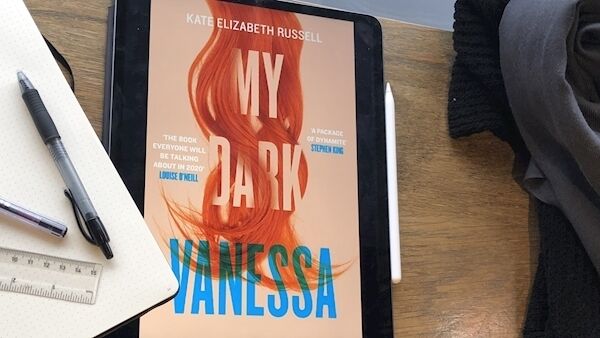
I read a proof of this book a year ago and I haven’t been able to stop thinking about it since.
Challenging, provocative, and uncompromising, this is Lolita subverted for a post #MeToo age. It’s superb.
This Netflix mini-series is about a young woman who runs away from her arranged marriage and Orthodox Jewish community in Brooklyn.
It makes for fascinating viewing.
CONNECT WITH US TODAY



Be the first to know the latest news and updates