Funding care model linked to ‘poor outcomes’ for young children not on
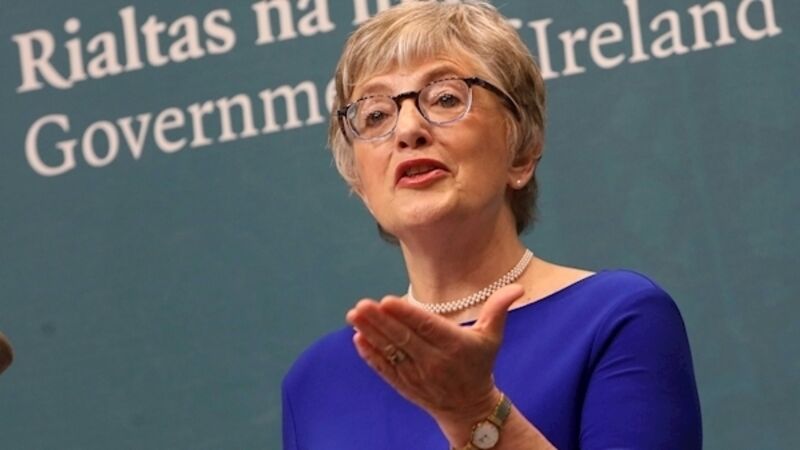
Children’s Minister Katherine Zappone must try to break the Anglo-American stranglehold on our work/life balance, writes
EARLY Childhood Ireland will today meet TDs and senators in Buswells Hotel in Dublin to advocate for a dedicated agency to deal with childcare. It is so right.
It is incredible that the childcare system is currently under the remit of three different government departments: Education; Children and Youth Affairs; and Rural and Community Development. It is ridiculous that three different agencies — Early Years Education Inspections, the Tusla Early Years Inspectorate, and Pobal — inspect different aspects of the childcare service. It’s ineffective, expensive, and confusing, and that doesn’t help any in the struggle that childcare providers face.
Government funding is inadequate, at 0.5% of GDP rather than 0.8%, for instance, which is the European average.
Pay levels in the sector are dire.
Michael Clifford wrote a strong piece in these pages last week about the levels of ‘poverty’ revealed among childcare workers by Siptu: 94% make it hard to make ends meet, 84% are unable to cope with unexpected expenses, and over half are actively looking for another job.
If you find it hard to identify with those figures, imagine it’s your daughter (they’re nearly all women).
If you still can’t identify, then consider instead the impact on babies and young children if the people who care for them are poor.
The most heinous impact is the turnover in the trade, running at up to 25% per annum, which means that the single most important aspect of the service, the relationship between children and carers, is not protected.
A baby or toddler might grieve for months for a carer who suddenly departs, they know not where or why. That grief might not be articulated but might manifest itself even decades later in an adult who is too scared of vulnerability to commit to a relationship.
That’s what we’re talking about here — stakes that high. The way that we gamble with the feelings of little children is absolutely shocking. The first principle of this new agency should be children’s welfare. That would change everything.
The proposal for the agency is grounded in the "whole-of-Government strategy for babies, young children, and their families”, First Five.
It says that what young children value most is time with their families. It cautions that more than 32 hours of centre-based care “has been linked to poor outcomes in language and cognitive development for children under three”. The Government shouldn’t consider funding a care model which has been linked to “poor outcomes” for young children by its own research, should it? Of course not. That would bring us back to the bad old days when we didn’t prioritise children’s needs.
Wrong. Children’s Minister Katherine Zappone is lobbying for the budget to bring the total number of hours of centre-based care funded by the Government’s childcare scheme for babies and toddlers from 24 weeks until they enter preschool from 40 hours weekly to 45 hours weekly, if the household income is less than €100,000.
The children’s minister is proposing to fund full-time centre-based care for babies and toddlers for fully 13 hours more per week than its own research says is wise.
I find this incredible.
It is explicable, however, in the context of the place of children within our economic model.
Zappone is simply aiming to provide a service for parents who have a packed working week and a daily commute.
I think she cares about children and their families and is responding as honestly as she can to an identified need. What she’s not prepared to do, however, is try to break the Anglo-American stranglehold on our work/life balance.
It doesn’t have to be like this.
Denmark is committed to its creches but parents routinely leave their workplaces at 4pm so they can pick up their kids and cook dinner.
In Sweden, the UK, and the Netherlands, parents have a legal right to part-time work.
In the Netherlands, where the right to part-time work has been enshrined in law since 2000, some 74% of women work part-time and only 7% of these would rather work full time.
Yes, we are talking women here and there is a heated debate as to whether the part-time work culture is a help to those women or not.
I think we should let educated, emancipated women work that one out for themselves. The Netherlands ranks highly for gender equality. Puzzling over the figures, The Economist came to the view some years ago that Dutch women simply value their free time more than Anglo-Americans.
In Ireland we are going through the painful process of disengaging from the assumed traditional model of family life and going somewhere else. I don’t think we know where we are going yet but I am strongly advocating a European regime of parental leave for at least two and ideally three years, as is provided in Austria, France, Germany, Spain, Finland, and Poland, for example. I would mandate a right to part-time work for people with caring responsibilities to children, the elderly, or disabled people. I would underpin this with State-run and registered creches and childminders, staffed for fewer hours by properly paid staff, with a key worker for each young child.
The intervention of Hyde & Seek creche co-owner Anne Davy caught on camera by RTÉ’s Primetime Investigates earlier in the year — “it’s a business, it’s not a babysitting, it’s not a one-to-one” — neatly sums up the danger of providing childcare through private providers.
It is terrifying to think that the State might actually end up keeping a baby a further five hours a week in such a facility, on top of the 40 they already fund.
We must hope that what went on in the episodes caught on camera in Hyde and Seek, the latest in a string of exposes in different creches, is unusual. What’s not unusual is the Government’s funding of children to stay in creche 13 hours more than is good for them every week.

ZAPPONE’S department says she is keenly aware of the importance of parents spending time with their children but that the extra childcare hours were needed because many parents were finding it difficult to “juggle work start and end times in order to drop off and collect children”.
Surely we are not going to organise our new childcare service around the needs created by inflexible employers reached through traffic gridlock from long distances ordained by the lack of affordable housing?
Surely little babies barely 24 weeks out of their mothers’ wombs and tiny tots of one and two years shouldn’t pay the price for this mess? How can we be sure that 30 and 40 years from now we will not face calls for redress from some of these babies and children?
I repeat, a proper Government agency to organise and inspect childcare for babies and children should have as its guiding principle what’s best for kids.
Is that the real reason we don’t have one?