Daniel McConnell: Protest by renegade farmers was a disgrace
Legitimate protest is one thing, but this week, a small group of renegade farmers crossed a line.

Daniel McConnell: Protest by renegade farmers was a disgrace

Legitimate protest is one thing, but this week, a small group of renegade farmers crossed a line.

At lunchtime Thursday, as I was crossing the Liffey river on the train, a most startling sight greeted me.


As we approached Pearse Street station, I gazed up Westland Row to see the seemingly never-ending line of tractors as they were beginning to leave Dublin City Centre.

By my estimate, about 100 tractors in single file were proceeding toward Dublin Port, escorted by members of An Garda Síochána. All normal traffic was stopped to allow this procession take place.

Protesting at the low prices being paid by meat-producing companies for beef, the rogue group of farmers feel unloved. Not backed by the main farming lobby groups, the so-called Individual Farmers of Ireland, felt they had to inflict considerable disruption on Dubliners yet again.

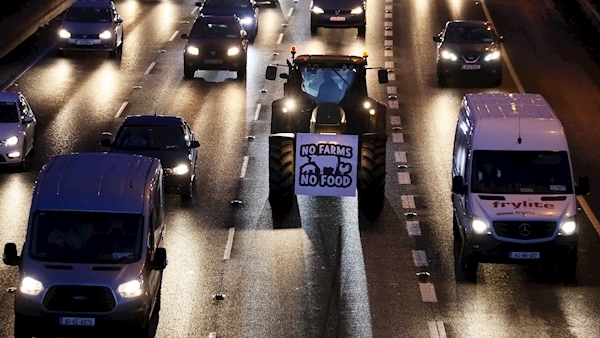
So once at Dublin Port, rather than clear off having held the city centre to ransom for more than 24 hours, they decided to stage a further protest there. Only after serious disruption was caused there, did the farmers make their way to the M50 orbital road where they proceeded with a go-slow protest at rush hour.

One only needs to look at the video clips posted on Twitter by RTÉ reporter, Laura Hogan, to see the level of disruption caused.

All the while facilitated by An Garda Síochána, despite the considerable inconvenience caused to thousands of commuters.

It was a disgrace, and was totally unwarranted and completely futile.

And it must be remembered that this was the second time this group of so-called independent farmers brought their protest to the streets of Dublin. When they came to the capital in November, they dug in for more than 24 hours, despite the total chaos they caused to thousands of ordinary Dubliners.

Having initially gathered on Merrion Square, the farmers repeatedly reneged on agreements with Gardai as to how their protest would take place.

A deal to allow a small number of tractors move from Merrion Square to St Stephen's Green was broken when a steady procession of tractors moved en masse, causing chaos to commuters. When they were blocked by gardaĂ­ at the stop of Kildare Street, the chaos of the group was laid bare.

As I stood there for several hours, senior Gardai made repeated offers to so-called leaders of the protestors as to how to end the protest while allowing them their right to make their point.

An offer was made to allow one tractor down Kildare Street. This was accepted by farmers but then rejected. Another offer from gardaĂ­ would have allowed all tractors down Kildare Street but they would not be allowed stop. Again, this was agreed but again it was rejected.

All of a sudden there were demands for Agriculture Minister Michael Creed to come out and meet the protestors and for a letter to be accepted. As day turned to night and to dawn, Creed eventually made his way to the barrier and spoke to assembled farmers in a bid to end the impasse.

Despite bowing to their bidding and meeting the farmers, some protestors were angry that he did not meet the 'right' farmers.

Later, five delegates handed a letter to Mr Creed in the lobby of the Department of Agriculture on Kildare Street outlining a number of issues. Other protesters shouted that the farmers the minister was talking to did not represent them and this letter was not the real letter of protest.

Eventually, amid promises to convene a beef taskforce, the protest was ended and the farmers headed home.

While the initial protest in November could be justified as they had a purpose in seeking a meeting with Creed, this week's protest had no such legitimacy. They were not there to protest at the Dáil as no politician was there — they are all out canvassing for re-election. They were not protesting to the Minister of Agriculture.

With no clear aim or objective, the misguided protest only served to place an intolerable burden on the ordinary people going about their day.

Speaking about their tactics, organisers from the Individual Farmers of Ireland group said they did not want to block the motorway completely but they wanted to leave their mark on Dublin. They certainly did that.

GardaĂ­ defended their handling of the situation by saying their main objective in dealing with the protest was to ensure the safety of the public:

"An Garda Síochána has a role in ensuring that peaceful protests can take place, and also in preventing injury and protecting life. We respect people's right to peaceful protest and will facilitate same.

GardaĂ­ attend protests to facilitate free movement of traffic and to prevent any breaches of the peace. GardaĂ­ are tasked with preserving law and order, without fear or favour, and with ensuring that people can go about their lawful business, including having access to their workplace, and that peaceful protest can also take place.

Be that as it may, just how is it acceptable that 100 people with their tractors are allowed bring a capital city to a halt, not once but twice in less than three months?

If this was a group of students, or nurses, would they have been given such latitude?

Far from being neglected, farmers are a largely protected species in this country, to be handled with care by the political system and State authorities.

For example, according to published figures, the highest-paid recipient of direct payments under the Common Agriculture Policy in 2018 got a whopping €323,000, the second-highest got €229,633 while the third got €221,510.

I accept this is not the same for all clearly, from the discussions I had with farmers on the barricades, some are really hurting.

Family farm income fell 31% for dairy farmers, compared to 2017; 21% for cattle rearers; 11% for other cattle farmers; and 21% for sheep farmers. For tillage farmers, family farm income in the survey increased 18% from 2017 to 2018, a recent Teagasc survey showed.

Whatever the merits or demerits of CAP, it is a very extensive system of support from taxpayers which few, if any, other industries receive. In Ireland, direct payments to farmers amounted to almost €1.8 billion last year.

One could argue that with farming accounting for 8% of employment and 10% of total exports, such supports are merited and they are.

So strong is the farming lobby, that despite clear evidence that the national herd is way too big and should be reduced in size, the political system refuses to grasp that particular nettle.

Time and time again, a key tenet of the farmers' argument is that rural Ireland is dying.

It is not. As the economist Dan O'Brien pointed out last year, rural population has been on the up for almost half a century. He wrote: “What we know from the census is that the number of people living in rural areas, defined as a place outside a conurbation of at least 1,500 people, has increased by more than a quarter of a million over the past 20 years."

“That is worth repeating: 1.75 million people live in rural areas, up from 1.5 million in just 20 years. In 1971, rural Ireland’s nadir, the population living in the countryside, villages and small towns was 1.4 million,” he said.

These shameful protests by a small group of farmers have more to do with inter-factional rivalry within the farming lobby seeking to outdo each other than it did about farming welfare.

It is not tolerable that a small, renegade group of people be allowed cause such disruption multiple times without consequence.

No one will deny that there are genuine issues affecting the price of beef or the agricultural sector generally, but the protest this week was a bridge too far.

More in this section

Revoiced

Newsletter

Sign up to the best reads of the week from irishexaminer.com selected just for you.

Cookie Policy Privacy Policy Brand Safety FAQ Help Contact Us Terms and Conditions

© Examiner Echo Group Limited