Cork’s infrastructure must catch up with economic growth
Talent and housing shortages and transport congestion must be resolved if the region is to continue to attract investment, says James Winters.

Cork’s infrastructure must catch up with economic growth

Talent and housing shortages and transport congestion must be resolved if the region is to continue to attract investment, says James Winters.

THE economy is gathering momentum. Disposable incomes are rising, while economic growth is evident in the regions.


And yet, while we should applaud the turnaround in our economic fortunes, talent and housing shortages and transport congestion cannot be ignored.

People are experiencing issues in relation to housing stock, transport, schooling, and water services.

In launching our new campaign, Better Lives, Better Business, in Cork, this week, Ibec is addressing policy change across four key pillars: Housing, infrastructure, planning, and sustainability.

Our objectives are to increase the supply of affordable housing, deliver the right infrastructure, overhaul the regime for planning consents and appeals, and embed sustainability in development activity.

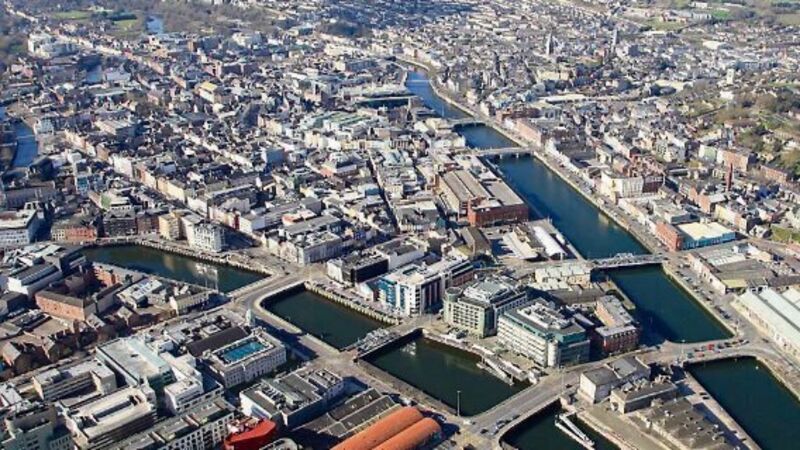
Cork is a prime example of the need for planning and investment across these four pillars. Under the Government’s Project 2040, Cork is to become the fastest-growing city in the State over the next 20 years, with some predicting the population could treble.

Without adequate planning and investment, Cork could struggle to maximise the economic opportunity that the Irish business model offers.

The city faces numerous challenges. Traffic congestion, for example, caused by insufficient road capacity, is undermining Cork’s liveability and increasing journey times, thus imposing higher business costs and resulting in reduced productivity. With a rising population, businesses may struggle to attract and retain key staff and thus compete for investment.

Following the recent saga over Apple’s attempts to proceed with a new data centre in Athenry, there is little doubt that the national planning system is flawed. This is a threat to Cork’s future economic development and damaging to the region’s international reputation as a location to invest for the long-term. Across the country, the housing crisis and accommodation shortages are becoming economic issues, as well as social problems. Housing supply makes business expansion increasingly difficult in Cork.

Ireland has some of the lowest-density cities in the world, with Cork city just a third as dense as similar-sized cities, such as Edinburgh.

The regeneration of Cork city centre, much-promised and commented-upon, is necessary, if the region is to unlock its economic potential and enable prosperity to spread from the city to its hinterlands. Finally, Cork and the region cannot be successful without an investment in its most crucial asset — people.

As the economy moves towards full employment, skills shortages are emerging in critical knowledge-intensive businesses. These are a threat to the region’s future prosperity. Solutions are needed to provide employees and entrepreneurs with the requisite skills and calibre.

Cork will need to continue to provide an attractive environment, with access to services a vital factor in providing a high quality of life, which, in turn, can attract investment, talent, and visitors to the region. Ibec is preparing policy initiatives that can best support Cork and the region, in preparing for population growth and capitalising on economic potential. It is a comprehensive and co-ordinated campaign, which highlights a suite of policy measures across the four pillars cited above.

These initiatives include:

-- Upgrade strategic road infrastructure, including the N8/N25 Dunkettle

Interchange, M20 Cork to Limerick, N22 Macroom to Ballyvourney, Cork Northern Ring Road, and N28 Cork to Ringaskiddy;

-- Invest in public transport across metropolitan Cork to meet population increase;

-- Overhaul the regime for planning consents and appeals to ensure fewer projects get delayed;

-- Facilitate an increase in the supply of good-quality social and affordable housing;

-- Target infrastructure spend to unlock sites capable of delivering large-scale housing developments in Cork;

-- Provide sufficient funding to enable the higher education institutions in Cork to cater for significant population growth and meet growing demand for STEM employment in biopharma, ICT, food, medical technology and financial services;

-- Ensure speedy award of the National Broadband Plan contract and deliver high-speed broadband (30Mbps +) to both urban and rural communities in Cork and the region;

-- Develop the Docklands (City Docks and Tivoli) and support urban renewal;

-- Deliver infrastructure to improve liveability and the attractiveness of Cork from a cultural, tourism, and economic perspective.

The Celtic Tiger era and subsequent economic crash showed the need for careful and prudent planning. As we plan for the decades ahead, we must give our people a national and regional infrastructure that is fit for the 21st century.

James Winters is Ibec’s Cork regional president and global head of manufacturing at Teleflex. In Cork, Ibec yesterday hosted its regional launch of Better Lives, Better Business

x

More in this section

Revoiced

Newsletter

Sign up to the best reads of the week from irishexaminer.com selected just for you.

Cookie Policy Privacy Policy Brand Safety FAQ Help Contact Us Terms and Conditions

© Examiner Echo Group Limited