The Big Interview with Stephen Scullion: Marathon man no longer on the run from himself
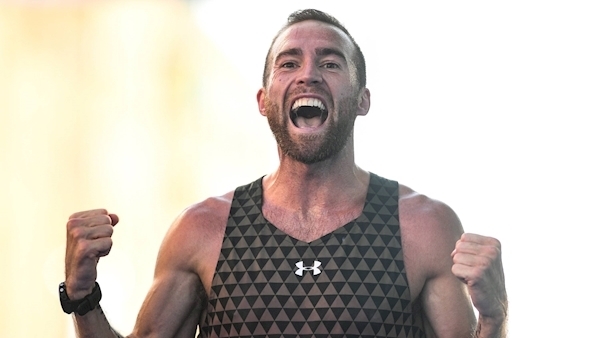
Stephen Scullion chases Olympic qualification in Houston this weekend, the latest staging post in a remarkable second coming in top-flight athletics. It's been a rocky road for the Belfast native before a tangle with a barbed wire fence three years ago changed his attitude and approach to life on and off the track.
On Christmas Eve, as the rest of us were wrapping presents and savouring the smells seeping from the oven, Belfast marathoner Stephen Scullion was touching down in a parish far from home.
‘Flagstaff, Arizona’ could be the title of a gory Sergio Leone spaghetti western, but Scullion’s battles were fought in his own mind.
Just off Route 66, Flagstaff is tucked into a pine forest at the base of the San Francisco peaks, at an elevation of 7,000 feet.
It’s where Scullion’s Olympic dream is being shaped and honed, over the Schultz Creek Trails, on the shoulder of Lake Mary Road, and on the flat circuit of Buffalo Park.
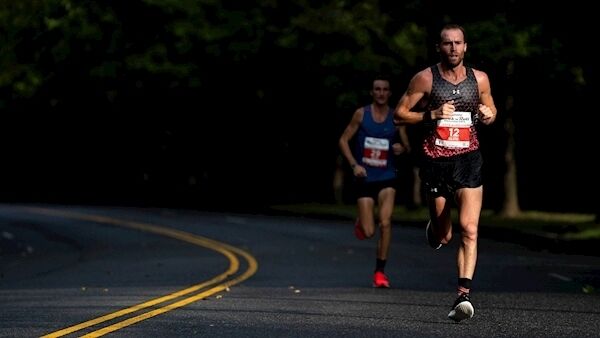
This Sunday, he will look to improve upon his 10th place finish in last year’s Houston marathon. Back then, he ran a personal best of 2 hours, 14 minutes, and 34 seconds. It might have been better, only he ran for a couple of minutes in the wrong direction, before he was alerted by a pedestrian. The weather was murder, too, the mercury sitting at minus four Celsius, with a 15mph wind that left his hands too raw and stiff to grab a bottle for the last two water stops.
In late October, he shaved over two and a half minutes off that, finishing second in the Dublin Marathon to become — at 30 and after a decade of running — an overnight sensation.
The path has been far from straight.
“I went out after Dublin and must have had 15 Jamesons with ice; I was pounding those home. And I really felt it the next day. I was throwing up all over the place and dying,” he says.
His inner struggle is how to eliminate that side of his nature. At home with his east Belfast friends, he will set up camp in a pub on a Friday evening to catch the Ulster rugby game and all the trimmings that follow.
“What I don’t love is that our way of socialising is drinking. I wish there was an alternative. I wish that, if I go home for a couple of weeks around the Christmas period, it annoys me that our way of socialising is drinking and getting pissed. But I am the world’s worst,” Scullion says.
“My parents used to think that one of my best friends was a bad influence on me, and they had no idea that it was me (who was at fault).
“I was the one influencing my friends,” Scullion says.
I can definitely do both. I can do two months of altitude, where I don’t drink alcohol whatsoever. I don’t even have a glass, because I was told it affects your sleep; even a glass. Altitude is tough enough.
Maybe it’s a hangover of the times when he used to play rugby for CIYMS.
“I would have left that rugby club at two in the morning and gone on to a house party,” Scullion says of matchday.
“I wouldn’t have left that party until half eight the next morning, gone home and slept all day, and been depressed for the next two or three days.
“That’s really what got me back into running, because I decided that it wasn’t doing it for me.”
If the result in Dublin increased his profile, if not quite to a household name, it’s been a long time coming.
He’s a two-time Ireland 10k champion, having defended his title in late July, at the Morton Stadium, in Santry, with a blistering time of 29 minutes, 36 seconds.
He’s been dipping in and out of running ever since his first ‘retirement’, after he missed out on the 2010 Commonwealth Games. Three years ago, he had an epiphany, on returning home in the morning after a New Year’s Eve party. Climbing over a barbed wire fence, he cut himself and was caked in blood.
Once he slept it off, he thought of his grandparents, who use that route to grab their morning papers and how they could easily have encountered him in that state.
‘What are you doing?’ he asked himself.
‘Where is the inspiration in that? You went from trying to make the Olympics, six months ago, so what are you doing now?’
“That day, I decided, ‘That’s it. I am tired of this. I am going back to the life I was doing’,” Scullion says. “Even though I might have made mistakes and gone to rugby and done stupid things, maybe my purpose isn’t about excellence and 2:08 and an Olympics bronze medal. Maybe my purpose is to inspire a young kid from Ireland to not make the mistakes I made.”
To not make mistakes means sacrificing, starting with his family.
His parents, Mark and Gillian, knew he had the talent and, for years, there was just him, and sister, Heather, who opened the door to running.
When he was 18, Gillian sat him down in the kitchen.
“I remember my mum telling me, ‘Oh, Stephen, I’m pregnant’.”
So along came Katie and, a year later, Dylan, who haven’t had their big brother around for most of their adolescent lives and aren’t shy in reminding him. He might be a prolific Podcaster, often producing two a day with advice for other athletes, but they need him, too.
It’s a subject that came up in discussions with his sports psychologist, Gary Longwell, the former Ulster and Ireland rugby international.
“We were going through life things and areas that I could improve, the pillars of happiness or life, whatever the hell you want to call it and running could just take care of itself,” Scullion says.
“He got me to score, out of 10, how is family life? How is your work? Life/work balance.
“And I think I gave family life a 1.5 out of 10. It did amaze me and I was like, ‘shit.’ At the European Championships, I thought everything was awesome. I thought my life was in a wonderful place. And then, we talked about, ‘do you check in with your family, do you Facetime your family, do you ask how they are doing, or is it just about you?’
“And I found that amazing. Wow. These things in life that you think should just exist and you don’t need to make an effort. That is incorrect. Sometimes, you need to make an effort and it is something I have worked on and tried to improve,” Scullion says.
“But the requirement and the commitment don’t allow everything to be in a perfect symphony and balance. Sometimes, something will suffer and that’s just part of it.”
Growing up in east Belfast wasn’t simple. Recently, he opened up to Gillian and began sharing things from his upbringing, things she wouldn’t have known.
He says, “On the one hand, it can be this sad story that you had to go through these kinds of things. On the other hand, it made you a tough motherf**ker. That was kind of it. You can’t be angry about your past, because it actually formed you. When shit hits the fan and the going gets tough, whether it is training or racing, etc, etc, there are few handle it better than I do,” Scullion says.
“I dunno, maybe we just saw things in Belfast or just went through things. Something comes up and when it seems like a problem, I just say, ‘It’s nothing. Why are you stressing about this? Nobody is going to jail, nobody is blown up. Calm down’.”
He posted something on Instagram a few weeks back, a line from a retired Navy Seal and now Ultramarathon runner, David Goggins, which said, ‘If you can’t do what it takes, create a motherf**ker that can.’
“I love that,” says Scullion. “Because, for three years, that’s what I have done. I have morphed from a kid that gave up at the first sign of struggle; from a kid that after a race that didn’t go perfect, I would say, ‘f*ck that sport, I am going to retire.’
I moved from this kid, brought up spoiled in so many elements. Everything needed to go his own way, wouldn’t listen to authority, people telling him what to do, to becoming a pretty good human, who is just doing really well at something.
"There is a much happier person now, a much more dedicated person,” Scullion says.
The dedication is immense. On a typical ‘light’ training day, he leaves his apartment, in Flagstaff, at 8.30am and runs 10 miles. He has 30 minutes for a shower and then hits the gym for an hour. After that, it’s lunch and then yoga for 90 minutes, followed by a massage.
He gets home around 4.30pm, gulps down an espresso, and then goes out for another five miles.
So much of him is implausible. His size, for one. At 5’ 10,” he towers above his opponents.
When he was playing rugby, he could squat 140kilos, and he now weighs just 68 kilos.
“Sometimes, on a personal level, it can be upsetting,” he says.
“I am on the starting line and mixing with these Ethiopians and Kenyans and I think, ‘my God, am I in the right place? Am I supposed to be a marathon runner?’
“They don’t have the shoulders I have. My frame itself, if I lost every bit of muscle, I just would never have that frame they have. They are just narrow,” Scullion says.
After Dublin, his mindset changed.
“I just thought, ‘f*ck trying to be a Kenyan or an Ethiopian. Just be the best you, stop trying to lose weight, and Stephen Scullion is never going to be from Kenya or Ethiopia. But he’s doing pretty damn good.’”
A while back, he blew up to 85 kilos. He Tweeted a picture of himself and joked about being a ‘fat bastard.’ Living with other athletes, he went through a period of not wanting to sit around with his shirt off, but once he cut back on alcohol and kebabs, he got down to 3% body fat.
“I sat down with a nutritionist and we talked, after Doha, about how it went and what I thought I could have done better. I think I tried to lose too much weight. And nutritionists always say the same thing to me, ‘why are you doing that? You need to be eating more calories’,” Scullion says.
“And my response to her was, ‘get out your phone, and Google top 100 marathon performances in the world, height, and weight.’
“She did. And in the year 2000, the average was 132lb (59.8kg) and 5’7. In the year 2012, it was 124lbs (56.2kg), and 5’5. ‘So don’t ask me why I am trying to lose weight.
‘I am sitting at 150lb (68kgs), and you are asking me why I would think about losing weight. I am not a crazy person. I don’t want to be skinny like that. I don’t dislike my body. But it’s a fact’!”
He continues, “If you are lighter, but still healthy and strong, you will be faster. Now, where the line is drawn is where lighter gets unhealthy, and unhealthy is not strong, and not strong means shit running,” Scullion says.
“My problem is that I love food. My battle, after the hard training session this morning, was, ‘do I have scrambled eggs, bacon, sausage, hash brown casserole and these little scones with butter and jam?’ That was one option. ‘Or, the turkey fried chicken with macaroni cheese and fries’?”
Body dysmorphia is everywhere in running, highlighted, in November, by elite runner Mary Cain describing how she was “emotionally and physically abused” when training with the Nike Oregon Project, under the disgraced running coach, Alberto Salazar, who would force Cain to weigh herself in front of her teammates to shame her. Cain also said that Salazar wanted to give her birth control pills and diuretics to lose weight.
Every runner obsesses over their weight. “This is my third year at altitude, doing camps and pretty much living up here, my third year of being healthy, and could I do better if I went home and had protein pancakes or something?” asks Scullion.
“Of course, I would be better in the following week’s time. I would lose weight, get a bit skinnier, and, with that, my running economy would improve and I would get a little better. But would my risk of fatigue go up substantially? Yeah.
“In altitude, when I am running 16 to 18 miles a day, it’s probably the equivalent of about 2,400 calories. I don’t eat enough throughout the day to meet those requirements. I am probably the only one of these athletes sitting, looking at this breakfast menu, thinking, ‘ok, I am allowed three sides: which have the most calories?’
“It’s a healthy place to be. Where I was going wrong was getting close to championship and thinking almost like a boxer: cutting weight. But what I forgot about boxers is they just cut sweat; where I was losing actual weight, four or five pounds in the last two weeks, and then getting to the championships and wondering why I was struggling,” Scullion says.
Drugs are another issue in the sport.In the Dublin marathon, Scullion was beaten into second place by Morrocco’s Othmane El Gourmi, just nine months after El Gourmi completed a two-year doping ban.
“You know, I didn’t feel cheated. What people don’t understand is that if he wasn’t in the race, I might not have came second,” says Scullion, taking the conversation down an unexpected boulevard.
“He changed the dynamic of the race. People have to understand that if the race was run exactly as it was run, he pushed the pace. The guys who I eventually beat went with him and they started to struggle. And I was able to beat them,” Scullion says.
“Now, if he is not in the race and they don’t go with him, I never catch them. I don’t know the answer to that. It’s difficult for me to say.”
He pauses for breath and then is straight back in.
“I can still say, ‘I don’t care!’ I don’t do it for that. I do it for me. You think this Moroccan guy sleeps as well as me at night? He might! I don’t know. But he is going to have to read every day that he is a cheat every time he wins a race. ‘Ex-cheat wins race’,” Scullion says.
“Drug testers come and test me in Flagstaff every time and I get tested when I am at home and don’t break a sweat. And because I don’t necessarily do it for the records, I don’t do it for the times.
“That’s what the sport is at. The sport is a little bit fucked. There are grey areas; things going on. If I was bothered that every person that beat me was on drugs, I would not be running anymore,” Scullion says.
“I am a realist and the chances of me winning an Olympic gold or a World Championship gold medal .... there is a higher chance of me being cheated out of a medal because of a drugs cheat than me winning it.
“But it doesn’t stop me trying to chase excellence and inspire others and achieve the best from myself.”
Something similar happened to him in a European semi-final, when he was pipped by an opponent who later failed a doping test.
I remember thinking, ‘Should I be a little bit annoyed about that?’ Because that would have been a final. When I got beat on a Friday and everybody came back on the Sunday for the final, there was really cool music, just to be part of a final... I felt I should be annoyed about that, a bit more.
“My opinion, on the whole drugs cheat thing, is maybe I do it to protect myself. It seems there’s another article, another cheat. Maybe I just don’t want to be bothered and annoyed about it anymore.”
HOUSTON is calling. It’s just days away. If Scullion can get around the track in 2 hours 11 minutes, it will be enough to guarantee his green singlet at the Tokyo Olympics.
But it’s a mental struggle. “I still wake up every morning, load up the airline websites, look at flights home, see if there is a cheap one,” Scullion says.
“I don’t know what it is: that’s my struggle.
“I am just not always settled, and yet it is what makes me good. Being able to cope with that. I can tell you now, if I can stay here and run that marathon, I will smash that qualifying time.
“It’s been fun. I won’t stop until I’m sure that’s all I’m good for. I hope that’s good enough to be one of the greats.”

CONNECT WITH US TODAY



Be the first to know the latest news and updates