Scaling Schmidt heights will take time, but Farrell needs statement of intent
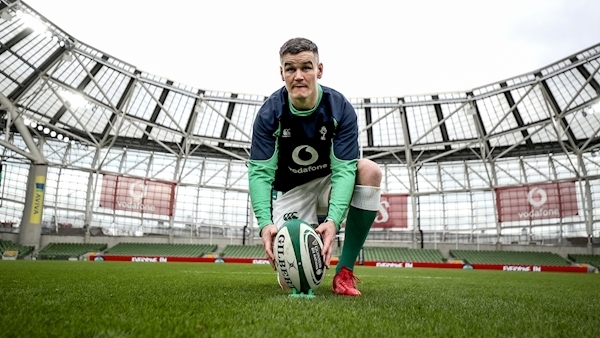
For all the elements that make up this brave new world for Andy Farrell and the Ireland team as they head into the 2020 Guinness Six Nations, it is one of the fundamental lessons from the disappointments of 2019 that will register the strongest on matchday one.
There may be a new man at the helm with a revamped coaching staff, working out of a sparkling and freshly-minted training base. There are Test debutants to boot when Ireland take the field at the Aviva Stadium this evening and World Rugby issued a reminder this week that there is a fresh focus on securing a favourable world ranking for the end of this year’s seeding allocation for the 2023 World Cup draw.
It all points to a bright and purposeful future with plenty to look forward to, but the bottom line for head coach Farrell and his team is that Saturday’s opening-round clash with Scotland is all that matters.
We are in the here-and-now, and Ireland need to hit the ground running in Dublin, not only to draw a line under the misfiring World Cup campaign with those awful defeats to Japan in the pool and New Zealand in the quarter-final, but also to lay down a foundation for the new regime for the coming weeks and months.
Farrell’s predecessor Joe Schmidt admitted that the loss of short-term focus was a major contributor to Ireland’s stuttering 2019 campaign which began with a humbling home hammering by England on the corresponding weekend 12 months ago.
His team took its eye off the ball, looked too far ahead to the main prize in Japan and paid the price with a succession of sub-par performances which led to chastening defeats to the English and Welsh in last year’s championship, to England once again in the summer, and left them looking rudderless in both Shizuoka and Tokyo when Japan and the All Blacks both exposed the Irish team’s self-inflicted frailties.
Farrell would be foolish to make a similar error, and while rescaling the heights he helped Schmidt reach in 2018 may not be on the immediate wishlist, a winning start against the Scots is essential.
How Ireland get the job done should not really matter. There is excitement within the camp at the innovation both Farrell and new attack coach Mike Catt are bringing to both training and the development of a more expansive, heads-up game plan. There is eager anticipation at the snarl, physicality, and explosiveness rookie No.8 Caelan Doris can bring to Ireland’s ball-carrying, and similar expectation about the counter-attacking potency a back three of Jordan Larmour, Andrew Conway, and Jacob Stockdale can unleash in broken-field play.
Yet there is also a weighty measure of caution surrounding all of the above, a toning down of how much change is reasonable to expect from this first outing and the stark reality that this is a Six Nations collision on a potentially heavy pitch.
So while there is relish in the words of coaches and players alike about the new dawn they are viewing, it is tempered by some basic truths, as advanced on Thursday by new captain Johnny Sexton, and Friday by forwards coach Simon Easterby.
“The fundamentals of the game don’t change,” the latter said following the captain’s run training at the Aviva.
“There’s plenty that we’ve been working on in the last couple of weeks and what you see tomorrow hopefully that has been with us for a long time.
“You don’t need to move everything, it’s about trying to challenge the guys to think slightly differently. To approach the game a little bit differently and then in Mike, Faz, and Richie (Murphy, skills coach) across the attack — that’s something we’ll evolve over time.
“It’s not going to happen overnight. It might be that we see things over the next few weeks and think: ‘That might not work for us’, we might head in a slightly different direction but I think there’s always going to be fundamentals we stick to.
“The good things we had over the last few years, hopefully they’ll be in place tomorrow with the added quality of what we’ve been working on in the last few weeks.
“It’s not going to be perfect, it will take time, but hopefully we’ll see it evolve and develop over the Six Nations.”
Scotland will certainly have a point to prove Saturday evening. Their 27-3 defeat to the Irish in Yokohama on September 22 marked the highpoint for Schmidt’s team and a nadir for Gregor Townsend’s that set in train their exit at the pool stage. Head coach Townsend has urged his players not to gift the home side the perfect start they enjoyed in Japan when James Ryan, Rory Best, and Tadhg Furlong powered Ireland into a 19-3 lead after 24 minutes.
“It’s important we are in the game and we stay in the fight for as long as possible,” said Townsend.
“We are looking to impose our game on Ireland, but we know that won’t be easy.
“When you play a team like Ireland, who have so much quality and they are on their own patch, it’s pretty clear they will bring their own energy and their own game.
“The first 20-30 minutes will be tough, and we need to be up for that, we need to enjoy the defensive side of the game.
“Ireland, out of all the teams in world rugby, make you tackle the most. There will be high tackle numbers. It may change with a new coach, but we don’t think so, we think the formula will be along similar lines.”
The worry for Scotland will be the outcome is also familiar. They have not won on Irish soil since 2010 — a 23-20 victory at Croke Park — and Ireland have lost only three Six Nations home games since, just one in the last six championships under Schmidt.
That the lone defeat came 12 months ago will not be lost on Farrell. The lessons will need to have been learned. Defeat is a luxury that Ireland cannot afford.


CONNECT WITH US TODAY



Be the first to know the latest news and updates