Christy Ring, more than a friend, a second father, says Denis Coughlan
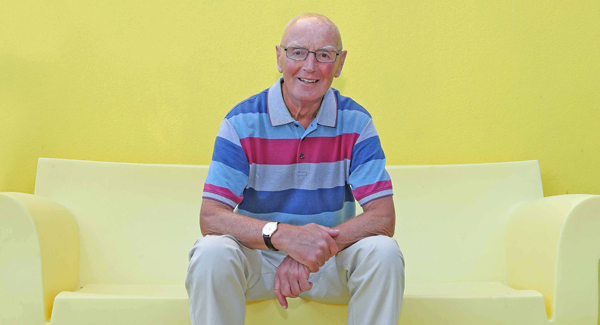
Denis Coughlan was one of hurling’s greatest ever wing backs who played for one of its greatest ever teams, the Cork side that 40 years ago this summer defeated Clare in a seminal Munster final on their way to winning a third All-Ireland in a row. But the greatest hurler ever was a selector to that team, one Christy Ring, someone who went from a distant clubmate to a very close friend and confidante, .
AS the great exodus from Cork to Thurles is at its height tomorrow, a Garda escort with its wailing sirens ensuring a safe passage for the Cork team bus, it may prompt memories among the more senior of the county’s supporters’ ranks of just how chaotic it was 40 years ago this summer when again the county faced Clare in a Munster final.
Denis Coughlan certainly remembers. He headed to that game as the reigning hurler of the year and also fearful that he might miss it.
There was no team bus or police escort in those days. Instead the team would arrive in Thurles in pods of four. The city-based players would convene at the old county board offices on Cook Street where they’d get a taxi. Coughlan was living between Glounthaune and Carrigtwohill so he was in the east Cork car. After it had crawled through Mitchelstown and hit that straight stretch overlooked by the Kilcoran Lodge Hotel, there were four lanes of traffic across the road. “Lawless!” Coughlan softly laughs.
At that the cab turned around and drove through the one-way traffic. “We were waving to supporters who knew us and that we knew in turn.”
Fortunately, the driver Paddy Roche knew what he was doing and every backroad and dirt track in the locality as well. By 1.30, he had delivered Coughlan and John Fenton safe and sound to the Anner Hotel. An hour later than scheduled, but still two hours before throw-in.
They weren’t finished navigating traffic yet. Like we’ve said, there was no team bus in those days, or escort or sirens either. Instead they’d hop into the cabs again which would meander through the wave of humanity making its way to the stadium.
“And you had to go at the same pace as the crowd. It could take you nearly an hour to get there when otherwise it would be a 15-minute walk.”
Such an ordeal for the 2001 team ahead of a home game against Limerick would be one of the trigger points for the first of the Punic Wars on Leeside but for Coughlan’s generation such an inconvenience was just how things were back then. As one of the greatest dual players his county has known, he played more than his share of Munster finals in Killarney and in 1970, when the heat was just as fierce as it’s been this past week, he hopped out of his wife’s car four miles away from Fitzgerald Stadium and walked the rest of the way, gearbag over his shoulder. He duly went on to kick 2-4, the same as the whole Cork team managed between them last weekend. It would take a lot more than traffic to affect him.
That Munster hurling final in ’78 though, there was a frenzy in the air. An hour before throw-in the gates were locked, leaving up to 4,000 people fuming outside (Ned Quinn must have been one of them, judging by his comments on Newbridge this week).
The tension transmitted itself onto the field. The two best teams in the country were reduced to shells of themselves, the score 0-5 to 0-3 at half-time. Then someone came into his own. The greatest of them all.
What Christy Ring said that day is both a matter of folklore and conjecture, and Coughlan can’t recall it in its entirety either, but he vividly remembers its essence. Though Cork were the side two points ahead, they were facing into a strong wind against a Clare team desperate to liberate its people. They needed another force of nature to guide them through the storm.
It wasn’t a rah-rah speech, though it suitably activated them for the second half; it was more instructional than motivational.
“Ring was excellent at saying exactly what a player needed to hear. I remember we played Tipperary in the championship on a wet miserable day: it was 1973, I was captain and Ring was a selector because the Glen had won the county. We were down in the dressing rooms in Limerick, they were nearly like dungeons, they were so dark, and I could tell the person who had been addressing the team had been saying the wrong thing.
“Christy Ring went over to me and said, ‘STOP THE BALL!’ I saw him go around to the three other Glen lads who were playing, telling them the same thing. The person who had been speaking earlier had been saying the opposite but Ring was right. On a wet day if you were a back running out, don’t be pulling on it, block everything. And it was that kind of advice he gave us against Clare in ’78.
“He was saying, ‘Six backs – two yards.’ We were never to be more than two yards away from our man, but if you were even closer than that, you wouldn’t be able to make the most of it when the ball breaks; you’d be able to read it better when you were two yards away. I was [left wing back] marking Colm Honan and in the second half when he was moved to the other wing, Ringie came out and shouted to me, ‘Follow him! Stay with him!’ Because Colm was being moved for a reason.”
Forty years on and Ring has stayed with Coughlan too. As teammates they barely spoke to one another. Then, after a random meeting the Friday before another Munster final against Clare, they became friends. More.
“Once I got to really know him,” says Coughlan, “to the day he died, he was like my father.”

=================THE TWO FATHERS
Although Diarmuid O’Flynn identified Denis Coughlan as one of his three standout left wing-backs to be interviewed for
Hurling: The Warrior Game
, his position-by-position study of the art of the game, Coughlan wasn’t the archetypal hurling warrior.
“Elegance,” Flynn would write, “that was Denis Coughlan.”
He was only sent off once – in the 1972 Munster final – and even then it was rescinded with the referee writing him an apology, acknowledging that it was a pure accident. He never had his name taken.
“To be honest, I don’t think I ever committed a free! Genuinely. I’d say I never had a word with a referee in my life.”
Although he played on a Glen Rovers defence renowned for its ability to mix it – “I wouldn’t like to have been a forward playing against our backs,” he winces and admits – Coughlan was a striking outlier.
Recently the
Evening Echo
published a photograph of the team from the night Christy Ring played his last match. Coughlan was one of eight in the backrow.
“Seven of these on their own would have sorted out the Taliban in two days and then paid attention to ISIS,” the Echo’s Kevin Cummins would write in the accompanying text, “and Denis Coughlan would then have been the negotiator from the United Nations.”
Up in the club now they call him Kofi Annan, as much because it’s apt as it is comical. He’s a fundamental pacifist. When he hears and sees people proclaiming that winning is all that matters, Coughlan – who won five All-Irelands, four All Stars and seven county medals – shakes his head.
“Whenever I’m not sure who I want to win a game, I’ll favour the team that plays decently. And up to the last two minutes of last year’s All-Ireland football final, I still didn’t know who I wanted to win. Then I saw what that Mayo fella did [Lee Keegan throwing his GPS at Dean Rock’s feet]. Straight away I wanted Dublin to win. Then before [David] Clarke had kicked out the ball, I didn’t want Dublin to win either with the way they hauled men down. It was deplorable.”
As a footballer his favourite player was his most frequent opponent, Mick O’Connell. Although he grew up in a club and city where the small ball ruled, Coughlan loved the thrill of fielding a big ball and kick-passing it 30 yards. When he went up against O’Connell, he had no interest in breaking the ball from him. Coughlan wanted to see which of them could claim it cleanly. More often than not, it was O’Connell, but he and Cork won enough of those clashes to sustain him. Even the prospect of those battles was enough.
Call him a purist, call him a romantic, but it probably all stems from being a gentleman first. In the summer of 1974, shortly after his county and club teams in hurling had been both knocked out early in the championship, the Cork hurling team headed to London to play in the then annual exhibition game in Wembley. Sitting next to Coughlan on the plane was Michael Ellard, the GAA correspondent with this paper and an old school friend of Coughlan’s.
“A rough few weeks, Denis?”
“Ah, I’m getting tired of it all.”
The following morning Coughlan learned in the paper he had retired. His great friend from the North Mon had added one and one and come up with a certain calculation. Did Coughlan force a profusely apologetic Ellard to retract his scoop? No. Instead he duly took the following 1975 season out; he didn’t want to see a decent man like Ellard embarrassed in any way because he was such a decent man himself. Besides, he’ll add, Ellard did him a favour.
When Coughlan returned, focusing only on hurling at inter-county level, he was rejuvenated, a new and better man.
If you were to trace that streak of decency in Coughlan, then it probably goes back to his father. John Coughlan worked in Murphy’s Brewery and lived in a council house in Madden’s Buildings, Blackpool. He was a handy hurler himself, playing junior hurling for Cork. In the family kitchen he’d cajole a young Denis to practise on his left side in their small kitchen, and go to all his games. Until, when he was in his early teens, Denis hinted he’d prefer if he didn’t. He felt less inhibited when the old man wasn’t around.
“We had two bedrooms upstairs – my sisters and I slept in one bedroom, and my mother and father slept in the other. We had no television but you could hear the radio downstairs and my parents talking when they were in bed. And one night my mother said to my father, ‘John, why are you always giving out to him?’ [Coughlan pauses and snuffles for a moment, a tear trickling down his eye…]
“And my father said, ‘But he has it, Margaret.’ “Now, I didn’t know what he meant by that, though I suppose it must have stayed in my head.
“The poor man. He was such a lovely, kind man, but whenever we’d be togging off on the side of a ditch, I’d be looking around to make sure he wasn’t at the match and he’d be behind the tree somewhere, not wanting to be seen by me. It was only later in life that I found that out, which must have been very sad from his point of view.”
In time, the dynamic would change. When the father would politely ask his son how a game went, Denis would be delighted to tell him all about it. By the time he was playing minor football for Cork he not only wanted his dad going to games but he wanted him to accompany him to them. In 1966 when Denis was playing U21 for the county hurlers, his dad was out on the Croke Park pitch to hug him when they beat Wexford in the All Ireland final. The following year his father proudly watched him lead the Cork senior footballers around the parade on All Ireland final day.
Then the following year John Coughlan died.
“He missed so much,” says his son. “He would have got great enjoyment out of me maturing as a player.” Something else John Coughlan got to see was his son play four seasons alongside Christy Ring for the Glen seniors. That same son though never had the privilege in all that time of hearing Ring address him by his name. It just wasn’t how things were in those days, in the Glen, in Ireland.
“If you were a young fella, you weren’t spoken to,” says Coughlan, “and you didn’t speak unless you were spoken to.”
That protocol was maintained while Ring was a selector to various Glen teams but then the Friday before the 1972 Munster final, the pair of them pulled up at the same petrol station on the Centre Park Road. Coughlan can still recall not just the precise time – 12.55pm – but Ring’s car and registration: a red Cortina, 25DRI.
“He said to me, ‘What hurley have you for Sunday?’ Now, normally I wouldn’t bring my hurleys around in the car, I was that fussy about them, but I was going to be dropping this one in to Justin McCarth because he was brilliant at finishing them off for me. So Ring says, ‘Give me a look at it.’ And whatever way he pressed it, the hurley snapped in half. I said, ‘Christy, what are you after doing?’
“He said, ‘Don’t tell anyone.’ And he brought me over to the back of his own car and opened the boot. He took out the hurley he had used in ’52, ’53 and ’54. ‘Is that any good to you?’ But it was too heavy so I got fierce upset. He said, ‘Don’t’ worry about it at all. Go home now and have your lunch and I’ll see you in your office at four o’clock.”
When Coughlan got home, he was about to head to Riverstown, where his hurleymaker, Mick McCarthy, was based, but there outside his house was Ring. “I told you to go back to work!” Instead Ring made the trip, McCarthy being his hurleymaker too. At 4pm, Ring dropped in with the most immaculate hurley Coughlan had ever held. There wasn’t even need for Justin to polish it off.
“There you go,” said Ring. “That will bring you luck.” Did it? Well, Cork beat Clare but Coughlan was sent off for the first time in his life – though the referee later reversed and apologised for his decision. More importantly, he went from being an acquaintance of Ring’s to something much more.
“I was very lucky to have known him when he wasn’t a hurler. I never had a brother and my two sisters were away and my father had died but he [Ring] was very helpful to me if I wanted advice about something.
“I remember in 1975 I was offered a very good job before the county final against Blackrock. We [the Glen] were training above in the Mardyke because the Páirc was being renovated and after I was showered and heading out of the dressing room, Ringie called me over. ‘Come here, I want you. What’s wrong with you?’
“I said, ‘Nothing. Why?’”
“He said, ‘You’re not yourself anyway. Is there something on your mind?’
“I said, ‘Now that you ask, I’ve been offered this job and I don’t know whether to take it or not.’
“Now, he never asked me where the job was, or who the company was, or what were the terms. Nothing like that. He asked me just one question. ‘Do you like the person you’re going to work for?’”
“By the time I had reached the gate, I had my mind made up: I wasn’t taking the job. I liked who I was already working for while I wasn’t sure I liked the other fella, though the job was perfect.”
During the winter they’d play squash two or three times a week together where Ring would coach and invariably beat him.
“After every two or three rallies he’d stop, ‘Look, how about you try this?’ but I knew he was only getting his breath back.” When Coughlan himself turned ill on Valentine’s Day 1979, Ring was there.
“I was up above in the hospital, about to have an operation the following morning, and myself and Dr Con [Murphy] were just chatting away when next thing Christy Ring walked in with a bottle of holy water. He had been in Lourdes at the weekend. And he sat down for a few minutes, talking away.
“He had a tic of speaking about himself in the third person. Even when I’d be playing squash, he’d say, ‘Ah, you wouldn’t be as good as Ring now!’ Now anyone else you’d say, ‘You’re some langer!’ but with Ring it was perfectly normal. And he gave me the holy water, put his hand on my head and said, ‘Ring will pray for you tonight.’”
At that Ring made his exit while Coughlan and Dr Con burst out crying. They didn’t know Coughlan’s condition and were fearing the worst.
A few days later Con called Coughlan. Bad news. The grim reaper was in town but it was Ring he had taken. That night in the hospital they had spoken for the first time about the four-in-a-row. Will we do it, Christy? “I’m not sure,” he said. “It’s very hard to do. Something always happens.”
But Ring’s prayer for Coughlan had worked. A few months later he was playing against Tipperary in the opening round of the championship. He would play until 1981, bringing to 16 the number of years he played senior football or hurling or Cork. At 73 he’s still sprightly, the couple of games of golf having long filled in for the couple of games of squash. In all his time playing his weight never deviated from 12 stone ten pounds. He’s only four pounds lighter now.
He still follows hurling and football but finds them harder to watch. Football, he says, has lost its identity, the two skills that thrilled him having not been adequately protected and cherished. He has his concerns too for hurling – the use of the spare arm in the tackle and the pulling and extra steps that come with it.
He watches U15 and U16 club games and lights up at the freedom and skill on display; then sees a few county development squad games in the same age groups and despairs.
A few months back he was at a removal when he heard a familiar voice call his name. Justin McCarthy. They chatted about old friends still here or otherwise, grandkids and their current hobbies. McCarthy was cycling. Just the previous day he had breezed down to the new Páirc, and took in a development squad game on the 4G pitch.
Twenty-eight players crammed in the middle third of the field. No tackling, no intensity, no self-expression. Is it clones or hurlers we’re producing at all? Coughlan was relieved and saddened. So it wasn’t just him.
Still, he hold out hope. The two Cork-Clare games in Croke Park in 2013 he considers “the two best games I ever saw”.
What happened to Clare after that he considers “the saddest thing that happened in hurling the last five years, Davy Fitzgerald nearly destroyed them.” Now the Tony Kellys seem to be getting back to playing with that old sense of abandonment.
So he understands why the masses will flood to Thurles tomorrow. They just mightn’t take up four lanes of the road, that’s all.


CONNECT WITH US TODAY



Be the first to know the latest news and updates