Without football backstop, will Brexit cut Irish players adrift?
In the aftermath of a drab, scoreless draw against Denmark on Monday, Martin O’Neill assured the media that his players would be ready for the “big stuff” in March.

Without football backstop, will Brexit cut Irish players adrift?

In the aftermath of a drab, scoreless draw against Denmark on Monday, Martin O’Neill assured the media that his players would be ready for the “big stuff” in March.

By that he meant the opening qualifying matches in the Uefa Euro 2020 campaign due to take place during the international break March 18 to 26, 2019.


It’s now up in the air as to who will be in charge of Ireland’s readiness for those games.

But something else that could have a dramatic impact on Irish football is up in the air too. Three days after that international break, the UK is scheduled to leave the EU.

We can only speculate at present on Brexit’s full impact on Irish sport, particularly on our bloodstock industry but also on professional sports, such as rugby, that operate on an all-island basis.

The quarter-finals of the Champions Cup will begin the day after Brexit. It is hoped that the Irish provinces will be well-represented, including Ulster.

And yet, post-Brexit, what exactly is the legal status of Ulster rugby, given that it encapsulates the pre-partition nine counties of the province?

On that same weekend in GAA, the finals of the various divisions of the National Football League are due to take place in Croke Park.

If, say, Tyrone or Antrim reach their respective finals, will they and their supporters be delayed at the border on the way to and from the game?

Even at this late stage we don’t know. What we do know is that the Football Association in England has already published details of a post-Brexit plan in which it seeks to boost the number of ‘homegrown’ players in the Premier League by reducing the number of foreign players.

Over the next few columns, the impact the FA’s plan might have on Irish football generally will be analysed.

This has been a dreadful year for the senior men’s team with two mind-numbingly boring draws against Denmark and two losses to Wales in the new-fangled Uefa Nations League.

The 4-1 defeat away to Wales (beaten by Albania during the week) in September was probably the year’s nadir.

Thirty-three years ago, this month, the Republic suffered another humiliating 4-1 defeat, this time at home to Denmark in the final round of the qualifying campaign for the Fifa World Cup of 1986.

In the aftermath of the defeat, the then Irish manager, Eoin Hand, was pilloried by fans and the press.

It wasn’t so much that the defeat had been the Republic’s worst in 15 years; rather, the opprobrium towards Hand was based on the feeling (and the echoes resonate with Martin O’Neill today) that he was simply not getting enough out of his squad.

Equally, the FAI copped significant criticism with questions being raised as to how a country such as Denmark (with a similar population to Ireland) could be so superior to us; indeed, how was it that, at the time, Northern Ireland (including Martin O’Neill, the player) were, with a much smaller population, easily outperforming us on the world stage?

History seems to be repeating itself with one point of contrast.

Throughout 2018, Martin O’Neill, to initial, if rapidly decreased, sympathy, implied that he simply does not have enough quality players playing with top teams in England.

On the opening weekend of this year’s Premier League, a total of eight Irish players got game-time (one of whom was Declan Rice).

On the opening day of the 2012/2013 season — Giovanni Trapattoni’s last full season in charge of the Republic before O’Neill took over — 22 Irish players got game-time in the Premier League.

Similarly, and returning to the Republic’s crushing defeat to Denmark in 1985, Eoin Hand appeared to have little excuse when it came to player quality.

Starting for Ireland that November day were Mark Lawrenson and Jim Beglin (who would go on to win the double with Liverpool that season); Kevin Moran, Paul McGrath and Frank Stapleton (who had won the FA Cup with Manchester United earlier that year); Kevin Sheedy who lost that FA Cup with Everton but had won the league that year); and Liam Brady (then at Inter Milan).

English football at the time was not, of course, the globalised sport it is now.

English football club scouts rarely ventured to the ‘continent’ and Irish players, North and South, benefited.

And yet, the 1980s was the decade in which European football generally was beginning to globalise. And the European Union played a key role.

In 1976, the European Court of Justice heard a case brought by an Italian football agent challenging the then ban in Italian football on all foreign professionals.

The ban had been imposed because it was felt that an influx of foreigners, into what was, at the time, the best-paying league in the world, would have an adverse effect on the Italian national team.

The Court of Justice held that restricting the right of nationals from one part of the EU to work in another member state simply because of their nationality was contrary to EU law.

In February 1978, the European Commission contacted Uefa to remind them that football associations throughout the EU could not have blanket bans in club leagues based on players’ nationality, though quotas on foreigners in the first-team were permitted.

And with that, European football began to become exactly that, European.

One of Italy’s first foreign signings (of the many to follow) was Liam Brady who moved from Arsenal to Juventus in 1980. EU-mandated foreigners in Italian football didn’t do the national team any immediate harm.

They won the World Cup in 1982. Ironically, the FA enthusiastically followed and even expanded the EU’s ruling, allowing Spurs to sign two of Argentina’s World Cup-winning squad of 1978, Ossie Ardiles and Ricky Villa.

If ever there was a sporting endorsement for EU law, it’s Villa’s goal against Man City in the FA Cup final replay of 1981.

A ban on foreigners had been in place in English football since the early 1930s.

In 1930, the legendary Arsenal manager, Herbert Chapman, had attempted to sign an Austrian player. Not the most popular nationality in the 1930s.

The FA successfully lobbied the UK Ministry for Labour to ban all foreign transfers. Only British-born subjects could be signed unless the player had lived in the country for two years.

The first residency rule of its kind in sport.

Players from the then Irish Free State were considered British-born under the FA’s rule.

This rule continued to apply to players from ‘Eire’ even when we left the Commonwealth in 1949.

The rule in part explains why if you ask the quiz question who was the first international team to beat England on home soil, most English fans will still say Hungary (Puskas et al at Wembley in 1953) and not the Republic who beat England 2-0 at Goodison in 1949.

In 1995, in the famous Bosman ruling, the Court of Justice of the EU struck down any remaining foreign player quotas in football.

Because the UK is now leaving the EU, such quotas can be revived by the FA.

The Bosman ruling’s impact on English football was almost immediate. Of the 13 players who played in Manchester United Champions League winning team of 1999, only five were English.

Later, on St Stephen’s Day 1999, Chelsea became the first club to name a starting 11 in the Premier League without a British player.

The globalised nature of the Premier League has intensified since. The team that I support, Watford (no sniggering), started the 2018/19 season with 30 in their first team squad, including 17 nationalities.

No one from the Republic.

Teams like Watford now overlook Irish talent and whatever FA plan comes into place post-Brexit, they are likely to continue to do so.

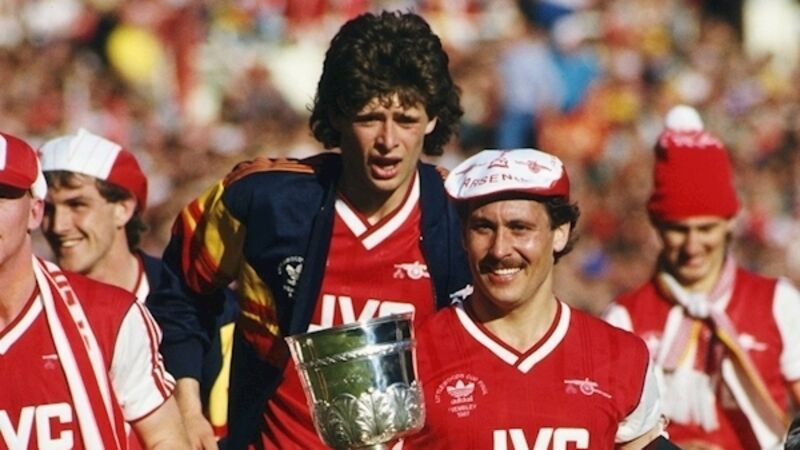
Finally, this year is the 30th anniversary of the last team purported to be champions of England without a ‘foreigner’ in the squad — Arsenal in 1988/1989.

Politics aside, David O’Leary and Niall Quinn, who were in that squad, were, as so many Irish footballers before them and since, considered neither fully homegrown nor fully foreign in England.

Brexit and the FA’s plans will likely close that longstanding loophole and there is no hope of any EU-supported backstop for Irish football.

We are on our own on this one.

Jack Anderson is Professor of Law at University of Melbourne

More in this section

Sport

Newsletter

Latest news from the world of sport, along with the best in opinion from our outstanding team of sports writers. and reporters

Cookie Policy Privacy Policy Brand Safety FAQ Help Contact Us Terms and Conditions

© Examiner Echo Group Limited