The answer to solving the housing shortage is at our doorstep
Vacant houses, empty holiday homes, unused upper-floors in city blocks, and ‘dead space’ in estates can all help solve the housing shortage, says .
Families in inappropriate accommodation, young professionals still at home with parents, unsustainable commutes. It’s not a homelessness problem, it’s a housing problem.
At the peak of the boom, in 2006/2007, Ireland was building 88,000 houses per annum. Our ongoing requirement is between 20,000 and 35,000 homes per annum. We are currently building, based on who you believe, somewhere between 8,500 and 15,000 annually.
“Great things are done by a series of small things brought together,” said artist Vincent van Gogh.
We should immediately focus on deliverable, smaller solutions, and, as architects, this is our expertise.
Under-used buildings in our towns and cities.
Housing Agency CEO, John O’Connor, and Fr. Peter McVerry have cited figures of between 5,000 and 8,000, vacant, upper-floor apartments in Dublin City centre. There is at least that number again in unused commercial upper-floors. Applying this figure, pro-rata, across our other major cities, there are circa 35,000, vacant, upper-floor apartment opportunities in our major settlements.
Schemes such as the ‘living above the shop’ initiative have failed due to the roadblocks imposed by our regulatory environment. Our planning, fire-safety, and building regulations and disability access certification processes are a one-size-fits-all model that imposes impractical standards and costly administrative roadblocks on the potential of these unused upper-floors.
We advocate an exemption class in the regulations that removes these upper floors from the regular planning and development protocols. A simple permit or licence-based system would allow decisions and permissions to issue on a practical, common-sense, case-by-case basis.
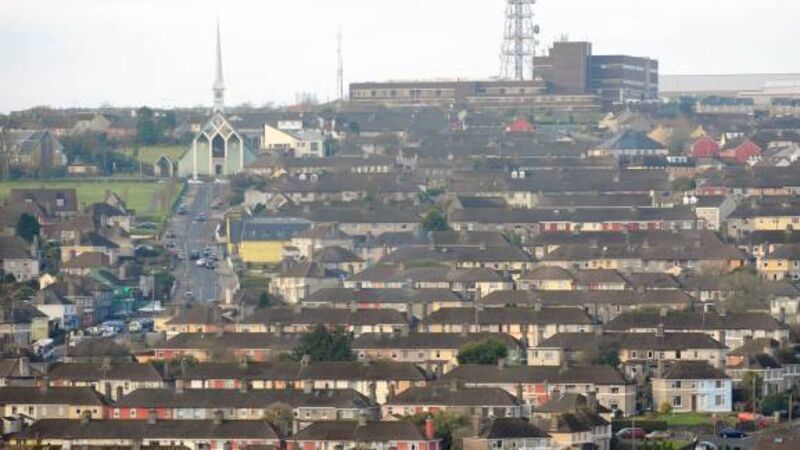
Harvest ‘dead’ spaces. Having grown up in a 1970s housing estate, I know the consequences of the ill-planned and unsophisticated pattern-book land-use of the late 20th century.
The next generation can expect a better experience, if the Government commits to the guidance espoused in their own Residential Design Guidelines.
A real opportunity exists to kill two birds with one stone, in terms of improving the built-housing stock and generating new residential opportunities. Many of the 1970s and ’80s developments address the amenity space requirements in an unfortunate way: the requirement for 10% or 15% of the site to be available as amenity space was often a mathematical exercise, i.e. the leftover, undevelopable slivers of land that were a consequence of the pattern-book layout of the standard house grids.
At Meitheal Design Partners, we are involved in a pilot project in a Cork housing estate built in the 1970s, where the green space has grown unattractive and become a problem. We are advancing plans to ask the council to consider the development potential of this green space.
This may seem anathema to sound planning practice, but the opposite is true. Making carefully selected green-space sites available for development, in exchange for the provision of high-quality amenity areas, is a ‘win–win’. Communities are liberated of problem areas, and we get an immediate infusion of homes in serviced areas.
Our pilot scheme would involve the council making available 1.5 acres of green space, currently a home to anti-social behaviour, in exchange for 20–30 affordable homes, a high-quality, multi-use games area, community playground, and neighbourhood play area.
Common sense is the key. Some, progressive local authorities have introduced ‘area champions’, tasked with enhancing the public realm and urban environment of a particular area. We advocate the appointment of a designated ‘housing champion’ for each major town and city.
Planning policy must take regional and local considerations into account
The appropriateness of housing density must be allowed for within statutory planning policy and legislation. The Planning Development (Amendment) Act, 2015, overrides local planning ‘Page 2 of 1’ policy in favour of national policy. This needs to be addressed urgently, so that national planning policy is not exclusively Dublin centric.
There has to be a realistic approach to the delivery of housing density, in order to increase supply. We have many examples of inappropriate and poorly designed, high-density residential schemes, blindly following policy guidelines to the detriment of other important, urban design factors.
The solution lies in tapping into local knowledge. There should be a local housing planning team for each priority settlement in each county.
This should include a planner, an architect, an engineer, a transport planner, an estates engineer, a Part V officer, a heritage officer, and a relevant Irish Water contact. This team would work with developers to advance proposals, streamlining the process and delivering the required housing stock.
Many development-opportunity sites in regional locations are deemed undevelopable, because of the commercial disconnect between national policy and local, micro-economic conditions.
Giving a local planning team the discretion to make decisions on a case-by-case basis would promote site-specific development opportunities and motivate developers to act now, rather than await price inflation, before embarking on higher-density schemes.
Vacant housing stock
The 2016 census records 62,000 vacant holiday homes. Half of these are in cluster developments on the fringes of towns and villages, built in the last 20 years as a consequence of tax-allowance schemes.
We need to consider how these existing, under-utilised holiday homes might contribute to the housing stock. With moderate amendments, these could make a timely contribution to the housing supply, providing a sustainable solution in urban areas.
Designated Town Architects could aid in identifying key infill opportunities within the existing fabric of our settlements — creativity can unlock density, particularly when considered in the context of case-by-case assessment of opportunities, rather than every decision being a slave to one-size-fits-all, national standards.
Perhaps a series of special objectives could be included in council local area plans, identifying acceptable design approaches and permissable residential densities.
This approach is likely to encourage smaller, local developers to view these sites as legitimate commercial opportunities.
Large scale rental
Ireland lacks large-scale rental complexes, singly owned and managed. Our standards insist on larger apartment sizes, generous amenity provision, dual aspect, and a diversity of types and sizes, in any scheme of substance. These regulations have cost and buildability issues and make apartment building unfeasible.
A large proportion of our population does not require an apartment to be a home, in the traditional sense. Educated young professionals, unbound by family and children, live their life in the context of the city. Purpose-built, large-scale, rental accommodation should be encouraged.
Intelligent density
The model of low-rise, endless sprawl isn’t environmentally or socially sustainable. We simply must pursue higher densities.
High-density doesn’t mean high-rise. Stoneybatter, in Dublin, is high-density, but no-one would assert that the distinct network of streets, and tightly planned neighbourhoods, is anything other than an attractive, functioning urban neighbourhood.
A good precedent to aspire to, and one not too far away, is the London Mansion Block, four- to eight-storey apartment blocks with a common entrance and normally two flats per floor.
These are high-quality apartments, all with balconies, communal gardens, and good sources of light.
While not as efficient as tower blocks, they are much more efficient than the type of semi-detached housing that is prevalent in Ireland.
Low-impact, high-quality, medium-density is where we need to go.
At a macro level, availability of finance, land values, taxation, and affordability are the big factors affecting the provision of real improvements in the housing stock.
At the micro-level, there’s lots we can do. Creative, well-intentioned thinking, and a co- operative approach between the professions, local authorities and communities, can deliver immediate change.
CONNECT WITH US TODAY



Be the first to know the latest news and updates