Terry Gilliam: Back in the saddle again

Terry Gilliam tells about the mystery woman who helped him to finally get his Don Quixote film made after 30 years
It's the movie that has come to define the film term “development hell” — the project in gestation for over thirty years that filmmaker and member Terry Gilliam seemed unlikely to ever get off the ground.
At one point, a shoot for that was abandoned within days amid flash flooding, illness and financial setbacks even spawned a movie of its own, the behind-the-scenes documentary .
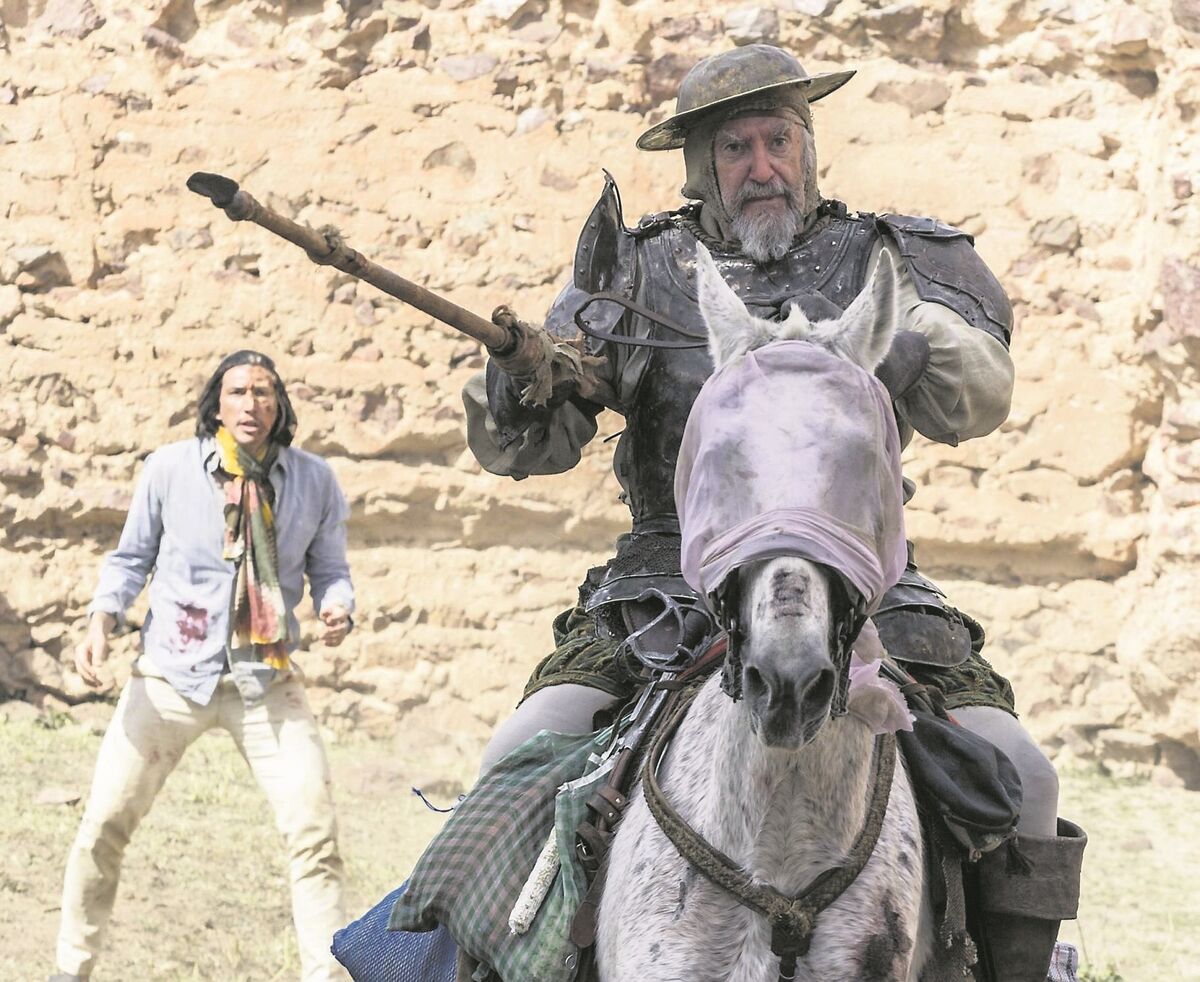
But Gilliam never lost faith, and in the end a female financier, who wishes to remain anonymous, was key to getting the movie into production once again, contributing the final amount needed to green-light, with Adam Driver and Jonathan Pryce in the leading roles.
“We actually were able to make it because of a woman who had come into money late in life and had formed a company,” he says.
“She really wanted to see the film because she had seen the documentary, she knew the tale of our difficulties. She just was like the fairy godmother who turns up in Cinderella and says: ‘Bing! You’re going to the ball. Here’s three million dollars’. They saved our ass basically.
“I only want to have lunch with billionaires these days,” adds the quick-witted filmmaker. “People who can afford to have a flutter on a movie.
“The business side of filmmaking is very strange because something that has failed anyway, like our first attempt did, is like having a bad talisman, something that’s going to bring bad luck.
People kept talking as if it’s cursed and the longer it took to try to make, the more it smelled like last week’s or last month’s fish.
"So that was very difficult. Actors wanted to be involved, creative people wanted to be involved... it was exciting, but the money people were very hesitant. That was always the problem.”
LOOSE ADAPTATION
Loosely based on Cervantes’ novel, stars Driver as Toby, an advertising director forced to confront the fallout of a film he made in a small Spanish village years earlier. On returning, he learns that the villager (Pryce) he cast as the swarthy Spaniard still believes himself to be the character.
Like many of his movies. including Brazil, Time Bandits, The Fisher King and of course, Monty Python & the Holy Grail, it looks set to garner a loyal and large cult following.
After more than three decades of dreams dashed, it must have felt like a great relief when the cameras started rolling a little over a year ago.
“That was actually a worrisome time because I was so worried about other people’s expectations. The documentary was kind of like the longest running trailer. And I felt the weight of that when we started.
But luckily, within a day or two, you’re just dealing with the daily nightmare problems and you forget about the audience or what the film might be. You’re just trying to survive.
The movie was filmed on location and mostly exteriors in a sun-drenched Spain, Portugal and Fuerteventura because Gilliam didn’t want to build sets as he wanted a world that was totally believable.
To his pleasant surprise, his infamous project had gathered such chatter that people were queueing up to get involved.
“We got incredibly highly talented people on so many different levels who were working for a fraction of their normal fee because they wanted to be part of this thing.
"I think the legend of the decades and trying to make it made people want to join in and be part of the impossible film.”
Aware at all stages of the project’s gestation that he needed “bankable” stars to get it over the line (Johnny Depp starred in the abandoned five-day shoot almost 20 years ago), it was his daughter who suggested Driver, an actor currently at the top of his game.
“We met in Hampstead and we had lunch at a pub. I really liked him because he wasn’t like any of the other people I had over the years wanted to work with. He just didn’t seem like a normal actor. He actually seemed like a real person. He didn’t look like a leading man in the normal sense.
"What really clinched it was the fact that when 9/11 occurred, the Towers went down, he went and joined the Marines, to defend his country. And I thought: ‘You’re someone I think I want to spend time with’.”
MONTY PYTHON MEMORIES
Professionally it’s been a rewarding time but personally it’s been a time for goodbyes. We speak soon after the death of his close friend and collaborator, Terry Jones.
In the two months before, Nancy Lewis — the woman he credits with bringing Python to an American audience, and Neil Innes, who contributed to the whistle melody for ‘Always Look on the Bright Side of Life’ and was a regular Python collaborator, have passed away.
“Nancy Lewis and Neil Innes were complete surprises. It was such a shock because Neil and I had spent an awful lot of time in the same dressing room when Python was on tour, because Neil was part of the show.
He was such a great songwriter, just a great human being because he was funny, he was concerned about everything that seemed to be wrong in the world.
"And he put that into lyrics that were very clever and touching,” he says.
“Terry, in many ways, I had said goodbye to almost two years ago. The dementia had consumed the Terry Jones that I knew. Terry had so much energy. He was so vibrant. That was gone. His body finally dying was not really as depressing as seeing his character, his spirit, his anima, vanishing over the years.
“I mean, that’s what it was about — we laughed. Life is full of horrible things and if you can’t continue to find humour in it, you might as well pack up. Terry, he could wear you out because he had so many ideas.
“It was funny, at the beginning when we both set off to do Holy Grail, for years we had agreed on everything. We had agreed on everybody else’s faults. When we started working together, we suddenly were aware of each other’s faults.
"But I just loved the fact he was always questioning. He wouldn’t accept that’s the way it is or that’s the way it should be. He always thought there were wrongs that needed to be righted.”
UK CITIZEN
Having renounced his US citizenship years ago in favour of the UK, he finds it ironic that his probation period ended just months before Brexit.
“We’re f**ked. We’re f**ked is what’s happening,” he says, still managing a characteristic chuckle.“Ten years after renouncing, I finally was 100% British, which to me was 100% European.
“That was 2016, the year of the referendum and it’s been downhill ever since. I think it is the most absurd thing that is happening to this country. I came here because I really believed in Britain and what it stood for, intelligence and pragmatism.”
CONNECT WITH US TODAY



Be the first to know the latest news and updates

















