New thriller 'Anon' takes aim at privacy
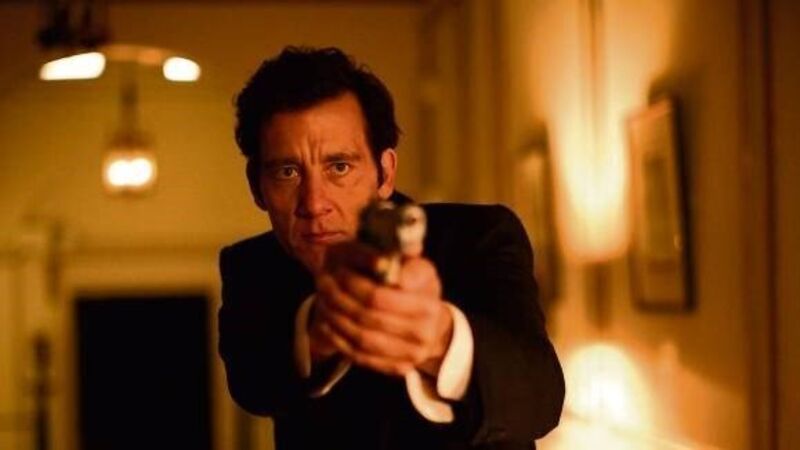
Andrew Niccol has already given us a satirical snoop-fest in The Truman Show, and his latest thriller addresses very relevant issues in the high-tech world we inhabit, writes .
The way we watch film is rapidly changing and with it the politics of the movie business.
Just this week, the worldâs biggest film festival, Cannes, opened without Netflix on board, amid a stalemate over traditional film distribution models.
As far as top filmmaker Andrew Niccol is concerned, changing realities offer movie-making opportunities.
His latest film, Anon, a thriller about technology and privacy, opens in cinemas this weekend but will also be available to watch at home on subscription service Sky Cinema (itâs on Netflix in the US).
âThereâs a lot of what they call âday and dateâ movies now, which I kind of understand, and it even relates to the film,â he tells me.
âI think itâs weirdly appropriate that people watch it on different formats. You canât be a purist any more, I think, because people sometimes have better home theatres than youâd get at your local multiplex.
âFor me itâs always about story, so to reach as many people as possible is the idea for me. For me, a story has to be able to work on any number of formats.â
While many filmmakers are wary of the TV/streaming models, Niccol feels they have much to offer. Is this because itâs getting harder to make movies?
âYes and no. If you donât have a character with a cape on, then yes, itâs hard to get a big studio to give you $100m unless itâs a franchise. On the other hard thereâs a whole lot of new places that need, in the horrible term, content. Letâs say stories, itâs a nicer word. Thereâs all of these different places now that need stories.
âI think back to my first film, Gattaca. You probably canât make that today at a studio, and it was made at a studio. The worldâs changed and I guess I have to change with it!â chuckles the affable New Zealander.
With classics like Gattaca and The Truman Show, both of which he wrote, Niccol has become known for high-concept ideas. Anon, starring Clive Owen and Amanda Seyfried, is a jittery account of a world without privacy, policed by the sharing of information.
Itâs a world of such transparency that crime no longer exists. But while investigating a series of unexplained deaths, Sal (Owen) comes across a woman (Seyfried) with no identity who is invisible to police, threatening to bring the system to its knees.

âFor a long time Iâve been wanting to do a film about privacy. About the war for privacy and how there was no war, actually, we gave it up without a fight, for convenience.â says Niccol.
âThatâs always intrigued me. If you look at the current times, there are real echoes of that, how weâve given away so much.â
The filmâs extensive visual graphics show how characters are âlife loggingâ in their every day-to-day interactions, meaning privacy is impossible.
âEverybodyâs walking around with a phone in their hands. Theyâre all on social media. So I just took a leap forward because if I could just put that in what we call your mindâs eye⊠Iâve just taken a leap in the technology.
âI had some narration in the beginning of the film originally, and then I realised that weâre actually so attuned to this idea of data technology that we live with, that I didnât need the narration at all, I just jumped right over it.
"Because everyone understands that thatâs what weâre already doing. You canât go to a concert these days without it being filmed, without everyone having a phone in their hands. There are some artists that wonât even perform because theyâre just looking down at a sea of cameras.
âRight now you and I are geotagging on our phones, so Google knows where we are. That may not matter to you but at the same time it feels like an intrusion. And with Cambridge Analytica we realised how much weâd given up. It came as a shock to a lot of people.â
Did the film come about from his interest in the subject matter or vice versa?
âYes!â he laughs. I think itâs a bit of both. Iâve been thinking about it for a long time â thereâs kind of a false choice, where people say: âIf youâve got nothing to hide, youâve got nothing to fearâ.
"But I prefer what the girl says in the film, where she says: âItâs not that Iâve got something to hide. Iâve got nothing that I want you to seeâ. Of course, some people are more private than others, but I think it is a human instinct to preserve something of yourself.â

Growing up in New Zealand, Niccol says, gave him a âbeautiful perspectiveâ when it comes to making his films. He feels that sense of distance from Hollywood was of benefit to his career.
âIf I was born in the belly of the beast, if I came from LA, I donât think I would write the kinds of movies that I write.â
Like some filmmakers, he moved into cinema through advertising. âI went to London pretty early on, to advertising which was my film school. At the time there was more storytelling, more of a narrative, in commercials.
Now itâs more style over story and itâs about imagery, but at the time it was genuinely more mini-films. It was a good film school.â
Still, a desire to tell bigger stories was driving him to write and develop ideas in his free time. âI just had a story that had been in the back of my mind for a long time which was The Truman Show, the first thing I really wrote. Colleagues around me were making that jump from directing commercials to movies. That was the impetus I guess.â
Written and produced by Niccol and directed by Peter Weir, The Truman Show was not only a bona fide hit but had a huge cultural impact, spawning thousands of features and TV debates on the nature of reality and privacy.
âThere was no reality television when I wrote it. So if I had anything to do with that I apologise,â he says.
As a writer, he is constantly developing idea based in what he likes to describe as âparallel presentsâ which he says is his Trojan horse when it comes to bringing challenging ideas to the screen.
âIâm writing a couple of things, but I find when Iâm working on more than one I get quite schizophrenic and characters start walking from one script into another. Ultimately itâs the stories themselves that decide: âIâm nextâ.â