We face an epidemic of skin cancer
SKIN cancer is the most common cancer in Ireland and the Irish Cancer Society (ICS) warns that we are facing an epidemic of the disease with urgent steps needed to bring down rates. Current figures predict an increase of two thirds by 2040 when numbers are expected to rise to 19,000 cases per year.

“The National Cancer Strategy calls for the development of a national skin cancer prevention plan,” says Donal Buggy, head of services and advocacy, at the ICS. “This was marked as a ‘priority’ in the strategy and we are calling for its publication by the end of the year. While we are pleased to note that work in the Department of Health is underway on this, there can be no room for delay in its publication.
“Urgent steps need to be taken now to prevent skin cancer in Ireland into the future — including raising awareness of the dangers of sun exposure, and steps to further regulate the use of sunbeds, including a potential ban. We need to see a comprehensive action plan with ambitious timelines to turn the tide against rising skin cancer rates.”
Shocked at diagnosis
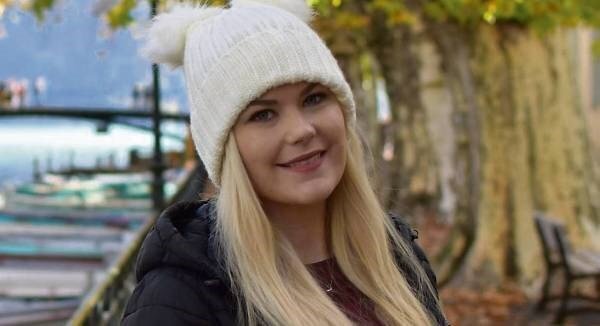
Siobhan McCarthy may have had cancer, but she is one of the lucky ones in terms of diagnosis. She was just 22 years old when her mother noticed an unusual marking on her skin and urged her to get it checked out.
“I moved to Toronto in 2012 and regularly kept in contact with my family through Skype,” says Siobhan who has since returned home to Waterford. “One day in May 2013, I was chatting to my mum when she noticed a brown mark on my arm. She asked me what it was and totally unconcerned, I said it was probably just a bit of dirt.
She said I should get it seen to but being only 22 at the time, I wasn’t too bothered even though it didn’t go away and actually seemed to be getting bigger.
Several months after her mother first drew her attention to the mark, which was “about the size of a rubber on the top of a pencil”, the young woman finally sought medical advice — and was shocked to discover that the innocuous “freckle” was actually cancerous.
“I went to see my GP in October who booked me in for a biopsy but because I was so young and it didn’t itch or hurt, I didn’t think it was anything serious,” says the 27-year-old.
“So I couldn’t believe it when I was told I had melanoma. I was so shocked and it was particularly hard as I was only 22. But the most difficult thing was ringing my family in Ireland to tell them — that was terrible.”
Upon hearing the news, Siobhan’s parents flew to Canada to support her through surgery, followed by a biopsy on the surrounding tissue to ensure it hadn’t spread.
“I had a procedure in November 2013 to remove the melanoma and then a biopsy,” she says. “Preliminary results showed that there may have been some cancer in my lymph nodes which was really upsetting. My parents had to go back to Ireland and everything was up in the air as they wanted me to come with them but I wasn’t sure what to do.
“So I decided to stay on for a bit and then just before Christmas I got the definitive results which showed that the cancer hadn’t spread — apparently I had a mole inside my lymph nodes and this is what caused the confusion. So hearing that it was contained to the spot on my arm was amazing — it was like a Christmas miracle — the best news ever.”
Siobhan’s story has a happy ending because although she didn’t seek medical advice for a few months, it was early enough to halt the cancer in its tracks.
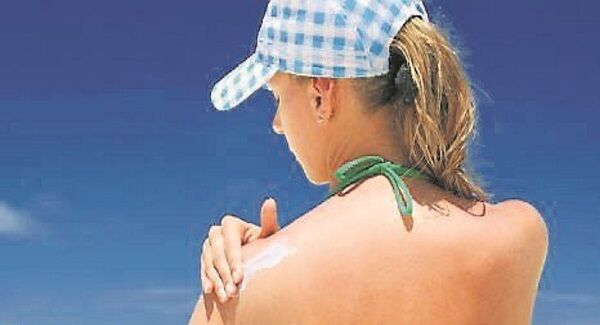
I was extremely lucky and am now totally fine but really aware of how dangerous the sun can be. I wear factor 50 all year around, never sit in the sun and when the weather is hot I wear long sleeves and a floppy hat and remember to reapply sun cream over and over again.
“Some people mistakenly believe the sun isn’t strong enough in Ireland but I had never been a sun worshipper and never even heard about melanoma before I got it, so it shows that you can’t be too careful and early detection is vital.”
In 2015, there were 11,785 cases of skin cancer in Ireland. 1,118 of these were melanoma, the most serious form of skin cancer. The number of skin cancer cases is due to rise to 18,989 by 2040, at a conservative estimate.
Craig Sinclair, director of the World Health Organisation’s Collaborative Centre for UV Radiation and head of cancer prevention at Cancer Council Victoria was in Ireland this month, to speak about prevention measures adopted in Australia, which has one of the highest rates of skin cancer in the world.
“Skin cancer is one of the most preventable cancers,” he says. “In Australia, we started innovative public awareness campaigns 30 years ago and we are now seeing the results of these with a downward trend in melanoma cases in younger age groups. It is vitally important that a comprehensive and well-resourced plan is put in place by the Irish government, to tackle skin cancer, or unfortunately, the significant human and financial burden of skin cancer will continue to increase.”
Be on the look-out for melanoma symptoms
- A new mole or one that suddenly gets bigger;
- One which has developed a ragged or uneven outline;
- Has a mixture of different shades of brown, black, or other;
- Is bigger than the blunt end of a pencil;
- Looks red or inflamed around the edges;
- Is bleeding, oozing, or crusting.
- Starts to feel different, for example, slightly itchy or painful.
- For more information visit www.cancer.ie or www.cancer.ie/uvindex


CONNECT WITH US TODAY



Be the first to know the latest news and updates









