Mike Leigh and the parallels between Brexit and the events of his new film set in 1819
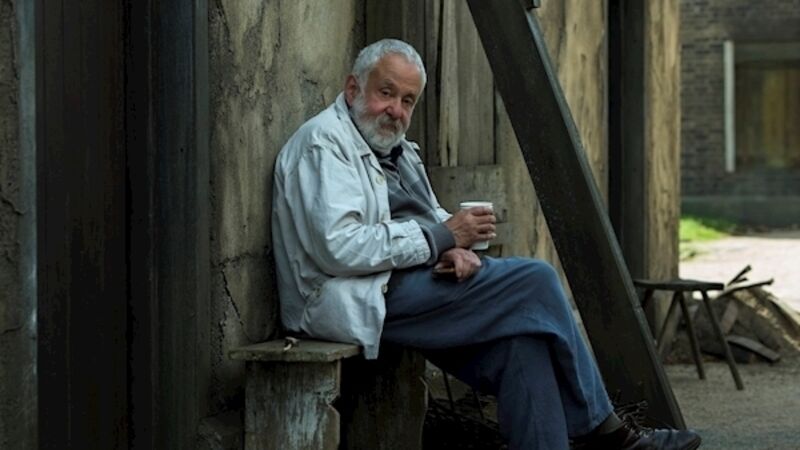
Mike Leigh says there are obvious parallels between Brexit and events around the massacre in his current film, writes
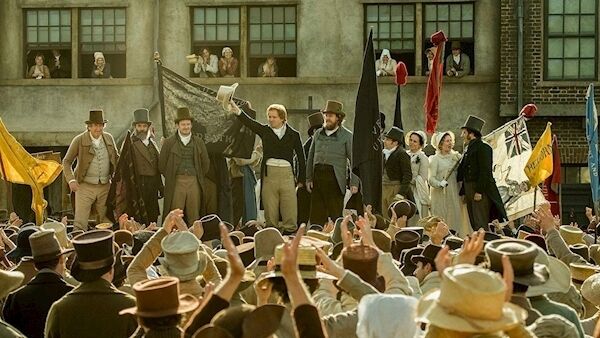
ACCLAIMED filmmaker Mike Leigh returns to a dark period in British history with Peterloo, a dramatic account of the massacre at Peter’s Field, Manchester, where calvary charged the assembled crowd.
Fifteen people died and hundreds were injured on that day in 1819, when a peaceful protest for the right of the working classes to vote ended in a bloodbath. It’s a film about power and the abuse of power, and the sense of immediacy and anger common in Leigh’s contemporary films is very evident. Events may have taken place almost two centuries ago, but they could not feel more timely, he agrees.
“Somehow I sensed it would be relevant. And indeed, as soon as we decided to prepare it and research, almost on a daily basis we found ourselves saying: ‘This is increasingly relevant’. Of course, since then it’s clearly become a matter of democracy.
“Every time I come to Ireland, I’m very aware — and at this moment not least — of history.”
He is, of course, talking about Brexit, and the potentially huge changes facing the UK . “Things have taken a massive lurch, in a more extreme direction, all over the place. I suppose a bonehead would say: ‘Well you had a referendum, people have the vote and that’s what they wanted’. The bottom line is, people voted in ignorance, people were misled. There was misinformation. The abuse of power in exactly the same way, relating exactly to what’s in the film.”
There has been growing speculation in recent weeks that Britain may return to the Brexit polls. “It’d be great if that happened. It’d be even greater if that happened and there was a reversal. It runs so deep, you know. It’s very difficult. My own feeling is it’s an intractable situation, therefore you don’t know how or where it’s going to go.”
Leigh has gained a reputation over the years for being a blunt and tricky interviewee but when we meet in Dublin, he is genial and engaging. Certainly, there’s a no-nonsense attitude about the straight-talking Salford-born film-maker, and you get the sense that he doesn’t suffer fools.
Take, for example, his recent comments that he never works with “thick actors”. How has he managed to avoid such types over the course of his career? “I do the casting process entirely by myself. I don’t have a committee of people. If you audition with me as an actor, you’ll find it’s just you and me for at least 20 minutes at first. I, like you, could generally spot who’s thick, you don’t have to be particularly clever to spot that really!
“There are lots of actors who are very good actors in the sense that they play themselves and they don’t particularly have a grasp of the world, and they’re not too interested in what’s happening out there in the street.
They may be a little bit narcissistic, and they may be gorgeous. But on the whole they’re not in my films,” he laughs.
As a boy, he would regularly go to local cinemas and began to consider a career in the arts, much to the dismay of his father, who like many of his generation, feared it would be too difficult for his son to make a living.
“Although my folks did go to shows, my dad in particular was very resistant. He saw inevitable penury,” he says.
My father was terrified at the idea that I would be any sort of artist, because his father, my grandfather, was a commercial artist. That’s what he did for a living, and in the slump, he couldn’t feed the family.
“What put the cat amongst the pigeons was that I got a scholarship to RADA, as surprising to me as to anyone else, and as surprising now as it was then.”
He attended the acclaimed acting school but was always more interested in a directorial career, spurred by his growing love of theatre and cinema. “I was happy to watch good films as early as I could. And you could see loads of films because where I grew up, there were fourteen cinemas, of varying degrees of fleapit, within walking distance from where we lived.
“They also had a programme that ran for an hour so you could see Laurel and Hardy, Mickey Mouse, quirky things about boxing kangaroos or whatever. I saw a lot of variety. Circus, theatre, I saw Laurel and Hardy on stage in 1952 when I was nine. I saw a lot of stuff. It all fed in and I was excited by all of it.”
He worked extensively in theatre before making his impressive film debut with Bleak Moments in 1971. Since then, he has endured as one of Britain’s most successful and beloved filmmakers, bringing us such works as Abigail’s Party for stage and then the BBC, and High Hopes, centred on a working-class London family.
A streak of films including Life is Sweet, Naked and the terrific Secrets & Lies, about an adopted woman’s efforts to track down her birth mother, solidified his career internationally and he has persistently impressed ever since, blending period films such as Topsy Turvy and Mr Turner with darkly funny modern dramas such as All or Nothing and Happy Go Lucky, featuring a young Sally Hawkins.
Uniquely, his films are heavily improvised, meaning financiers get just a broad outline about an upcoming project. Autonomy is hugely important to him, and he makes his films on his own terms.
“It’s a no-brainer, that’s what it is. I’ve only walked away from projects in the sense that… my late producer, Simon Channing Williams, who died nearly ten years ago, I remember him on a number of occasions coming back from meetings with money people and saying: ‘You know what? They don’t mind that there’s no script, they don’t mind that they don’t know what it’s about, but they will insist on a name’.
“By that they meant a Hollywood star. He’d say: ‘What do you think? They’ll give you as much as you want’.” Each time, he added, he declined.
“I’ve been lucky. I’ve made 21 films that nobody’s interfered with, but only because that’s been the deal, really. If I can make a film where that’s the situation then we’ll do it.
“We’d say: ‘I can’t tell you anything about it. As long as you tell us what the budget is we’ll make it within that. We can’t tell you anything about it, who’s in it, what it’s about. We’ll give you a film’.
“It’s very straightforward, and they either say: ‘Great’ or they say f**k off basically! It’s as straightforward as that.”
CONNECT WITH US TODAY



Be the first to know the latest news and updates