Feeder are still hungry after 25 years
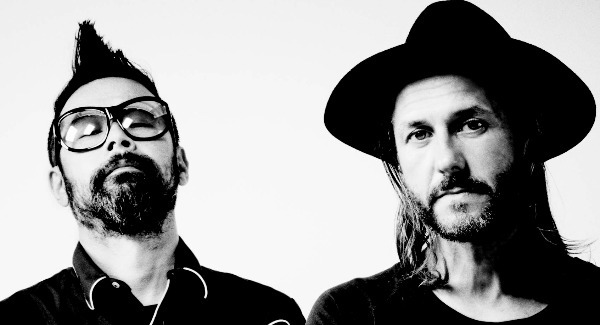
MANY times during the 25-year history of Feeder, frontman, Grant Nicholas, thought it was all over for the band. The darkest hour was in January 2002, when Jon Lee, Nicholas’s childhood friend and Feeder’s drummer, died by suicide.
“When Jon took his life, it was kind of the end for us,” says Nicholas, 50. “We were a three-piece, and the drummer with whom I had started it wasn’t there any more. He was a great personality and a great drummer, as well as a friend.”
In the face of adversity, Nicholas found a strength he hadn’t known he possessed. Feeder, a Nirvana-esque outfit from south Wales, had built a loyal following. Now, all the hard work looked in danger of turning to ashes. Refusing to give up, Nicholas knuckled down and Feeder returned, scarred yet stronger, with their most successful album, 2002’s Comfort In Sound, a UK top-10 hit.
“It was a case of start a new band or carry on with Feeder,” he says. “I was lucky that the whole shock of it inspired me to work a bit differently.”
Feeder had emerged in the mid-1990s, when Britpop was at its height. With a grungy sound and a transatlantic inflection, they didn’t fit in.
This was a product of their upbringing in provincial Wales as much as their artistic outlook. As a child, living in Newport, it didn’t seem possible he might end up on the cover of the NME or on the BBC Radio 1 playlist. So he wrote the sort of songs he wanted to hear, rather than what might catch the ear of scenesters hundreds of miles away.
“Coming from a small town, we weren’t close to the trends of the day. I discovered music though my older brother and also, bizarrely, through a friend, who moved from New York to Wales when his parents got divorced. That was bizarre, but he introduced me to a lot of American stuff. I grew up with heavy guitars. I used to love Black Sabbath and Led Zeppelin. At that point, the American grunge scene was starting to bubble up. We were on the wrong side of the Atlantic. When you’re in a small town, your tastes are probably going to be different from what is going on in London.”
Keeping a band going for more than two decades is never easy. Feeder have had commercial highs and lows. The nadir, arguably, was 2005’s Pushing The Senses, a more reflective record that critics savaged on the (wildly inaccurate) basis that it sounded a bit like Coldplay.
“Ten albums in 25 years,” says Nicholas, who sounds faintly astonished to still be around. “There’s a good vibe in the camp and I’m still writing new music. We had a little break for a while, during which I did a few solo records. It might have been frustrating for the team and for Feeder fans, but that was the first proper time away we’d had and it brought back a fresh spark.” The music business has changed beyond recognition since Feeder started, says Nicholas. On balance, he’s glad he began when he did.
“I don’t know whether we could be successful now. Some things are better; others are worse. Back then, there was no way you could get discovered in Wales, so I had to move to London.
“Nowadays, with the power of the internet, you can get discovered no matter where you live. But it makes it more competitive, and sales are tiny, compared to what they used to be. If you’re a small band, unless you are very lucky, it’s quite hard to earn a living from it.”
The Best Of Feeder is out now. The band play Dublin Olympia, this Wednesday.
Ed Power

CONNECT WITH US TODAY



Be the first to know the latest news and updates