‘The scary thing is this could happen again’ - mother of crash victim
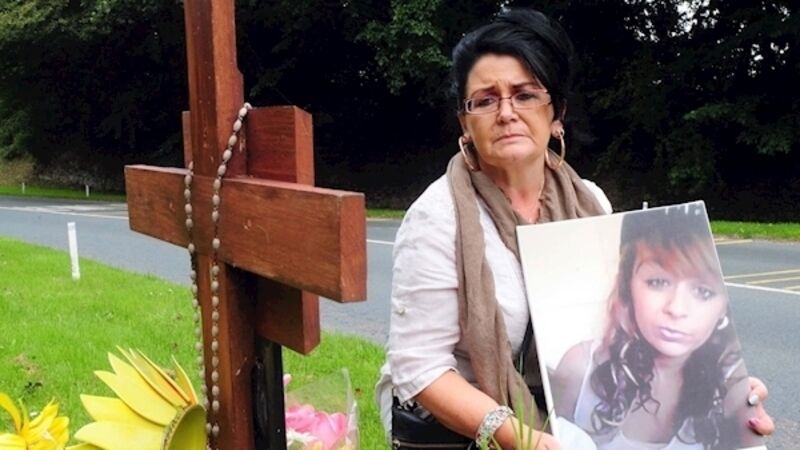
Although a Cork court ruling on negligence arising out of a fatal crash raised important issues for suspension testing of cars across the EU, little change has been seen to date, writes
A mother who successfully sued the NCT operator for negligence following the death of her daughter after a car crash says she won’t rest until lessons are learned from the tragedy.
Paula Murphy, from Cork, said she intends to continue her campaign to ensure more changes are made to car- testing regimes here and across Europe after the circumstances of her daughter’s death exposed a flaw in the system.
“I won’t give up. I can’t, because I fear this could happen again,” she said.
“I will keep going, no matter how long it takes. Seven years on from Amanda’s death, and from what I can see, no significant changes have been made. To them, Amanda was nothing, but to me she was everything.”
Her daughter, Amanda O’Flaherty, 26, bought a 95D-registered Mazda 121 from a roadside dealer in mid-2012 for €600. The seller had arranged for it to undergo an NCT on May 31, 2012, and a certificate was issued.
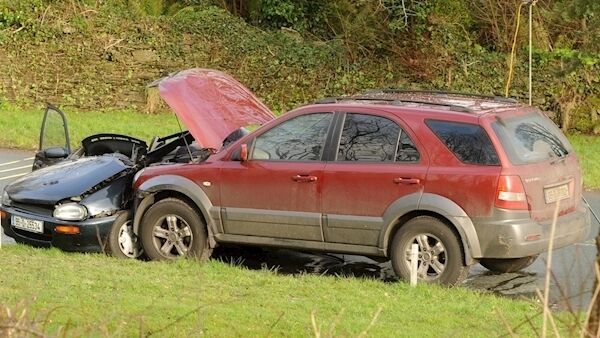
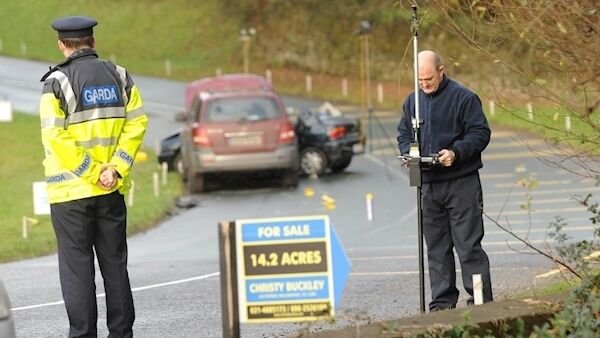
But Amanda suffered fatal injuries in a car crash near Fota, Co Cork, onDecember 29, 2012. She was pronounced dead at Cork University Hospital the following day.
An inquest later heard that hervehicle was not roadworthy at the time of the accident, with defects found in its rear suspension which would have made it unstable before and duringcornering.
Ms Murphy has always believed her daughter was driving a death trap that night.
Following a data protection battle, she got access to the vehicle’s NCT test results.
Motor assessor Liam Cotterexamined the data and immediately identified a flaw in the NCT’s vehicle suspension testing regime, whereby vehicles are put on a shaker or oscillator, which puts a force into their suspension unit.
The device takes a measurement on the suspension on one side and compares it to the measurement on the other side and if the difference between the two sides is greater than 30%, the machine ‘fails’ the suspension.
But Mr Cotter said if both rear suspensions are equally defective, and the test does not record a difference greater than 30% between them, the system can allow defective suspensions to pass.
“The suspension tester machine in effect will ‘fail’ the suspensions on imbalance only, and it is up to the machine operator to take note when suspension damping is less than 50% and manually fail the suspensions under ‘suspension inspection’,” his report found.
Amanda drove just over 1,200 miles in her vehicle in the six months before her accident. Mr Cotter said the mileage wasn’t big enough for the suspension to deteriorate to the extent it did at the time of the crash.
He said if it was accepted that the NCT on Amanda’s car was valid, the only clear inference was the defective rear suspensions had not been noticed when the car went through the test.
Ms Murphy began a lengthy civil action for negligence against Applus Car Testing Service, which operates the NCT. In December 2018, at Cork Circuit Court, Judge Brian O’Callaghan held that Applus was negligent in passing a defective car it had examined, and allowing it back on the road.
He awarded Ms Murphy and other members of the family €31,000 in what is thought to be the first successful case of its kind.
While he found against Applus, he dismissed the action against the man who sold Amanda the car. But Applus signalled its intention to appeal. It is only in recent weeks that the appeal was withdrawn, the damages paid, and all legal issues concluded.
Ms Murphy said it has brought her some closure but she has now asked gardaí to examine the documents arising out of the legal case to see if a criminal investigation is warranted.
Mr Cotter said the case has raised very important issues, not just for the NCT and the Road Safety Authority (RSA), which oversees it, but for car testing across the EU.
He welcomed new moves to pilot a new suspension tester, with results expected by June 2021.
But until a standardised suspension testing regime is agreed across all 27 EU member states, the potential for fatal accidents to occur as a result of faulty suspension still exists, he suggested.
“The RSA, which oversees the NCT regime here, has defended the test but the judge in this court case said he was satisfied that the defects in the car caused the accident which killed Amanda,” Mr Cotter said.
“But the issue has to be addressed at an EU level. You have the crazy situation that every single country has its own way of doing it. It’s ridiculous.
We have no way of knowing how many cars are out there with faulty suspension and it’s only through pure luck that they haven’t been involved in fatal accidents.
He said in the UK, for example, MOT testers conduct a simple bounce test to assess rear suspension.
“It has stood the test of time. It’s crude, but it works,” he said.
“But the point remains that there is no agreed suspension-testing regime between all 27 EU countries, and until that happens, the circumstances that led to Amanda’s death could happen again.”
Ms Murphy paid tribute to Mr Cotter for his work on the case, and for uncovering this potentially deadly flaw in the testing regime. “It had to take Amanda’s life for this to come to light,” she said. “The only thing that’s changed is they’ve reduced the speed limit on the road where Amanda’s crash happened. Other than that, nothing else has changed.
“I’ve written to Moya Murdoch [head of the RSA] and handed in petitions but to be honest, I’ve felt fobbed off. They don’t want to know.
“So from where I’m standing, this could happen again and that’s the scary thing about this whole saga.”
IN a statement to the IrishExaminer, the RSA defended the NCT test but said changes to its suspension-testing process are being piloted. It will be mid-2021 at the earliest before the outcome is known, however.
“The NCT, similar to all periodic vehicle inspections across the EU, is a periodic check test that the vehicle meets the minimum requirements set out in law without any dismantling of the vehicle,” it said.
“It checks, at a point in time, that the components required to be tested, where visible and accessible, meet basic standards. It cannot be a warranty for the period between NCT inspections and this is clearly stated on the NCT certificate. The reason being that wear and tear and other damage can occur as vehicles are driven day-to-day after the NCT is conducted.
“NCTS has the processes, quality management systems, accreditations, training, and integrity measures in place to provide a very controlled system, operated by qualified technicians. It is regarded internationally as an example of best practice in vehicle-testing.
“The consistency of testing is achieved by a professional and well-trained workforce operating modern and well-maintained test equipment and applying their expertise to the assessment of each vehicle in a fair and consistent manner.
“The NCTS is subject to a stringent regime of independent audits and inspections conducted on test lanes as testing is underway.”
In 2018, more than 99% of tests were deemed to be fairly and correctly assessed.
“The suspension test at the NCT meets and exceeds EU requirements. Ireland is one of only five member states who exceed the EU minimum requirements by conducting suspension performance test [balance test] as well as a visual inspection,” the RSA said.
The suspension balance test used at NCT is the current industry-approved standard within the EU. Equipment at NCT fully adheres to the industry specification.
“The premise of the current industry standard set out in EU legislation is that where there is a significant difference between the right and left side, the car is not safe to drive. In order to ensure roadworthiness is maintained throughout the year, vehicle owners are advised to service their vehicles at manufacturer’s recommended intervals and assess on an ongoing basis for signs of poor handling or component damage.”
The European Garage EquipmentAssociation has been leading development of new suspension test methods.
“The RSA has been keeping fully abreast of developments in this area and has always been committed to ensuring that the NCT develops in line with the best approved and proven practices and technologies as they mature within Europe,” the RSA said.
“In recent months EGEA has finalised a specification for a phase shift suspension tester and this has now been made available to equipment manufacturers. The phase shift suspension tester will be able to measure independently the damping efficiency of the left and right-hand side of a vehicle’s axle as well as the balance.
“While there is no requirement under EU legislation to introduce this method of testing, the RSA has required the NCT contractor, in conjunction with their equipment supplier, to develop a new suspension tester, capable of using the newly-endorsed phase-shift method and to evaluate its capability, by way of a large-scale pilot, to be carried out no later than June 2021.
“Ireland is, therefore, leading the way in terms of trialling new technologies for deployment,” a spokesperson said.
Ms Murphy said she thinks about her daughter every day but remembered her especially on December 30, seven years to the day since she stood at her bedside and held her hand as her life support machine was switched off.
“It’s seven years on but it doesn’t get any easier. I do draw some comfort from the fact that her organs gave new life to several people,” she said. “A young child got her heart and an adult man got her liver.
“That keeps me going.”
CONNECT WITH US TODAY



Be the first to know the latest news and updates