Paschal Donohoe outlines the three elements of the EU's Covid-19 rescue package
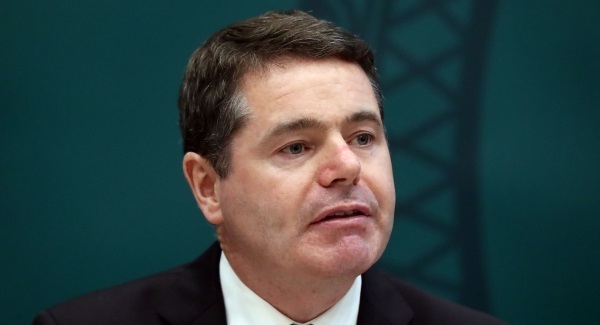
Minister for Finance Paschal Donohoe has said the Government may need limited access to the new European Union Covid-19 rescue package to help fund the wage subsidy scheme and support companies in difficulty.
Mr Donohoe told RTÉ radio’s Morning Ireland that he is resolutely confident the country “can create a new economy” and create new services to recover and move forward, but he cautioned, “we have a journey ahead of us.”
The new welfare supports will be monitored and may need to be strengthened to aid the recovery as 200,000 workers access the wage subsidy scheme.
Mr Donohoe said: “If they need to be changed we will do so.”
He said the deal reached with EU finance ministers on Thursday night has three different elements.
The first is to make loans available to countries in major difficulty to help their healthcare ability to respond to Covid-19; secondly, there is a company plan - to use European Investment Bank to make money available to companies at low interest rates to respond to Covid-19; and a third plan for workers to help companies pay for wage subsidy schemes.
The Minister said it was possible that Ireland would need to access funds from the European Investment Bank to help fund companies and will consider whether to access the programme to help fund wage subsidy schemes.
It is hoped that Ireland will not need to use the fund from the European Stability Mechanism, he added.
A new Government in Ireland must have a stable majority but must reflect the hopes and fears of the electorate when they voted.
Earlier on the same programme Alan Ahearne, professor of economics at NUI Galway said the €500bn rescue package was a positive outcome, but warned that the figure needed is likely to increase.
Prof. Aherne said that, as it stands, Ireland will not need to borrow from the European Stability Mechanism's new low-cost loan fund, as the European Central Banks keeps borrowing costs close to zero.
He said he is “cautiously optimistic” the recovery will be “much, much quicker than a usual recession” given the welfare supports that have been put in place.
[snippet1]987600[/snippet1]

BLACK FRIDAY
Already a subscriber? Sign in

CONNECT WITH US TODAY



Be the first to know the latest news and updates