Judge: Cocaine is a serious matter
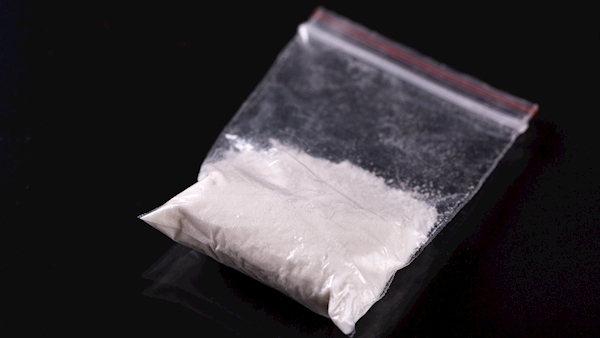
A judge has warned of the dangers to society of cocaine and the need for the law to be applied after convicting five young people of having cocaine in their possession at the Kinsale Sevens rugby event last year.
Judge James McNulty made his comments after all five were searched by gardaí, mostly in plain clothes, in the afternoon and early evening on May 5, 2019, in and around the annual event.
The judge said he wanted to share his rationale for sentencing in each case to the parents who attended court, stressing that, while each case was dealt with on its individual merits, the law needed to be applied and the benefit of the Probation Act, which would allow a defendant to escape a conviction, could not be assumed when it came to serious matters such as cocaine possession.
Judge McNulty referred to a previous court sitting in Bandon on December 20 when he had what he described as “a parade of graduates and aspiring professionals” appear for cocaine possession relating to their attendance at the Kinsale Sevens.
He said he was “astounded” by the details of the offending, which he said had taken place in broad daylight, across the later afternoon and into the early evening — “openly, shamelessly and in public” by those “who have placed their career and travel prospects at risk”.
On that day, eight people were convicted and fined €1,000, and the judge said all were likely appealing those convictions.
The solicitor in four cases yesterday and the barrister in the other case all signalled that they too would appeal.
Two were fined €700 and two others €1,000, with one conditional discharge.
Judge McNulty said he had time in recent months to “rethink and recalibrate” how the court in West Cork would deal with cocaine possession, referring to how the Probation Act can be applied, and how a judge can assess factors such as an accused’s age, family circumstances, and character, and the nature of an offence.
But he said the court also had to consider the harm drugs did to individuals, families, communities, and society.
“It is increasingly difficult to accept that the use or possession of cocaine falls within the terms of the ‘trivial nature of the offence’,” he said.
“Cocaine use or possession is not a trivial offence.”
He said the court could not employ a one-size-fits-all policy, but that a strike-out on drug possession charges, or dismissing them on a regular basis, could tend to “trivialise the offence”.
“It could be seen as indulgence, tolerance, or acquiescence,” he said. This could lead to acceptance, he said, that cocaine possession could be seen as “a lifestyle choice or a recreational option, when it is none of those things — it is a criminal offence.”
The judge referred to a minority report written by the former Mr Justice Garrett Sheehan as part of a Drugs Task Force submission to Government last year in which he said “we need to address these problems before they overwhelm us”.

Judge McNulty said ultimately the laws were made by Dáil Éireann, and the courts would apply them, whether that meant ultimate legalisation, or the prohibition of the use of the Probation Act for some drugs charges.
“The Dáil making the law is paramount, and courts must apply the law,” he said.
Solicitor for a number of the defendants, Eamonn Fleming, said “clearly a message has gone out today” but forcefully argued that sentencing in each case was “following a pattern” in his view, when the circumstances were different.
In the case of a trainee nurse who was convicted, he said her case was different and worthy of the Probation Act, referring to the Bible story of the prodigal son and that it seemed to him that people with previously impeccable character were not being rewarded.
Judge McNulty also quoted a line from the Bible: “From him to whom much is given, much is expected.”
More cocaine possession cases are expected to come before the court tomorrow.
CONNECT WITH US TODAY



Be the first to know the latest news and updates