Human remains found by archaeologists at Waterford site
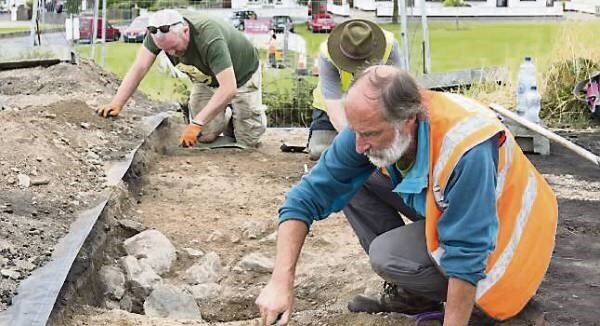
Archaeologists and volunteers have discovered human remains while working on a community archaeological scheme in west Waterford.
The remains, at a Motte-Bailey mound known as Gallows Hill, near Dungarvan, are of two individuals believed to have died up to 200 years apart.
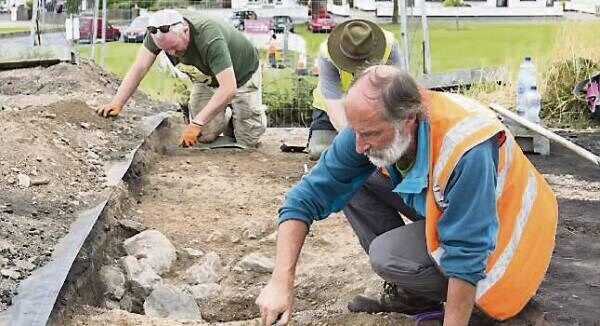
“We found a poorly preserved but almost complete skeleton on what may be a 17th century burial ground,” said Christina O’Connor, committee member of Dungarvan’s Waterford County Museum, which co-manages the project.
“It was possibly someone killed in battle.”
The second find comprises “a few remnants, including teeth, possibly dating from the 1800s and perhaps representing someone hanged at the site”.
The dates have been estimated from the nature and level of soil from which the remnants emerged. The older remains were discovered about 3.5ft underground with the other was only inches below the surface.
In 2015, the voluntary museum, in conjunction with the local community commenced research and geophysical surveys, identified it as of probably 12th century Anglo-Norman origin.
“They would have built a wooden keep or castle on it, surrounded by wooden palisades and large ditches,” Ms O’Connor explained.
In 2016, the group joined the Heritage Council’s ‘Adopt a Monument’ scheme and last year carried out its first seven-day community excavation, supported by Waterford Council and Creative Ireland. The Motte-Bailey itself stands 26ft tall with a 130ft circumference.
The excavations, under the guidance of archaeologists Dave Pollock and Jo Moran, “revealed that that the motte was refortified during the 17th century, possibly during the 1640s rebellions or during Cromwell’s incursions,” Ms O’Connor said.
During the 18th century gallows were built in the area.
“Most hangings would have taken place at Dungarvan castle about a mile away, but Gallows Hill overlooked the two roads entering the town and so would have been a good place to show someone’s head on a pole as a display of power and as a warning against rebellion,” Ms O’Connor said.
This year’s week-long excavations, involving more than 20 participants, revealed evidence that the motte was re-used for different purposes over the centuries.
“The group’s research, surveying and excavation, has shown that Gallows Hill has a much longer and more complex biography than expected,” Ms O’Connor said.
The recent findings, which also include a historic coin and other artefacts, “means this also now a human story”.
“The bones have been forwarded to a team of specialists who will attempt to decipher their story, including the individual’s ages, how they lived and how they died.
“These accounts will be significant in understanding the history of both Dungarvan and Ireland, during some of the most turbulent periods of our history.”
With only a few sections of the mound explored, there are probably further remains buried there. “Whether we dig further will be decided by the local community,” said Ms O’Connor.
This month the project was also announced as county winners of the National Lottery Good Causes Awards and will represent Waterford in a regional competition aimed at qualifying for the national finals, which carry a lucrative cash prize for the winner.
More information on Gallows Hill project can be found at waterfordmusuem.ie. The group will present its findings to the local community over the coming months.

CONNECT WITH US TODAY



Be the first to know the latest news and updates