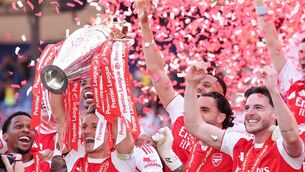
Tommy Martin: Has chat about football outgrown the game itself?
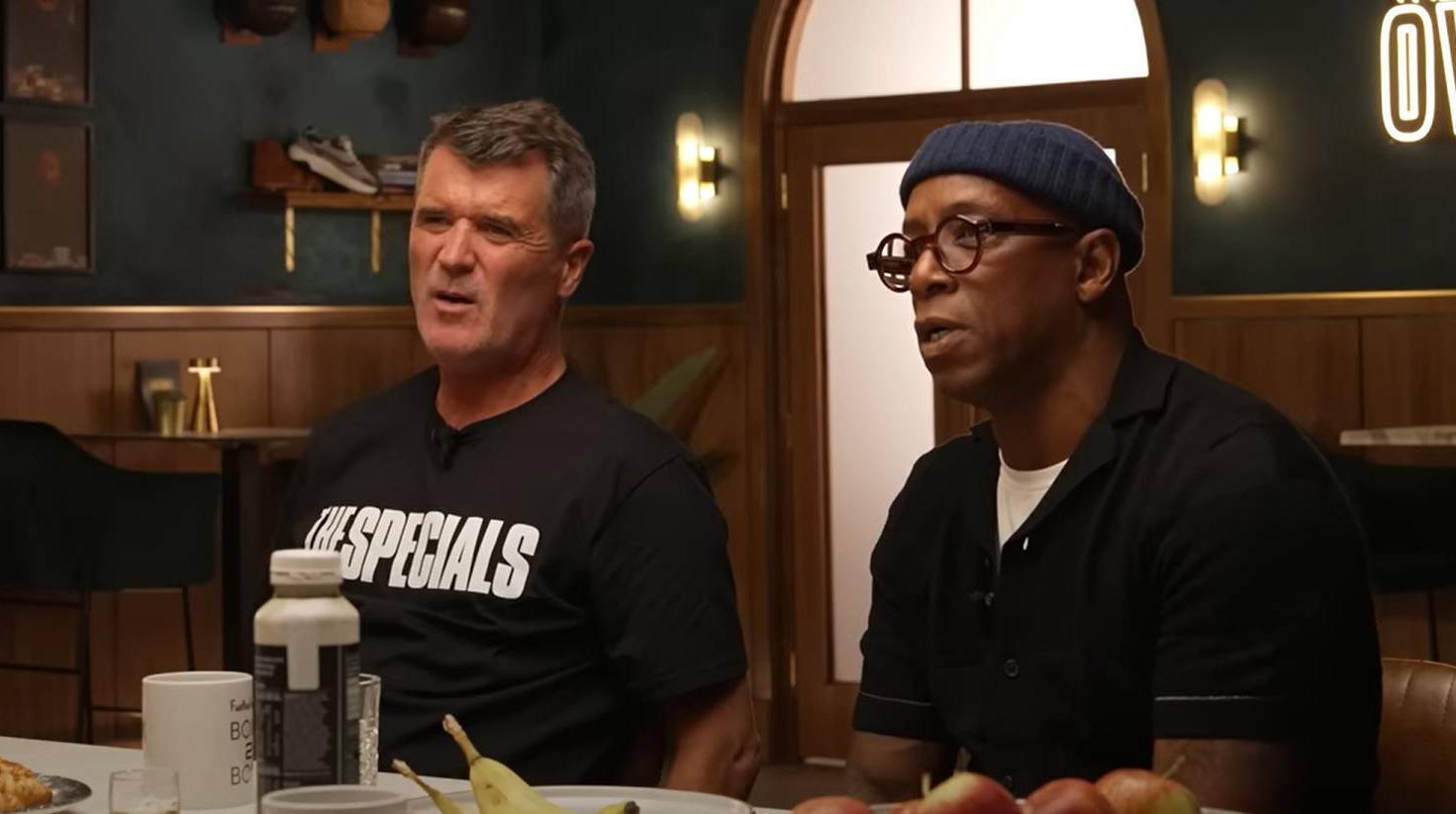
Roy Keane and Ian Wright on the hugely popular Stick to Football.
“The boys are back in town!” A passerby on London’s South Bank has just spotted Richard Keys and Andy Gray holding court on a swanky restaurant terrace and greeted them in a manner the two boyos could not have scripted better themselves.
The pair are back on British soil after a 13-year exile with Qatar-based beIN SPORTS, following their banishment after allegations of sexist behaviour while in their pomp at Sky Sports. Now, like everyone else, they’ve started a YouTube podcast – , naturally – and they have brought a bottle of bubbly for the first episode to ring in the new Premier League season and the return of their patented brand of unintentional comedy.
The pair seem, strangely, more tolerable with the passing of time, like listening to two mad uncles rambling over the whiskey at a family funeral. Or perhaps it’s just that the Overton Window of unacceptable misogynists has grown so large in the intervening years that Keys and Gray really don’t seem so bad now.
Talk of breakfast with Eamonn Holmes and unexplained references to how Harry Redknapp tried to get them jailed tick all the Partridgian boxes, but the most notable exchange of the meandering 35 minutes comes when Gray is in the middle of giving out about Gianni Infantino and the introduction of hydration breaks at the World Cup.
Keys interrupts his old chum. “But you and I are not in a position to complain about change in football too much…we created change in football!” Gray responds: “We never changed football. We didn’t change the kick-off, the half-time, the kick-off of the second half…” Keys: “Sorry, we didn’t change the kickoff from three o’clock Saturday to four o'clock Sunday afternoon and Monday night?!” As an example of trademark delusion of grandeur, it takes the biscuit: Sunday afternoon telly matches were a fixture long before he donned a fluorescent sports jacket for Sky in the 1990s.
But the return of the one-time Ford Super Sunday warhorses feels timely, nonetheless. Though Keys’ has a ridiculous tendency to overstate the importance of him and his chum to the overall success of the Premier League, they return at a time in which the way the game is talked about, and by whom, has achieved a prominence that, for the first time, puts the actual game itself in the shade. In a profoundly Keyesian turn of events, the medium has come to seem more important than the message.
It has been noted that this will be the first Premier League season in which none of Alex Ferguson, Arsene Wenger, Jose Mourinho, Jurgen Klopp or Pep Guardiola will walk the sidelines. In their stead are ranged a cohort of intense Basques and tight-trousered Teutons who, while at the cutting edge of modern coaching, aren’t great men for a soundbite.
Mikel Arteta is left as the capo of the family business but, while not without a certain nerdish fascination, he’s unlikely to ever be the subject of a Netflix three-parter. Neither do the playing squads boast the colourful characters and genuine charisma of yore. There are personalities there: Haaland, Bruno Fernandes, Declan Rice, Virgil Van Dijk at a push. Wouldn’t be your ideal dinner party either though. Will Jack Grealish even get a game this season?
Some of this is just foolish nostalgia, like the way they used to say there were no more personalities in snooker because none of the players were necking vodka and orange and puffing on a Silk Cut. And players are technically and physically better than they’ve ever been.
It may just be that the appearance of a lack of star quality is the by-product of an era when the individual is subservient to the system. Add last season’s data-driven focus on set-pieces and the teeth-grinding nature of Arsenal’s successful title push to the lack of overall grand narratives and there is the sense of the actual football never having been less compelling.
So why have the people talking about it never seemed more prominent? Sky Sports retain their position as the Premier League’s flagship broadcaster after all these years and their new season promos have focused more on the big names in their punditry ranks than those doing the business on the field.
If the nine managerial changes mean a lack of viewer familiarity with the characters in the dug outs, in the studio, the roles of main players could not be more established. Roy Keane is the acid-tongued curmudgeon, Micah Richards the class clown, Jamie Carragher the passionate voice of the people, Gary Neville the C-suite straight-talker.
The football’s back, and so are we, goes the message. People know who exactly these people are, like they knew once knew who JR Ewing or Jack Duckworth were. Can’t say the same about Matthias Jaissler and Carlos Baleba.
And why not lean into the talkers rather than the players? Everyone else is doing it. Following a successful run during the World Cup, Netflix have announced a new deal to carry Gary Lineker’s podcast, which also features Richards and Alan Shearer, throughout the Premier League season.
Disney Plus, meanwhile, will carry , the highly successful podcast spinoff from Gary Neville’s The Overlap stable, which features Neville, Keane, Carragher, Ian Wright and former England women’s international Jill Scott yakking about the game on a weekly basis.
To be clear, none of these shows carry any footage of actual football, just people talking about the game. For so long, people wondered how the streamers would disrupt things by using their financial muscle to snap up broadcast rights. It seems they have looked at things and decided, at the price, they’re better off showing gab than goals.
A new offshoot of the Overlap family is , an Old Trafford-only wafflefest featuring Wayne Rooney and Manchester United YouTuber Mark Goldbridge. This brings things full circle, Goldbridge being at the vanguard of fan-led content that has completely reshaped mainstream coverage of football as traditional broadcasters struggle to be heard amid the online cacophony.
For a sense of this changed landscape, you need only look at the BBC, desperately trying to maintain its relevance in the face of slashed budgets and non-stop attacks from the right-wing press. Their coverage launched this week amid reports in the Daily Telegraph of “unrest” among pundits and staff over concerns that flagship highlights show has lost its sheen in the post-Lineker era.
Reading like a story about a manager losing the dressing room, the Telegraph say that insiders “have concerns about the vision Alex Kay-Jelski, the BBC's director of sport, has for [Match of the Day]” and that he is "too obsessed" with social and digital content at the expense of the broadcast product.
True enough, the Beeb’s offering reads like someone took snapshot of the whiteboard at a production meeting brainstorm session. Along with highlight clips, a 20-strong “fan collective” and returning online shows like The Football Interview, they announced four new YouTube formats – Football Hub, Golden Goal, The Truth About Football and, the one that sounds most like the marketing department on the charlie, FANS². It all amounts to throwing a lot of stuff at the digital wall and seeing what sticks.
The Telegraph say MOTD has lost hundreds of thousands of viewers post-Lineker, but numbers accessing Premier League coverage via the BBC’s online clips have risen exponentially, which appears to vindicate the Beeb’s under-fire gaffer.
Ultimately, they all want to be part of the conversation, and, in an age when everyone is a “creator”, that conversation about the game seems to have outgrown the game itself. There is a grand narcissism to all this, of course, a great collective attentions-seeking to which even the mighty Premier League is not immune.
No wonder Keysie feels like his time has come again.