Focusing on speed or handling in F1 has trade offs
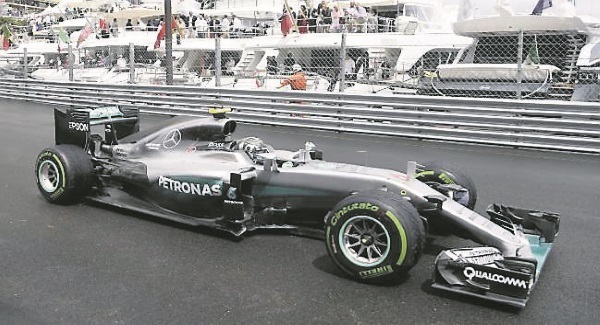
While it’s clear that slowing down these road-bound rockets makes things safer for the drivers, is there a case for simply letting the teams come up with the purest, quickest cars they can, free from any rules?
If a car was built for sheer speed, it would have much smaller wings than the current crops of F1 cars. This would greatly reduce aerodynamic drag, which in turn is what generates the downforce that allows this breed of car to corner so quickly.
However, taking away drag means the cars are also less stable at high speeds as there’s air pushing on the wings to stick the tyres to the ground. Also, what goes fast must slow down, so stronger brakes would be needed and that would add to the weight of the car.
Another aspect with a car designed solely for speed would be to enclose the cockpit. This makes the car more slippery when passing through the air, and it’s something being mooted for future F1 cars to make them safer in the event of a collision.
So, if maximum speed isn’t the solution, what about handling? Bigger wings, fatter tyres and ground effects would all help improve cornering ability and speeds. Taking ground effects first, this was used in the 1970s and early 1980s until it was outlawed. It allowed the whole of the car to hunker down closer to the road to improve aerodynamic efficiency.
The problem arose when drivers reported the cars were becoming too tiring to drive flat out. That could now be solved with modern power steering.
What about larger wings and tyres, then? Well, they create more drag on the car, so it slows down. The only way to counter that is with more powerful engines, which use more petrol so need larger fuel tanks that add to the weight of the car. Which brings us to the simplest way to make an F1 racer, or any car, quicker: make it lighter. Less mass improves the power to weight ratio, needs less braking and puts less strain on the tyres.
While there is a lower weight limit with modern F1 cars, the reality is it’s very tricky to make them much lighter than they already are with the driver, fuel and technology they have to carry. Which is why the latest F1 cars are just about the most advanced they can be, rules or no rules.







