Talks off to rocky start over future of Assad
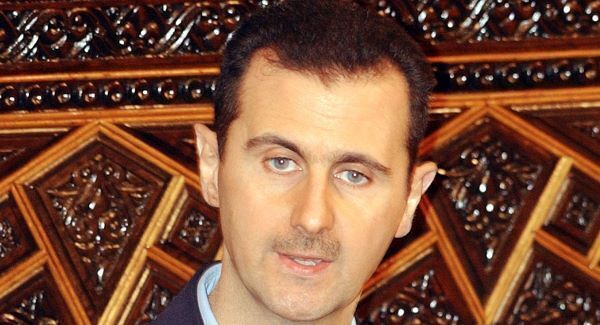
The dispute over the president cast a pall over an international conference that aims to map out a transitional government and ultimately, a democratic election for the country mired in fighting that has killed more than 130,000 people and displaced millions.
While diplomats sparred against a pristine Alpine backdrop, Syrian forces and opposition fighters clashed across a area from Aleppo and Idlib in the north to Daraa in the south, activists and state media said.
Just hours into the talks in the Swiss city of Montreux, the two sides seemed impossibly far apart.
The US and the Syrian opposition opened the conference by saying that Assad lost his legitimacy when he crushed the once-peaceful protest movement.
“We really need to deal with reality,” said US Secretary of State John Kerry. “There is no way — no way possible in the imagination — that the man who has led the brutal response to his own people could regain the legitimacy to govern.”
The Syrian response was firm and blunt.
“There will be no transfer of power and President Bashar Assad is staying,” information minister Omran al-Zoubi told reporters.
Syrian foreign minister Walid al-Moallem said terrorists and foreign meddling had ripped his country apart. He refused to give up the podium despite numerous requests from the UN chief.
“You live in New York. I live in Syria,” he angrily told UN chief Ban Ki-moon. “I have the right to give the Syrian version here in this forum. After three years of suffering, this is my right.”
Ahmad al-Jarba of the Syrian National Coalition said any discussion of Assad’s continued hold on power would effectively end the talks. A transitional government “is the only topic for us,” he said.
But al-Moallem insisted that no one except Syrians could remove Assad, whose family has led Syria since 1970. He also accused the West and neighbouring countries, notably Saudi Arabia, which he did not name, of funnelling money, weapons and foreign fighters to the rebellion.
The question of Assad’s future goes to the heart of the peace conference with the stated goal of a transitional government for Syria. Notably absent was Iran, which along with Russia has been Assad’s most forceful supporter. Ban invited, then disinvited Iran at the last minute, after the Syrian opposition threatened to back out of the peace talks.
Saudi foreign minister Saud al-Faisal said “it goes without saying Assad has no role in Syria’s future.”
Diplomats have played down expectations for the Swiss peace talks, although they have said repeatedly they are the only hope for ending Syria’s civil war. But Assad’s forces have gained ground in recent months.
Later this week in Geneva, Syria’s warring sides are due to sit down for their first face-to-face meeting since the conflict erupted.
CONNECT WITH US TODAY



Be the first to know the latest news and updates