Final Lap: ‘He projected a glamour image, but he was different to that’
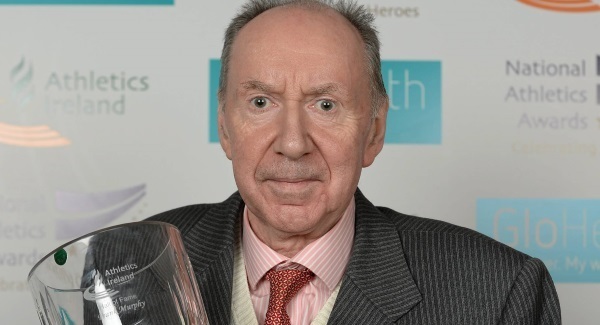
The Fitzwilliam Card Club, at 2am on a Thursday morning, is not the kind of place you tend to encounter athletic greatness. It was the spring of 2010, and there we were — students, athletes, gamblers — taking our seat at the final table of a poker tournament with men who looked like life’s victims.
All apart from one. Sitting quietly, impeccably dressed in a navy suit, was a man in his 60s. At the other end of the table, an ultra-marathon runner regaled us with tales of his heroism; describing the conditions he had braved to finish the most sadistic races on earth. Where he placed in these races was conveniently omitted, but we, being fellow runners, indulged his ego.
Soon after, as we explained our own non-achievements to ultra-marathon man, a guy in the corner piped up, his expression smacking of mild disdain: “You know there’s a European 1500-metre medallist at this table?”
We looked around, scanning the seats, but Frank Murphy just sat there quietly. There are certain guys who delight in rehashing stories of glory days, but he was damned if he’d be one of them.
Only when pressed did the ageing athlete admit that, yes, he had once been one of the world’s best milers, “a long time ago now,” he added with a nostalgic smile.
“That was Frank, yeah,” says Des McCormack, who sparked a lifelong friendship with Murphy when they roomed together at Villanova University in the late 1960s. “He was always humble about his achievements.”
And they were many. Murphy was a star for his college, racking up wins on the NCAA circuit with astonishing frequency. In 1969, he won an American collegiate indoor title over 800m, then clocked 3:40.90 for 1,500m to break Ronnie Delany’s Irish record.
One of the few vestiges of his career on YouTube shows him obliterating the field to win the British 1,500m title that year — the full breadth of Murphy’s talent is on display, his head dipped, shoulders rolling, and fists pumping as a gaping chasm opens between him and his rivals.
Later that summer, Murphy was edged out by British rival John Whetton for the European 1,500m title, though his time of 3:39.5 made him the first Irishman under 3:40.
“He was tough, he was hard,” recalls McCormack. “A lot of people said he didn’t train that hard, but Frank was savage when he got on the track. He might have even trained too hard, because in those days you ran 100 miles a week or more.”
The coach at Villanova was Jumbo Elliott, a brutal taskmaster with worldwide renown. “Jumbo loved him because his personality was infectious,” says McCormack. “Typically after Christmas, Frank would come back and everyone had a few pounds on, but he’d always pick on Frank, shouting: ‘Murphy, we’ll run that lard off your backside if it takes all day,’ but Frank loved it.”
“Frank never let Jumbo down,” says Donie Walsh, a team-mate and long-time friend of Murphy’s. “He was such a great competitor, a fabulous runner.”
Walsh recalls fondly the evenings he and Murphy raced at Madison Square Garden, which would usually be followed by them hitting the bars of New York, and rarely making it back to their hotel the right side of 4am.
“He was a likeable rogue,” says Walsh. “He had great humour and he was very good for looking after people.”
McCormack felt that in his first year at Villanova as Murphy took him under his wing.
“He was the star; I was your average domestique,” he says. “But Frank always insisted I was part of his success. He wasn’t a star in his mind.
“One time we decided to get part-time jobs so went to a ladies’ shoe store in Philadelphia. Very quickly Frank became one of the highest paid salespeople even though he was only working two days, but he attracted all the ladies. He had that charm and charisma.”
Murphy enlisted McCormack as his assistant, making it his job to ferry shoes from the back room, but all the commission he earned was split 50/50 with his friend. “That’s the kind of guy he was,” says McCormack.
In their final year, the pair had enough savings to buy their first television, conveniently enough the week of baseball’s World Series.
“We knew nothing about baseball, but all of a sudden we got hooked on it,” says McCormack. “We did nothing but watch it for an entire week, missed training, college, everything. After that we looked at each other and said: ‘Okay, the telly has to go.’”
Having been there during Murphy’s physical prime, it pained him to witness his decline. Three years ago, Murphy was diagnosed with Parkinson’s, then just six months later, cancer.
“He had a six-week radium treatment but I don’t think he ever recovered from that,” says McCormack.
“It was all downhill from there. It was so sad to see it happen, to come to the realisation that this was it.”
Murphy moved to the TLC nursing home in Santry last April, and his health declined further when contracting pneumonia last November.
He passed away in the first week of January at the age of 69, leaving behind his loving daughters, Joanne and Susan, their mother, Margaret, and his partner, Yuk, all of whom would remember Murphy not as he was at his lowest, but how he soared at his highest.
“He was larger than life in so many ways,” says Frank Greally, editor of Irish Runner magazine.
“People compared him to George Best because of his attitude, but I don’t think that was right. He was a fairly deep guy behind it all.”
McCormack has the same go-to phrase as Greally and Walsh when describing his friend: “Frank was Frank,” he says. “He projected a glamour image, but he was different to that. He was such fun to be with, very thoughtful of others, very caring and he loved his two daughters.”
Frank was Frank — it might seem an obvious, almost empty statement, though it’s anything but. They use because it describes the indescribable, a man you just had to know. Different to the point of unique, loved by many, liked by all. A charmer, a champion.

CONNECT WITH US TODAY



Be the first to know the latest news and updates