How the GAA can level the playing field
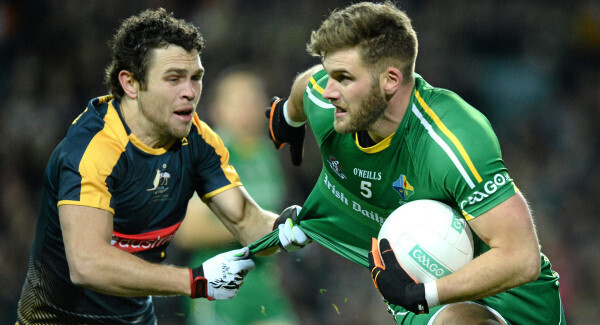

The draft works on a similar premise to that in the NFL: the worst performing teams in the previous year’s competition are given the priority picks among the best up-and-coming players. The poor get a little richer, the richer a little poorer. It doesn’t warp the market – Hawthorn won their third consecutive title this year – but it helps to even things up slightly.
The Great Western Sydney Giants club, where former Cavan footballer Nicholas Walsh works in their strength and conditioning department, was established as a new AFL franchise in 2012. Finishing bottom of the AFL ladder in ’12 and ’13, they were handed first choices in the draft. In 2014, they finished third from bottom. This past season, they jumped to 11th.
Where birthright beats the buck, the GAA could never incorporate such a system. But that’s not to say it couldn’t learn a lesson or two from the AFL about balancing the scales between the haves and the have-nots.
The GAA could never implement salary caps as those enforced by the AFL but like their Antipodean cousins officials might be able to do something about the amount of money spent.
Controlling the finances of a county team is easier said than done when a large proportion of the funding for the bigger counties is unaccounted for and contributed from outside sources.
Managing the amount of personnel figures may be a little less tricky. If a county like Leitrim, disadvantaged in comparison to most others because of their size and proportional financial constraints, can afford, say, four backroom team experts outside of the coaching staff should a county like Mayo be able to have eight?
At the same time, how do you equate the distances players from Leitrim, Mayo and even Kerry, many of them living outside their native counties, have to travel to and from training and games compared to relative ease for those in city counties like Dublin, Cork and Limerick? (We don’t feel as sorry for Kerry whose incredible charm offensive blitz in the US earlier this year reaped them over €1 million) Two years ago, outside of Jim Gavin and his selectors, Dublin had 14 backroom team members. That number has wavered little since. It was similar size when the county weren’t winning All-Irelands under Paul Caffrey but the point is Dublin are the Texas of Gaelic football: where everything is bigger and often better.
It’s known, for example, that they provide match-day expenses for the partners of their players. Could those of the Carlow footballers even dream of such luxuries being afforded to their nearest and dearest?
Too greedy to share, Dublin are often painted as the bogey men when the thorny issue of equalisation comes up. In his annual report last December, county secretary John Costello attacked the “anti-Dublin prejudice” idea floated by GAA president Liam O’Neill about cutting the county’s funding. To sustain GAA development in the capital, more money simply must go their way.
But couldn’t some of the eye-watering revenue be spread? Were the GAA at central level entrusted to negotiate jersey and franchise deals with manufacturing companies, they would be able to pool the vast monies generated by the sales of Dublin and Cork kit along with the humble figures from counties such as Leitrim and Longford and distribute the cash among all the counties evenly.
Too idealistic?
Well, might Croke Park at least consider ending the seeded formats ascribed to by the likes of the Leinster and Munster Council in their football championships. Only in Ulster and Connacht are counties truly equals.
Although it is primarily a player welfare initiative, the phased inter-county winter collective training ban could be interpreted as an attempt by the GAA at equalisation. Because Waterford’s hurlers were permitted to return to training last November, they were able to hit the ground running in Division 1B and sustained it throughout a victorious league and into the championship.
The GAA know that until such time as they catch somebody doing something when they shouldn’t be doing it and make an example of them the policy will remain a flawed one.
But it seem clears Croke Park believe the best way to make life fairer for counties is in the pocket. In his annual report earlier this year, GAA director general Páraic Duffy insisted financial equalisation was still on the agenda despite Dublin’s opposition: “We are in an era where some counties have backroom teams of up to 20 people; they can afford this back-up by virtue of their success in the top division of the Allianz Leagues, their income from sponsorship and corporate events, and from other fundraising.
“Small counties, by contrast, draw from a restricted pool of players, must survive on lower revenues, and can afford minimal backroom support, yet must compete in the same leagues and championships as those with substantially greater budgets.”
Instead of taking a leaf out of the AFL’s rulebook and replicating a form of their mark, which will is counter-productive, the GAA should be looking to take one from the Australians’ accounts. When the market is so polarised, fixing it is permissible.
Super 11 lessons must be learned
We don’t fall into the fundamentalist group that looks upon Super 11s as a bastardisation of hurling. In the US, where the vast majority, if not all of the major stadium fields, are smaller than those required for Gaelic games, it actually makes sense to adjust the game accordingly, so that bigger crowds can watch. Super 11s could very well be the gateway for the game into the American market.
However, if it’s going to be done, it must be done right. The fight that broke out during the Dublin-Galway game in Fenway Park marred the occasion as much as those associated with it would like people to think otherwise. The jaw-dropping skills, particularly from the goalkeepers, were overshadowed by the ugly scenes, which if repeated in a game here would involve suspensions, not to mention fines, for the counties involved.
The brawl was completely ignored by the organisers as if it somehow didn’t happen. They couldn’t have legislated for the ugly stand-off in Galway that precipitated the trip but there was plenty within their control on Sunday. Reminding the hurlers of their responsibilities was one; appointing a referee from a county other than the two competing would have been another.
Aussies’ Hodge should have faced censure
The day of Ireland being choirboys in the International Rules series is, thankfully, long gone. Prior to the start on Saturday evening, it was obvious Joe Kernan’s men weren’t going to be pushed around by the Australians, and if that attitude continues, then the concept will be all the better for it.
That Ireland have been reluctant to make more of the cowardly push by Australian captain Luke Hodge on Paddy McBrearty into a goal-post to deny him a six-pointer does the series a disservice. The Donegal forward was hospitalised after the incident (imagine if the post wasn’t padded!). An apology may have been forthcoming but it is hardly enough. In rugby, Hodge’s act would have warranted a citing and a likely ban. After the dark years of the series in the mid-2000s, a match tribunal was introduced so players would refrain from such acts, as suspensions would carry into their own code. Hodge should have been made pay for his cynicism, to instil the idea that the series be taken more seriously.