Water leak at National Archives caused ceilings to collapse and led to discovery of asbestos
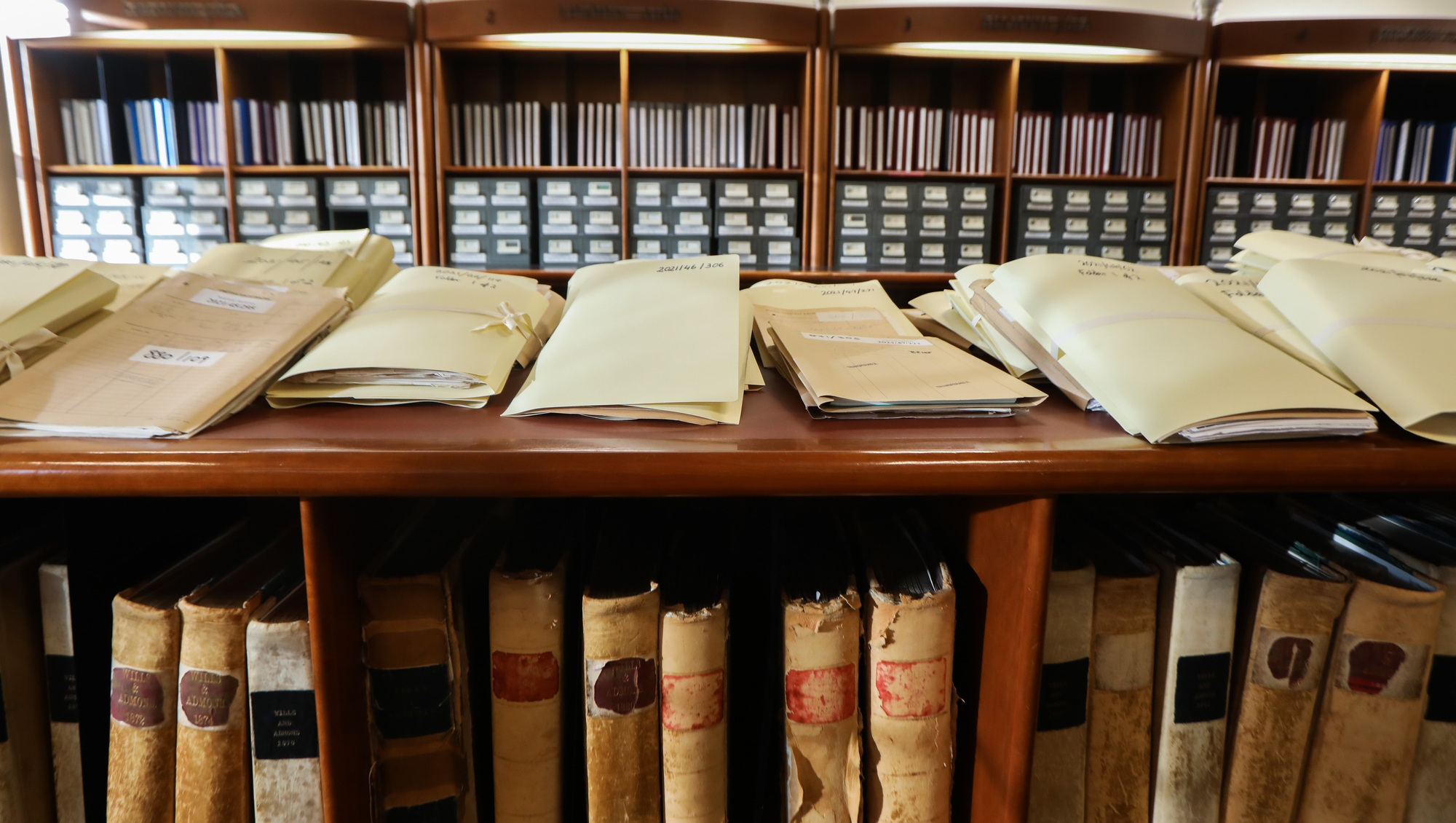
Report said fortunately much of the damage was cosmetic and no archival records were lost during the event. File picture: Leah Farrell / RollingNews.ie
A major leak at the National Archives caused suspended ceilings to collapse, disturbed flooring, damaged document storage boxes on four different levels and led to the “concerning” discovery of asbestos in the building.
An internal report said the leak occurred after the valve on a high-pressure hose “perished”, leading to a steady flow of water that began to spread throughout the building.
It said water had seeped through the National Archives premises in Dublin affecting all six floors, file storage areas, and the ground-floor reception.
However, the report said fortunately much of the damage was cosmetic and no archival records were lost during the event.
“The most concerning damage was to the flooring in the third-floor workroom and the possible presence of asbestos," it said.
The report said the National Archives disaster plan had quickly been activated after a staff member spotted water in a corridor early one morning last October.
It said wet archival boxes were quickly taken to a large holding area and plastic sheeting put over shelving to protect files and documents from any further potential damage.
The investigation detailed the salvage operation as teams of staff opened any wet or damp boxes to assess their contents.
“The boxes that were clearly saturated were moved to this area first followed by boxes that were in water-damaged areas and at risk of becoming wet.”
It said unaffected records were immediately re-housed in fresh boxes, while documents that were wet or damp were carefully managed by the archival conservation team to air dry them.
“By mid-afternoon on the day of the incident, the majority of the collection had been removed from saturated boxes and it became clear that the salvage operation could be managed by [our] staff and that external assistance was not needed,” the report said.
It explained that commercial dehumidifiers were then used to help dry out the building and a total of 935 boxes of archival documents had become wet, with another 1,145 moved because they were at risk from the leak.
The report said: “Thanks to the bespoke archival boxes used by the National Archives, very little water reached the archives held within them. No items were damaged beyond slight water staining.”
However, the leak did lead to the discovery of asbestos beneath damaged floor tiles in the Bishop Street building.
A second report carried out by specialist surveyors following the leak said: “Asbestos containing bitumen adhesive was found under existing floor tiles. The floor tiles are in good condition in general but small amounts have become loose.
“The loose tiles can be taped down temporarily or covered with a mat. The loose tiles should be removed and replaced with a small section of linoleum.”
The report also said that if the National Archives were planning any major work in the building, a more intrusive survey for the presence of asbestos would be required.


CONNECT WITH US TODAY



Be the first to know the latest news and updates