‘Virtually certain’ extreme Antarctic events will get worse without drastic action
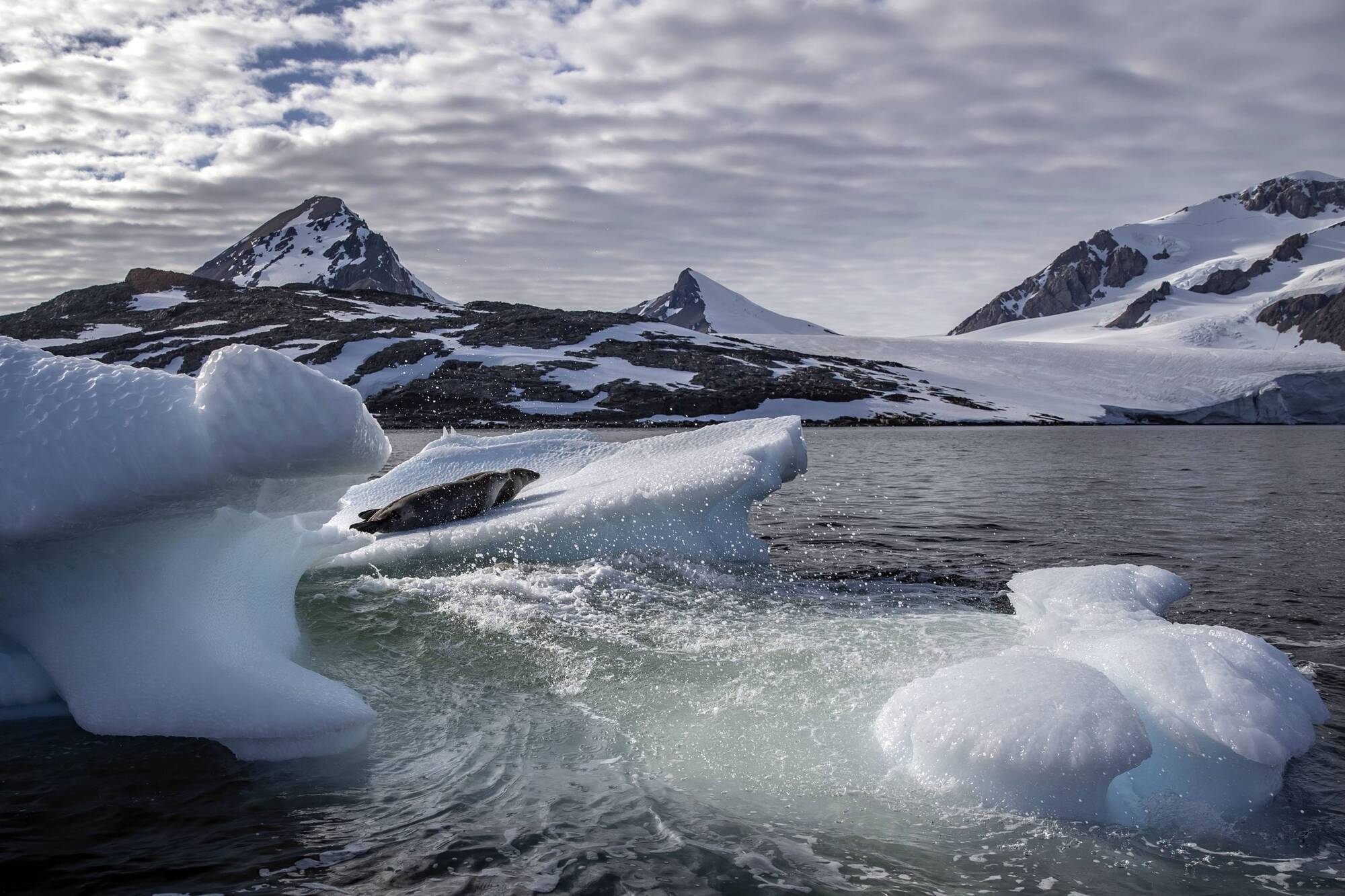
Seals are seen on floes off Horseshoe Island as the floes melt due to global climate change in Antarctica last year. Antarctic land ice — which contributes to sea level rise when it melts — has declined since the 1990s. Photo: Sebnem Coskun/Anadolu Agency via Getty Images
It is “virtually certain” that future extreme events in Antarctica will be worse than the extraordinary changes already observed, according to a new scientific warning that stresses the case for immediate and drastic action to limit global heating.
A new review draws together evidence on the vulnerability of Antarctic systems, highlighting recent extremes such as record low sea ice levels, the collapse of ice shelves, and surface temperatures up to 38.5C above average over East Antarctica in 2022 — the world’s largest ever recorded heatwave.
Records for Antarctic sea ice, which varies every year between a February minimum and a September maximum, “have been tumbling in recent years”, said study co-author Dr Caroline Holmes, a polar climate scientist at the British Antarctic Survey.
“One clear metric of how things are changing is that the summer minimum has broken a new record three times in the past seven years.”
Sea ice extent in July 2022 hit a record low for that time of year, but was surpassed by a new record this July — one that was “three times further away from the average than what we’ve seen previously”, Holmes said.
CLIMATE & SUSTAINABILITY HUB
Antarctic land ice — which contributes to sea level rise when it melts — has also declined since the 1990s, said Associate Professor Anna Hogg of the University of Leeds, a study co-author.
Between 1992 and 2020, the Antarctic and Greenland ice sheets have contributed a 2.1cm rise to the global mean sea level. The rate of ice sheet loss from Antarctica “matches the IPCC worst case” for predicted ice loss under high greenhouse gas emissions scenarios, Hogg said.
This is despite global emissions currently tracking closer to an intermediate emissions pathway.
Ice shelves, which fringe three-quarters of the Antarctic coastline, have also retreated in recent decades. Ten Antarctic ice shelves have also experienced major ice calving events since 2009.
CONNECT WITH US TODAY



Be the first to know the latest news and updates