Natural health: How to deal with cracked feet
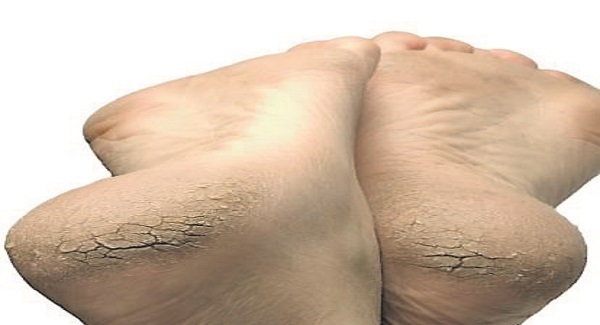
I typically recommend a nightly foot soak of warm water with a cup of apple cider vinegar added to it for cracked or rough heels. With deeper cracks in your feet, this may sting a little initially (even though the apple cider vinegar is well diluted), but it is worth sticking to this nightly routine for at least half an hour as it really does work.
Once the cracks in your feet have closed somewhat and are healing, you can apply a gauze pad soaked in the apple cider vinegar directly to the affected areas. Tape a waterproof plaster over the soaked gauze pad, then put your socks on over the top and leave this applied overnight.
The apple cider vinegar is best if you choose an unpasteurised brand with the ‘mother’ in it, as this is the most effective at preventing infection, helping the skin to heal, and encouraging the hardened dead skin to shed easily.
With fermented health drinks becoming very popular, it is much easier to find quality vinegars and ferments in the shops. In fact, I have also used clabbered goats milk, kefir, and kombucha to address cracked heels — all with great success — however, apple cider vinegar is by far the easiest to obtain and use.
It is often more comfortable if you apply a balm or salve during the daytime. Anything with a plant butter (cocoa, shea, mango) and/or beeswax base helps to prevent new cracks from forming or existing cracks from becoming deeper. Avoid petroleum-based products, as this will dry out the skin further and cause more issues in the long term.
Whenever dry or cracked skin is an issue it is also important to ensure that you are getting plenty of healthy fats in the diet and you are well hydrated. It is worth noting that there are some medications that can trigger excessive dryness in tissues, as well as underlying conditions (such as a thyroid imbalance) that may need to be taken into consideration.
The first thing to note is that people of all ages, including babies and children, can have the same dosage as adults without any risks or adverse effects. The reason for this is that homeopathy is a system of medicine which is based on energetic properties rather than a chemical dosage.
Homeopathic remedies are not necessarily without side-effects however — there are some individuals who experience a short-lived aggravation to a remedy depending on their sensitivity rather than their age or body mass. Diluting the remedy further typically remedies this situation.
I agree with you, the dosage system for homeopathic medicine is somewhat daunting, and hope that I can shed some light on this for you.
The potency of each homeopathic remedy is denoted using a number and letter — the number indicates how many times the source has been diluted, while the letter indicates the dilution rate. X is the slowest dilution rate at 1/10, C denotes 1/100 dilution, M is 1/1000 and LM is the fastest dilution rate at 1/50,000.
Each remedy is potentised during this series of dilutions and succussions (a powerful shaking action), which means that the remedy substance is activated while removing any risk of chemical toxicity.
The difference between these potencies is in their action rather than the notion of being a stronger or weaker medicine, and it is this that seems so different to our typical model of medicinal treatments.


CONNECT WITH US TODAY



Be the first to know the latest news and updates