Dr Bernadette Carr answers your questions
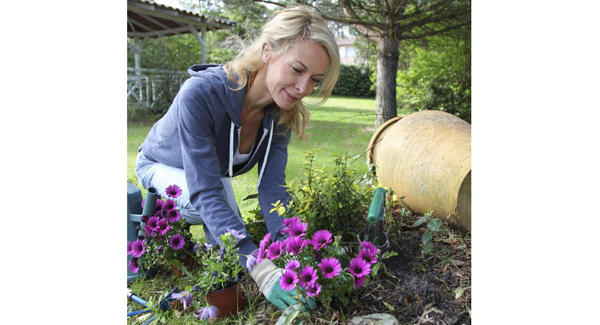
Housemaid’s knee or prepatellar bursitis is an inflammation of the bursa, a small fluid filled sac at the front of the knee (but not involving the knee joint); movement of the joint is not usually affected.
The bursa acts as a cushion between the tendons and the bones and it becomes inflamed often due to repetitive movement(s), such as gardening where the person is constantly on their knees
Repetitive actions do increase the risk of bursitis. Other joints that are commonly affected are the shoulder, elbow (student’s elbow) and the hips.
In addition to repetitive movement or injury, bursitis can be caused by an infection if the fluid in the bursa becomes infected. The pain usually does improve within a few weeks but if there is fluid in the bursa, any inflammation may take longer to go down.
To ease the pain and reduce the swelling, here are some general suggestions to consider:
* Rest the knees and ease back on the gardening.
* An ice pack may provide some relief — you could use a packet of frozen peas wrapped in a dish cloth or towel.
* An anti-inflammatory should help to ease the pain and reduce the swelling.
If you have had the symptoms for more than two weeks, I would suggest making an appointment with your GP, who can examine your knees and rule out any underlying medical condition.
When this episode has eased, it might be a good idea to consider if there are garden implements or kneeling pads available which would reduce the amount of kneeling.
Watering eyes (epiphora) are common and can occur either because of an excess of tears or a blocked tear duct. It can occur in one or both eyes and is common in young babies and in people like your mother who are over the age of 60.
Tears are produced all the time by the lacrimal gland to keep the eyes moist. The tears drain away through small channels (tear ducts) on the inner side of the eye into the nose.
If the tear ducts either become blocked or the ducts are too narrow, the tears will not be able to flow away and instead flow out of the eyes.
The most common reason for watering eyes is a blocked tear duct and the reasons for this include:
* An inflammation in the duct which has caused it to narrow.
* An allergy such as allergic conjunctivitis.
* A piece of dirt or grit which has lodged in the eye.
* Small scratch to the front of the eye.
* An ingrown eyelash at the front of the eye.
* Less frequently, it could be due to certain medications.
I would suggest you encourage your mother to make an appointment with her GP, who can examine her eyes and find a cause for the watering eyes.
While she is waiting for the appointment, I would suggest she avoids contact with any irritants, for example, peeling onions. She should also avoid using any creams or cosmetics close to or on the eye area.
I am sure her GP will be able to reassure and advise her on the most appropriate management.


CONNECT WITH US TODAY



Be the first to know the latest news and updates