Hopes dashed
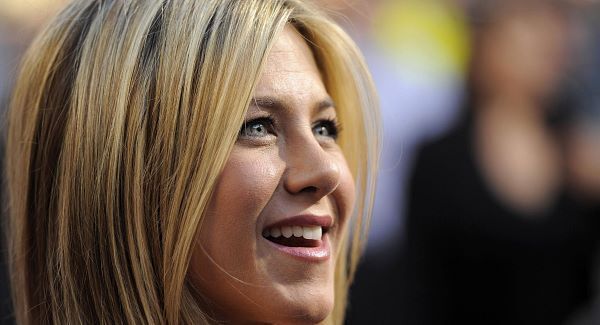
This is how 44-year-old Jennifer is represented in the media. A woman so devoted to her career that she paid for it by not having a family.
But who are we to judge? Perhaps Jennifer is one of a growing number of women who value other aspects of life besides motherhood and choose not to have children?
And what does our judgment of her mean for women here in Ireland who find themselves in their 40s and facing the end of their fertility without having had children?
According to the 2011 census, more than 165,000 women over 40 have never had children. That’s twice what it was 20 years ago and, with women marrying later in life, it’s a figure that is only set to rise.
One in six couples has fertility issues. Those who can afford to often opt for expen-sive fertility treatment and some go on to have children. But many find only heartache at the end of a painful road.
What happens to women who long to be mothers when they have to accept a future without children? “It can be extremely difficult for some women to reconcile the idea they had of themselves as a woman and a mother with being a childless woman,” says Dr Marelise Spies, a counselling and occupational psychologist. “There can be a sense of shame at not living up to what you and society expect. It can be almost unspeakable and very traumatic for some women.”
A Danish 2012 study compared 98,737 women who attended infertility specialists, dividing them into those who went on to have children and those who didn’t. Those who didn’t ran twice the risk of being hospitalised for alcoholism as those who succeeded, and their risk of being hospitalised for mental disorders was 43% higher.
These weren’t short-term risks either. They were equally strong more than a decade after women had seen a fertility specialist as they were immediately following their attempts to get pregnant.
Jody Day understands this mental anguish. She set up Gateway Women in Britain in 2011 to help such women. She is holding workshops in Dublin for the first time this June.
Jody, 49 says: “The depth of pain and shame in the letters I got from Ireland was greater than anything I’d received before. Women who had never been able to talk about their problems and thought there was something wrong with them. Ireland is modernising but it’s still a traditional country where women are expected to have children. It can be difficult if you don’t and that’s where I try to help.”
Jody and her husband started trying to have children when she was 29. “Fifteen years went by in a haze of infertility and IVF followed by divorce and relationships that didn’t work out. All that time, I wanted to be a mum and when I arrived at the age of 44 and realised that was it — I’d never have children — I was grief- stricken.”
She could see other women going through similar grief but nobody was talking about it. It was a taboo and these women were suffering as a result. “I’ve met women who’ve spent 20 years in silent grief,” she says.
“Childless women who think they’re mad and depressed. They think they’re failed women, that they’ve done everything wrong to have got where they are. I’ve worked past that and want to help others create a meaningful life without children.”
Helen Brown, co-founder of the National Infertility Support and Information Group (NISIG), also uses her personal experience to help others. Diagnosed with endometriosis in her 20s, she went through 10 years of surgery, IVF, frozen cycles, and miscarriages before realising she’d never have the family she dreamed of. She founded NISIG to share her pain with others who understood.
“You realise you’re not alone when you’re surrounded by women going through the same feelings as you,” says Helen. “There’s a kinship there.”
Nonetheless, acceptance was slow to come. “Women are born with a womb and grow up imagining they’ll have children,” she says. “It’s reinforced by society. Two years after a couple marries, people start asking when the baby is due. The couple’s parents expect to become grandparents. Their friends start to have children. If you don’t take that step and join the mummy club, it can take a lifetime to come to terms with it.”
Fertility treatment isn’t the cure-all it’s made out to be either. “Success stories in the papers ignore that there’s only a 30% to 40% success rate with IVF and that’s only a positive pregnancy test, not a live birth,” says Helen. “Nobody looks at the 70% who don’t succeed.
“IVF takes such an emotional, physical, and financial toll on you and the chances are that your hopes will be cruelly dashed.”
Like Jody, Helen has met women suffering greatly because they cannot become mothers. “If our group isn’t enough for them, I recommend infertility or grief counselling, because they are grieving the loss of their children.”
Marlyn Robinson from Dublin knows this grief. Aged 46, she miscarried her first baby. Early in her second and third pregnancies, her babies’ hearts stopped in the womb.
“I was 40 when I married so we started trying straight-away,” she says. “Initially, I just took folic acid, ate well, and kept fit, but after the second failed pregnancy, we started treatment. Everything was about my body clock, timing, fertility sticks, and hormone injections. It was very draining emotionally and physically but I believed I’d have a baby at the end.”
After her third failed pregnancy aged 45, she had to accept her time had passed. “I was initially overtaken by grief for my loss and would go to church to light candles for my babies,” she says.
The passing of time has eased Marlyn’s pain but she’ll always have pangs of regret. “It gets easier with time and age,” she says. “Nature has a way of dealing with your body clock. But you never forget your unborn children.”
Bríd Ní Chionaola, 48, was also late marrying. Aged 39, she followed the natural path at first and considered IVF when that was unsuccessful. However, everything changed when she got breast cancer.
“We went down the adoption route once I recovered but it’s so long-winded that we got old in the process,” says Bríd. “After so many disappoint-ments, Paul and I didn’t have the heart for it anymore.”
Having put her life on hold for six years, at 45, Bríd decided she’d had enough. “I felt relief that I could now get on with the rest of my life but there were negative emotions too. I’ve worried about being alone when I’m old. I’ve felt a sense of betrayal when friends got pregnant. How could they move on with their lives and leave me behind? There was jealousy, a sense of missing out, and the unfairness of it too. I was doing everything right but still couldn’t get pregnant.”
In overcoming cancer, she encountered the Work of Byron Katie, a process of addressing the things that hurt you. She used it to help her deal with the issues surrounding her infertility.
“There will always be reminders of what you don’t have,” she says. “Friends became grandparents recently and we’ll never have that. But I dealt with the negatives so I could focus on the positives. I use the Work of Byron Katie to help others and travel the world doing that. You don’t have to stay stuck on the negative for years. You can be happy with your life.”
Eva Drum, a 35-year-old Austrian living in Dun Laoghaire, has a different story. She met her husband at 21 and married at 27. “I’d always wanted children so we started trying soon after we married,” she says.
Still not pregnant 18 months later, they started tests, which found nothing wrong and led to a diagnosis of unexplained infertility.
The couple decided to try IUI. “This involves hormones but is lighter than IVF,” says Eva. “We did it twice and it didn’t work. After the second time, I didn’t want to do it anymore.”
Nor did she want to try IVF. “It’s portrayed as something you just do but it’s much tougher than that,” says Eva. “I decided it was time for us to stop trying so hard.”
Although still only 35, Eva is facing up to the fact that she is unlikely to become a mother. “Essentially I’m tired of hoping. But it’s hard to give up hope as long as the body is still able and you have a period every month. I’m torn between accepting life as it is and hoping.”
Having tried to conceive for six years, Eva has felt many emotions. “I was envious of other people and found it painful to be with friends who had children. I was alone and isolated.”
There was a sense of having failed as a woman, too. “Having a baby is supposed to be easy. People have unplanned pregnancies all the time. You feel you haven’t achieved the purpose of your existence as a woman. Without a child, what is the meaning of your life?”
These weren’t the only issues she grappled with either. There was a barrage of advice which contained judgment. “People tell you you’re working too hard, your life is too stressful, you want children too much, or you must be doing something wrong,” she says. “Everyone is full of advice.”
Eva found the way to work through her loss was to focus on what gives her life purpose. Her work is one thing. “I’m lucky that I’m a writer and my characters and stories are my babies in a way. They bring me a lot of fulfilment,” she says. So does her relationship with her husband. “He went through this with me and it brought us together. To get through this, you have to come back to what is important to you.”
Women who long for children and are unable to conceive will always struggle to accept their childlessness. But Jody, Helen, Marlyn, Bríd, and Eva believe it is possible with help.
“Only other women in the same position can understand the depth of your loss,” says Jody. “I used to describe my childlessness as an open wound but now it’s more of a scar on my heart.
“It’s a tender place and the most surprising things can touch it. I still cry for the children I’ll never have but I also want to show other women that we can go on to lead a meaningful life without children.”
*To find out more about the workshops in Dublin and Gateway Women, visit www.gateway-women.com.
* NISIG holds regular meetings in Dublin, Cork, and Limerick. For more information visit www.nisig.com or call 1890 647444 or 087 7975058.
* To find out more about Bríd Ní Chionaola’s work, visit theworkwithbrid.com.

CONNECT WITH US TODAY



Be the first to know the latest news and updates

















