Here are a few of Darina Allen's favourite offal recipes

The meringues and macaroons tasted great, in fact there’s no way I would have known they were anything but chocolate. The brownies, I didn’t love, they tasted very peculiar.
Where you might ask did I taste these bites? It was at the Oxford Food Symposium and by the way Jennifer McLagan, who read a paper on “Blood, not so simple”, can buy fresh blood any day of the week at her local butcher in Toronto.
I spent the weekend surrounded by food historians, scholars, anthropologists, writers, chefs, enthusiastic amateurs and lots of offal nerds.
Jennifer discovered that blood has the same whipping properties as egg whites.
The symposium has been in existence since 1983. It was founded by Alan Davidson, author of The Oxford Companion to Food and co-chaired by Theodore Zeldin.
Despite initial scepticism and some outright opposition, it was eventually accepted that Davidson’s proposed field of research — “Science in the kitchen from a historical perspective” — was a suitable subject for Oxford University.
"Several seminars were arranged, and the initial gathering of about 20 included such luminaries as Elizabeth David, Richard Olney, Ann Willan, Paul Levy, Jane Grigson, Sri Owen, Nicholas Kurti….
The success of these seminars showed there was a great deal of interest in food history so Davidson and Zeldin created the first full-scale symposium in 1981.
Thirty-five years later, it continues to gather momentum with delegates coming from 28 different countries this year to explore the topic of offal and explore it they did from numerous angles.
Key note speaker Professor Timothy Lang spoke about “Sustainable diets: an offaly good idea but what will it take to get there?”
Paul Rozin in a paper entitled “Disgust and Decay as Determinants of Dining” explored the disgust phenomena.
Offal engenders a huge disgust level in many.
We are happy to eat a steak or chicken breast or a chop but present someone with a salad of gizzards and hearts or spleen sandwiches and they’d rather starve.
Yet they are the sort of titbits that many two and three star Michelin restaurants serve.
Nanna Rögnvaldardóttir from Iceland delivered one of the most interesting papers on the role of offal in the diet of her country and how horse, seal and whale are still important foods.
In former years a beached whale saved communities from starvation but it is now remembered by many as the food of desperation.
Others talked of caul fat, crepine, the Cypriot sheftalia (forcemeat wrapped in caulfat) and Turkish cocorette, chargrilled lamb intestine served with onion and tomato.
Sami Zubaida waxed lyrical about tripe “pacha” in Iraq.
I was longing to tell them about Cork people’s traditional love for offal dating to the time when Cork was a hugely important provisioning port for ships crossing the Atlantic.
Many of those who were employed in the abattoirs were part-paid in offal .
Wander through the lanes in the English Market and you’ll find tripe and drisheen, the traditional blood pudding, skirt, kidneys and bodices and tongue, pigs, trotters, tails and ears, livers, hearts, kidney and sweetbreads in season.
But as impressive as that sounds we’ll lap up cheap sausages, cured meats and pâtes and yet turn our noses up at liver, kidneys, not to speak of a juicy bit of pig’s snout .
Well I love offal; in our house we didn’t look down on offal, we celebrated it like any other cut of meat.
In London sweetbreads are now three times the price of steaks and quite right too. Here are a few of my favourite offal recipes.
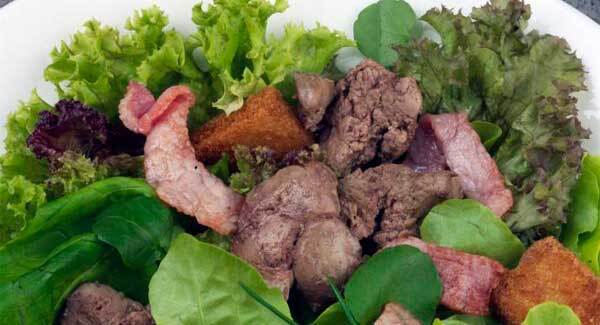
Liver wrapped in caul fat, salad of lamb’s kidneys, chicken or duck hearts on pan grilled bread, and just to cheer you up my favourite brownie recipe (sorry no blood) — and it’s also gluten free.
2-3 lamb kidneys
4oz (110g) oyster mushrooms
1 tbsp freshly chopped annual marjoram, optional
30 pink peppercorns
2 tbsp of tomato concasse
Selection of lettuces and salads, ie, butterhead, iceberg, raddichio, Chinese leaves, lambs lettuce or rocket leaves
Vinaigrette dressing
1 tbsp of arachide or sunflower oil
2 tbsp olive oil
1 tbsp wine vinegar
¼ tsp Dijon mustard
Salt and pepper
Remove the skin and fatty membrane from the centre of the kidneys, and cut the kidney into small cubes (about 0.5in) 1cm approx.
Trim the stalks from the mushrooms and slice lengthways. Wash lettuces and dry carefully.
Heat a little olive oil in a frying pan until it smokes, toss in the mushrooms, season and fry quickly for about 3-4 minutes, add the marjoram, remove to a hot plate add the kidneys to the pan and fry quickly for about 2 minutes.
While the kidneys are cooking, toss lettuce in a little of the dressing, divide between the plates.
Spoon the hot kidneys and the mushrooms over the salad immediately they are cooked and if liked, scatter salads with pink peppercorns or with tomato concasse and serve immediately.
1lb (450g) lamb’s liver
Salt and freshly ground black pepper
8-16 sage leaves
Pork caul fat
Watercress sprigs
Wash and dry the liver. Cut into eight pieces. Season well with salt and freshly-cracked pepper.
Lay one or two sage leaves on top, wrap each piece loosely in caul fat (the lacy membrane encasing an animal’s organs).
Chill or cook right away on barbecue or hot pan grill.
Cook for 3-4 minutes on both sides until the fat renders out and become a rich golden colour.
Serve on hot plates with a few sprigs of watercress.
12-16 chicken or duck hearts
½ pint (10 fl oz) chicken stock
Extra virgin olive oil or butter
Salt and freshly ground pepper
Thyme leaves or a little snipped tarragon
4 slices of sourdough bread
Preheat a pangrill.
Wash the hearts, put into a small saucepan, and cover with chicken stock.
Add a little salt and bring to the boil. Simmer gently for 10-15 minutes or until just tender.
Drain, cut some in half lengthwise, others into rounds.
Just before serving, heat a little butter or extra virgin olive oil in a pan.
Toss in the hearts and cook until heated through and browning at the edges. Sprinkle with a little thyme or snipped tarragon and toss.
Season well with salt and freshly ground pepper. Taste and tweak if necessary.
Chargrill the slices of bread on both sides. Put a slice on each of four plates.
Divide the hearts between them and scatter a few thyme flowers over the top if available.
I sometimes add a little harissa or zhoug.
125g (4oz) best quality dark chocolate, 70% cocoa solids
25g (1oz) unsweetened chocolate
Approximately 175ml (6fl oz) stock syrup
Rum or vanilla extract, optional
Stock Syrup
125g (4oz) sugar
150ml (¼ pint) water
Melt the chocolate in a bowl over simmering water.
Gradually whisk in enough syrup to make a sauce of coating consistency.
Serve hot or cold. Keeps well in a fridge. Stir before use.
This is very useful to keep in the fridge as a base for homemade lemonade, sorbets, fruit salads etc. Keeps for two to three weeks.
Dissolve the sugar in water and boil together for two minutes. Store in a covered jar in the refrigerator until needed.
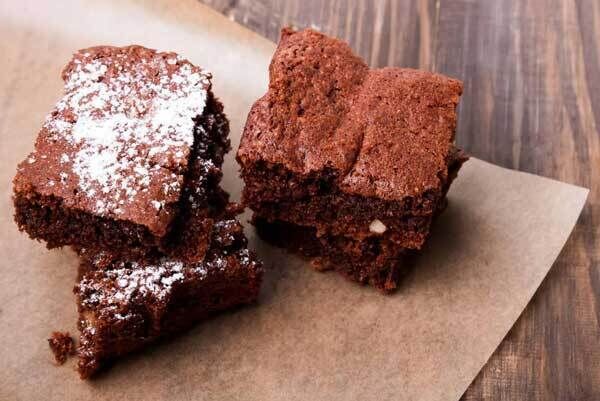
50g (2oz) best quality gluten – free dark chocolate
100g (3½oz) butter
200g (7oz) castor sugar
2 eggs, preferably free-range
½ teaspoon pure vanilla essence
75g (3oz) ground almonds
½ teaspoon gluten-free baking powder
Pinch of salt
125g (4oz) chopped walnuts
1 x 20cm (8in) square tin lined with silicone paper
Preheat the oven to 180°C/350°F/gas mark 4.
Melt the chocolate in a heatproof bowl suspended over simmering water or in a low oven.
Cream the butter and sugar until pale, soft and light, then beat in the lightly whisked eggs, the vanilla essence and melted chocolate.
Lastly stir in the ground almonds, gluten-free baking powder, salt and chopped nuts.
Spread the mixture in the tin and bake in the preheated oven for approximately 30-35 minutes.
Cut into 5cm (2inch) squares for serving.
Serve with bitter chocolate sauce and crème fraîche. Sprinkle with chopped pistachio nuts and dried rose petals.
Garden Workshop — Autumn Harvest and Winter Crops: On Monday, August 15, head gardener at the Ballymaloe Cookery School, Susan Turner will teach the necessary skills to develop sustainable organic growing techniques.
Topics covered will include harvestingand selecting varieties for next year, inter crops and filling the hungry gap, seasonal review and planning, and winter soil management. www.cookingisfun.ie
Simply Delicious Food for Family and Friends: Wednesday, August 17, until Friday, August 19.
So many of us are ‘time-poor’ – struggling to juggle careers with running our homes, doing our best to look after the important people in our lives – that we want to make sure that the food we are cooking is delicious, nourishing and healthy, simply oozing with TLC.
You will come away from this two-and-a-half day course armed with a repertoire of fuss-free, quick and tasty dishes – good, gutsy food with masses of flavour, guaranteed to gladden the hearts of your nearest and dearest.
We’ll give you invaluable time-saving tips and a list of the essential ingredients you should have in your cupboard for those fraught occasions when you haven’t had a chance to do a ‘big shop’ and have very little time available to prepare something simple but delicious.
The course will include quick and easy breads, starters, main courses, salads and some scrumptious puddings. www.cookingisfun.ie


CONNECT WITH US TODAY



Be the first to know the latest news and updates