Using their heads to ease pain of migraine
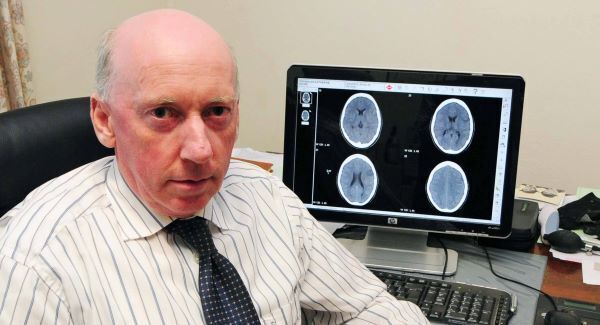
The first national seminar about migraine and sport is on Sept 18, as part of Migraine Awareness Week. Dr Edward O’Sullivan, director of the Cork Migraine/Headache Clinic, will talk about ‘understanding migraine in a sporting context.’
Dr O’Sullivan says many high profile Irish sports people suffer from the neurological disorder. He treats them, but for reasons of confidentiality he naturally can’t name them.
Two tennis legends have spoken publicly about their migraines. Serena Williams was 18 when she suffered the first of several excruciating headaches. Five years later, she learned that she was afflicted with menstrual migraines, when a sudden and fierce headache cost her a match, and led to her early elimination from a tournament for the first time. She was later prescribed medication, which works for her.
Monica Seles suffered for years from what she thought were tension headaches. She had to pull out of a couple of tournaments, because the pain and sensitivity to sunlight was “unbearable.” She takes medication when she feels a migraine coming on.
For women, menstrual migraine is known as an estrogen-withdrawal headache. But in all, half a million Irish people suffer from the condition, and it’s three times more prevalent in women than men.
“The menstrual cycle has a lot to do with migraine in women. It’s down to hormonal factors,” says Dr O’Sullivan. But it’s not just a women’s issue. Dr O’Sullivan says that while sports and exercise can be of benefit to a migraine sufferer, they can also trigger attacks.
Dehydration, sun-glare, over-heating, low blood sugar and over-exertion are the most common sporting triggers.
“Some patients experience an aura prior to the headaches, which can involve flashing lights, zig-zag lines, pins and needles and numbness.
“The impact that the migraine headache will have on an individual is often such that they can’t function. Typically, the person will need to lie down in a quiet, dark room.
“Lasting from four to 72 hours, the patient often has to take time off work or miss school. Patients can experience migraine up to twice a month.”
Dr O’Sullivan says there are factors in relation to sport “that can have an influence in terms of vulnerability to migraine. The sheer effort of physical exercise can bring on migraine attacks. Missing a meal, and being without adequate nutrition before a game, can bring on an attack. Also, low blood sugar can lead to migraine in a patient.”
Environmental conditions during sport are also a factor. “If it’s a very hot day or very humid, patients can be vulnerable to headaches,” he says.
Dairy products, particularly cheese, can trigger a migraine attack, as can chocolate and alcohol.
An injury can bring on a migraine attack. “These patients can be otherwise healthy. They don’t want to limit their ability to play games. We try to work around the issues, and lessen the likelihood of migraine occurring during a game,” Dr O’Sullivan says.
The stress experienced by a sports person before a game can lead to a migraine attack. “We would give practical advice on how to relax as much as possible before a game. It’s important to be well prepared nutritionally and sufficiently hydrated. Of course, one needs to be mentally prepared for any game. There’s a need to rest properly the night before, and in the hours before a game.”
Even a game such as golf, which is not overly physically demanding, can cause migraine. “From a competitive point of view, it’s stressful and it’s a very psychological game. It requires full-on concentration. With migraine, people find it hard to concentrate.”
Migraine and sport is an issue that deserves attention, says Dr O’Sullivan. “It can have a very disabling effect. It’s like anything else; it’s often suffered in silence. If you’re playing in very competitive sports, your teammates aren’t going to be too delighted if you turn to them suddenly and tell them you have a headache.”
Often, during a migraine, the patient will persist playing their sport.
“Some patients will be able to keep themselves focused and motivated, to the point where they struggle through, but perform below par.
“It’s only when the whole thing is over, and they relax, that the full-blown symptoms develop.”
Each individual’s experience of migraine is unique. “There’s a lot of medication available, some of it over the counter. But what works for one patient may not work for another. Sometimes, even the best of drugs don’t work.”
Dr O’Sullivan says that awareness of migraine has increased in the last ten years. The seminar will also be addressed by Julie Sugrue, a chartered physiotherapist, who will discuss physiotherapy and headache-management.
* The Migraine Association of Ireland will hold the Migraine and Sport seminar at the Anner Hotel, in Thurles, on Sept 18 at 7.30pm.
www.migraine.ie.


CONNECT WITH US TODAY



Be the first to know the latest news and updates