Corkman Brian Deady's new album is a real slab of southern soul
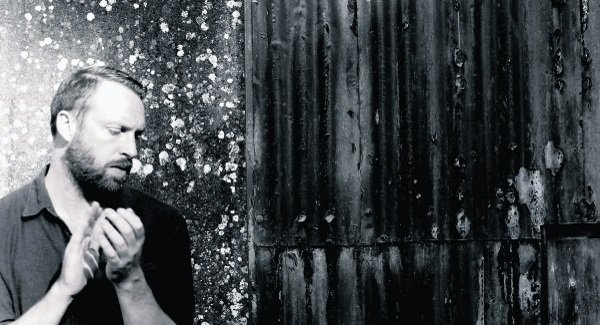
BRIAN Deady is extraordinarily frank about the personal upheaval that inspired his second record, Non-Fiction.
“My family broke up when I was 15,” says the Cork soul singer.
“I spent a bit of time in foster care. But I was too old in many respects to fit into that. My identity as a person was formed already. It wasn’t quite working. I went from one place to another and ended up living in a bed and breakfast from age 16.”
He speaks in a low, steady voice without emotion. The pain is saved for his music and unflinching songs such as ‘A Darkness’ (“I’ve never known a darkness like you,” rumbles the chorus), which read as complicated back and forths with family members, Deady speaking truths perhaps too painful to convey face to face. It’s a tough listen — endlessly raw and unflinching.
That is exactly as Deady intended. To him, the collection is a confessional — a venting of feelings that have simmered beneath the surface for years. Recording it, he felt a weight lift.
“Well, the title IS Non-Fiction,” he says, nodding. “It is personal — definitely. I wanted the songs to be real, to have a rawness. I’ve been a winding road for me — and very hard in some respects. The one thing that has always been there is music.”
He never really went off the rails as a teenager. Rather than lashing out, he internalised the agony of separation, poured it into his music.
It helped that, as his 20s approached, he was growing into his talents — in particular an extraordinary blues falsetto. Deady’s ability to give voice to his sorrows was his salvation — offered a better buzz than all the drugs or booze in the world.
“A lot of people in Ireland expect time to be African-American. They meet me and say ‘We thought you were black’. It’s weird. In America, I never get that. “
He has, is it happens, enjoyed success in the United States, on the West Coast especially. Deady’s first record, Interview, was championed by KCRW, the influential Los Angeles public radio station acclaimed for breaking new artists. The loudest drum-beater was Aaron Byrd, a respected taste-maker who has performed alongside Groove Armada, James Blake and Little Dragon.
“They picked up on me. I don’t know how but it just happened,” reflects Deady. “They heard my first album and they liked it — and they played it.”
Interview was positively received in Ireland as well and became a slow-burn success — an impressive feat given the lack of label backing. The exposure presented him with some unique opportunities.
In 2014, for instance he sang Ella Fitzgerald’s ‘Every time We Say Goodbye’ with accompaniment from a 50-piece orchestra at the Bord Gais Energy Theatre, Dublin (“I was a bag of nerves”).
But Deady always regarded his voice and his music as more than an instrument for painting pretty pictures.
He had stories to tell — things he needed to share with the world. Thus, over the past several years, he accumulated a body of tough and challenging songs — material so uncompromising he sometimes wondered how it would all fit into a cohesive body of work.
Solving that puzzle took longer than he expected, though he assuredly got there in the end.
The musical influences on Non-Fiction are far-reaching, with Skibbereen-raised Deady having absorbed such far-flung artists as Future Islands and John Hopkins and field music recordings from the American South, such as those of chain gangs of the ’40s and ’50s as recorded by ethnomusicologist Alan Lomax.
The project furthermore benefits from a stripped-down recording approach. Deady’s first record was put together with a nine-piece band. It was nice to have company but sometimes marshalling so many musicians became a task in itself.
On this occasion, it was mostly Deady, at piano or rapping over a spectral beat — a bare-boned approach that fleshed out the sombre subject matter.
“I grew up on Elvis and Roy Orbison. The tapes I listened on were like a chronicling of my inspirations. From Elvis, it went from Jeff Buckley and David Grey to John Coltrane and Marvin Gaye. I have a song called ‘Tapes’ that is about exactly that — about how we keep overdubbing our sense of identity going through different phases. One of my first real loves was The Prodigy. Then I chased down all of the artists they sampled, pulling at the threads. Black music has been a big influence on me throughout.”
Non-Fiction was almost as heart-breaking to put together as it is to listen to.
“It didn’t come together very quickly,” says Deady, whose own thumbprint features on the cover.
“The upside of being an independent artist is that you have so many options. Of course, that’s sort of the downside too. There are a lot of headaches. You have infinite choice. Finding the focus for an album can be a challenge.”
He didn’t set out to make a deeply personal record.
“The songs are quite introspective. I didn’t really plan on that. It’s what came out. I dug deep and as a result the record took a long time. I’d been ‘banking’ tracks for two or three years — I had a lot to chose from. I started recording in April, thinking I’d be done in two or three weeks. It didn’t work out like that.”
Alongside KCRW another prominent champion is Nile Rodgers, leader of Chic.
“I’ve supported Chic twice. Once was in Cork Opera House and I remember it distinctly. I looked over and there was Nile Rodgers, grooving away. I nearly forgot the words.”
He has a high-profile appearance coming up at St Luke’s Church in Cork.
“It’s going to be interesting. I am curious as to how the music will fit with the space. I want to take advantage of that and put on something that is interesting and reflective of the surroundings. I’m still considering ways to do it. I’m looking forward to the challenge.”


CONNECT WITH US TODAY



Be the first to know the latest news and updates