Allergy service delays ‘put lives at risk’
The delays mean children are at risk of “further episodes of anaphylaxis” while waiting to be seen, according to Jonathan Hourihane, who heads the internationally recognised paediatric allergy service at Cork University Hospital.
“The HSE thinks once you are on a waiting list that you are safe, but that’s not quite the case because anaphylaxis can happen at any time,” said Prof Hourihane.
Anaphylaxis is a severe allergic reaction, rapid in onset, that can cause death.
The saturated state of public paediatric allergy services is outlined in a draft document prepared by Prof Hourihane and colleagues for the HSE’s National Paediatric Clinical Advisory Group. In it, he describes each of the five services in Cork, Dublin, Drogheda, Mullingar, and Galway as “overwhelmed”.
The Dublin service, run by consultant in paediatric allergy Dr Aideen Byrne, is “already overwhelmed” even though it only commenced late last year.
The document, describing the current chaotic state of our allergy services, says there has been “no HSE strategy to develop allergy care in Ireland”, at a time when Census figures show that 28,600 children have all three major allergic conditions — asthma, eczema, and food allergy.
Paediatric dietician Ruth Charles, secretary of the Irish Food Allergy Network, said difficulties accessing expert opinion meant many parents were “chopping and changing children’s diets themselves, so that kids could end up with significant nutritional deficits”.
She said: “For example, a parent might eliminate dairy because their child has eczema [inflammatory skin disease] and this can have a significant effect on bone development.”
She said that while the practice had been to put children with allergic conditions on restrictive diets, in fact the approach now was the opposite.
In 75% of new referrals to CUH, the diet is broadened after the first consultation, rather than restricted further.
The resource deficit in allergy services extends to adults — there is no public adult service — and to the number of doctors, employed in the area. Between the five paediatric services, there are just two whole time equivalent allergy consultants.
Prof Hourihane’s document says if we were to follow UK guidelines, we should have nine, but that “a realistic goal would be the creation of two additional full-time posts within the current specialist services”.
Ms Charles said another deficit was the lack of allergy training for undergraduates. She said such training was particularly important in relation to maternity hospital staff, public health nurses, and GPs as the first points of contact with infants with allergies.
The deficits in allergy services are particularly relevant at a time when Ireland is due to host — for the first time — the international Food Allergy and Anaphylaxis Meeting 2014, which takes place in Dublin’s Convention Centre on October 9 to 11.
The conference, designed for healthcare professionals, will be attended by worldwide allergy experts.

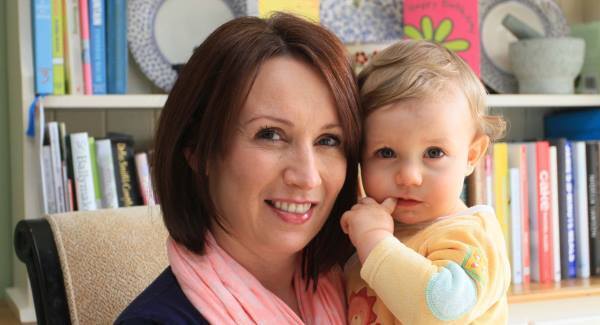
Baby Callum O’Beirne was exclusively breastfed for the first six months of life and showed all the signs of a healthy, hungry baby.
Having reached the six-month milestone, his mother, Michelle, decided it was time to try him with some solid food.
“The first time I gave him baby rice and porridge, he reacted,” says Michelle. “His skin turned blotchy. His dad and his aunt are coeliacs and I thought ‘another one in the family going down that road’.”
She started Callum on gluten-free porridge but he reacted nonetheless. His face would swell. Michelle’s public health nurse in Kilcock, Co Kildare, put her in touch with paediatric dietitian Ruth Charles, who is also secretary to the Irish Food Allergy Network.
“We went through all the food that had and hadn’t worked for Callum and at the end of the chat, she said she wanted to refer me straight to Tallaght Hospital. I was surprised,” Michelle says.
Despite the very long delays for most kids awaiting food allergy tests in public hospitals — up to three years in some services — Callum was seen within about a month. Michelle reckons his young age went in his favour.
“At Tallaght, we went through a list of food I thought was safe — fish, meat, fruit, veg — and basically it was food that wasn’t processed.” A skin prick test identified dairy, eggs, and peanuts as the foods he was allergic to.
Because the approach to treating food allergies is all about trying to broaden the diet — previously it was restrictive — Michelle tried Callum at one stage with some homemade cheese sauce in his pasta.
“I turned around to get something out of the oven, and literally, by the time I turned back, his lip was swollen to twice its size,” she says.
There was another, more frightening, episode on the beach in Wexford when Michelle’s other two kids gave Callum a lick of icecream and he started wheezing. Rather than heading for the nearest hospital, Michelle breastfed him in the hope the breastmilk would counteract the allergen, which it did.
Nowadays, Callum is on a dairy-free diet, using soya instead. Michelle says the plan is to re-introduce dairy in miniscule amounts in a “controlled setting” — a hospital with access to a resuscitation team.
Michelle remains constantly vigilant to the presence of allergens in foods and has more or less stopped food shopping in favour of home cooking. See ifan.ie


CONNECT WITH US TODAY



Be the first to know the latest news and updates